















How to Replace Shock Absorbers on a 2022 Jeep Grand Cherokee WK
Step-by-step DIY guide with tools, parts list, torque specs, safety tips, and cost savings
How to Replace Shock Absorbers on a 2022 Jeep Grand Cherokee WK
Step-by-step DIY guide with tools, parts list, torque specs, safety tips, and cost savings


🔧 Grand Cherokee WK - Shock Absorber Replacement
You’ll be removing the old shock absorbers and installing new ones so the suspension can control bumps and body movement correctly again. This improves ride comfort, handling, and braking stability.
Difficulty Level: Intermediate | Estimated Time: 3–5 hours (all four)
⚠️ Safety & Precautions
- ⚠️ Always support the Grand Cherokee with jack stands, never rely only on a floor jack.
- ⚠️ Work on solid, level ground so the vehicle cannot roll or shift.
- ⚠️ Let brakes and exhaust cool before working near them; they can be very hot.
- ⚠️ Wear safety glasses and mechanic gloves to protect your eyes and hands.
- ⚠️ Chock (block) the wheels that stay on the ground so the vehicle cannot move.
- ⚠️ If your Grand Cherokee has auto‑level/air suspension, stop and tell me; the procedure is different.
- ⚠️ Battery disconnect is not required for basic shock replacement.
🔧 Required Tools
You'll need the following tools for this repair:
- 🔹Floor jack (rated 3-ton minimum)
- 🔹Jack stands (rated 3-ton minimum, Qty: 4)
- 🔹Wheel chocks
- 🔹Lug wrench 21mm (for wheel nuts)
- 🔹Socket set metric (8mm–21mm)
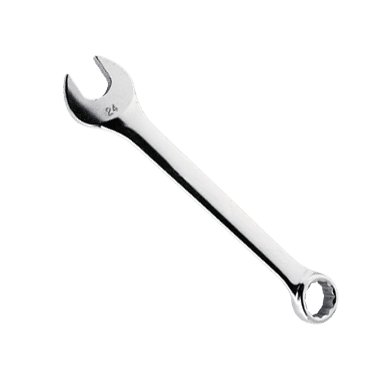
- 🔹Combination wrench set metric (8mm–21mm)
- 🔹Breaker bar 1/2" (long handle for tight bolts)
- 🔹Torque wrench 3/8" drive (5–80 ft-lbs range)
- 🔹Torque wrench 1/2" drive (30–200 ft-lbs range)
- 🔹Allen/hex key set metric
- 🔹Torx bit set (E and T styles)
- 🔹Pry bar 18"
- 🔹Flathead screwdriver medium
- 🔹Rubber mallet
- 🔹Penetrating oil spray
- 🔹Wire brush small
- 🔹Needle-nose pliers
- 🔹Spring compressor (strut type, external) (specialty) – tool that safely compresses coil springs
- 🔹Paint marker or white correction pen
- 🔹Safety glasses
- 🔹Mechanic gloves
- 🔹Shop rags
- 🔹Small wire or bungee cords
- 🔹Measuring tape
🔩 Required Parts
HowToo sells all the parts you need for this repair:
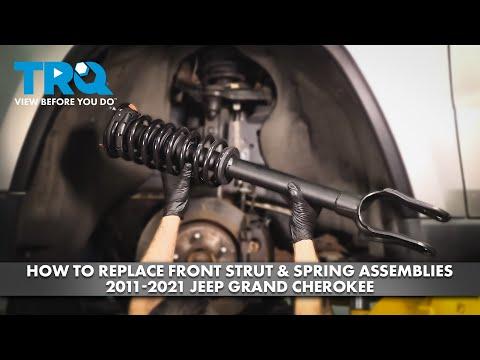
- 🔹Front strut assemblies (shock + coil spring type) - Qty: 2
- 🔹Rear shock absorbers - Qty: 2
- 🔹Front upper strut mounts - Qty: 2
- 🔹Front strut mount bearings - Qty: 2
- 🔹Rear upper shock mounts/bushings - Qty: 2
- 🔹New front strut mounting nuts and bolts - Qty: set
- 🔹New rear shock mounting bolts and nuts - Qty: set
- 🔹Anti-seize compound - Qty: 1 small tube
- 🔹Rust penetrant spray - Qty: 1 can
- 🔹Paint marker (for alignment marks) - Qty: 1
📋 Before You Begin
- 🔹Park the Grand Cherokee on level ground, engage the parking brake, and put the transmission in P.
- 🔹Place wheel chocks in front of and behind the wheels that will stay on the ground.
- 🔹Loosen (do not remove) the wheel lug nuts 1/2 turn with the 21mm lug wrench before lifting the vehicle.
- 🔹Check your new shocks/struts and mounts to be sure they match the old ones in length and mounting style.
- 🔹If you do not feel comfortable using a spring compressor, consider buying complete loaded strut assemblies or having a shop swap the springs.
🔨 Step-by-Step Instructions
Follow these steps in order:
Step 1: Lift and Support the Vehicle
- 🔹Use the floor jack at the front center jacking point to lift the front of the Grand Cherokee until both front wheels are off the ground.
- 🔹Place jack stands under the factory-recommended support points on both sides and slowly lower the vehicle onto the stands using the floor jack.
- 🔹Repeat at the rear if you plan to do all four shocks: lift the rear and support it with jack stands at the specified points.
- 🔹Use the 21mm lug wrench to remove all wheel nuts and take off the wheels.
- 🔹Keep wheels and nuts safely aside; you will need them later.
Step 2: Front Strut Area Preparation
- 🔹Turn the steering wheel to expose the back of the strut; this gives better access.
- 🔹Spray all visible strut bolts and nuts with penetrating oil and let it soak for 5–10 minutes.
- 🔹Use a wire brush to clean dirt and rust from around the bolts.
- 🔹Use the paint marker to mark the camber bolt/strut-to-knuckle position if your model uses slotted holes; this helps keep alignment close. Helps reduce alignment change
Step 3: Disconnect Components from the Front Strut
- 🔹If there is a brake hose or ABS wire attached to the strut body, use a flathead screwdriver or needle-nose pliers to gently open clips and free the hose/wire.
- 🔹Use the appropriate socket (usually 18mm–21mm) and wrench to loosen the sway bar link nut from the strut tab if equipped.
- 🔹Hold the stud with the correct Allen/hex key if it spins while removing the nut.
Step 4: Remove the Front Strut from the Steering Knuckle
- 🔹Place a small floor jack or a jack stand under the lower control arm to support the suspension.
- 🔹Use a breaker bar with appropriate socket (18mm–21mm) to loosen and remove the lower strut-to-knuckle bolts and nuts.
- 🔹You may need a rubber mallet to tap the bolts out if they are stuck.
- 🔹Once the bolts are out, the knuckle may move slightly; keep it supported on a jack stand if needed.
- 🔹Do not let the brake hose stretch; support the knuckle/suspension with a jack stand or bungee cord.
Step 5: Remove the Front Strut from the Vehicle (Upper Mount)
- 🔹Open the hood and locate the top of the strut towers.
- 🔹Use a socket (usually 13mm–16mm) and ratchet to remove all but one of the upper strut mount nuts on each side. Leave one nut loosely threaded to hold the strut in place.
- 🔹Support the strut from below with one hand; use the socket to remove the last upper nut.
- 🔹Carefully lower and slide the strut assembly out from the wheel well.
Step 6: Swap Springs and Mounts on the Front Strut (If Not Using Loaded Struts)
- 🔹Place the strut assembly on a stable work surface.
- 🔹Install the spring compressor (specialty) on opposite sides of the coil spring, following the tool’s instructions carefully.
- 🔹Evenly tighten both sides with the appropriate wrench or ratchet until the spring is just loose and no longer pressing on the upper mount. Compress slowly and evenly
- 🔹Use the correct socket (often 18mm–21mm) and Allen/hex key or Torx bit to remove the center strut shaft nut.
- 🔹Lift off the upper mount and bearing, then carefully remove the spring.
- 🔹Transfer the spring to the new strut, keeping the same orientation of the coil ends in the lower seat.
- 🔹Install the new upper mount and bearing onto the new strut.
- 🔹Install the new strut shaft nut using the correct socket and Allen/hex key.
- 🔹Tighten the center nut to Torque to 75 Nm (55 ft-lbs) using the torque wrench.
- 🔹Slowly loosen the spring compressor evenly until the spring is fully seated and the tension is on the new mount.
- 🔹Remove the spring compressor carefully.
Step 7: Reinstall the Front Strut Assembly
- 🔹Position the new or rebuilt strut into the wheel well.
- 🔹From the engine bay, install the upper mount nuts by hand using the socket, but do not fully tighten yet.
- 🔹Align the lower strut with the steering knuckle and slide in the lower bolts; you may need a pry bar or rubber mallet to help alignment.
- 🔹Install the nuts on the lower bolts using the appropriate socket and wrench.
- 🔹Tighten the lower strut-to-knuckle bolts to Torque to 170 Nm (125 ft-lbs) using the 1/2" torque wrench.
- 🔹Reconnect any sway bar link with the correct socket and Allen/hex key and torque to Torque to 75 Nm (55 ft-lbs).
- 🔹Reattach brake hose and ABS wire clips using needle-nose pliers or flathead screwdriver.
- 🔹Torque the upper mount nuts to Torque to 48 Nm (35 ft-lbs) using the 3/8" torque wrench.
Step 8: Remove and Replace Rear Shocks – Preparation
- 🔹Move to the rear suspension area.
- 🔹Spray the upper and lower rear shock bolts with penetrating oil and let them soak.
- 🔹Use a wire brush to remove rust and dirt from the bolts.
- 🔹Support the rear axle or control arm near the shock with a floor jack to relieve tension on the shock.
Step 9: Remove the Rear Shocks
- 🔹Use the appropriate socket (usually 18mm–21mm) and wrench to loosen and remove the lower shock bolt and nut.
- 🔹Slowly lower the floor jack a little if needed to ease pressure on the lower mounting point.
- 🔹Use the correct socket and wrench to remove the upper shock mounting bolts/nuts (in the wheel well or under the vehicle, depending on your exact setup).
- 🔹Remove the old shock from the vehicle.
Step 10: Install the New Rear Shocks
- 🔹Position the new shock in place, starting with the upper mount.
- 🔹Install the upper bolts/nuts by hand using the correct socket; do not fully tighten yet.
- 🔹Align the lower end of the shock with the mounting point; use the floor jack to raise the axle or control arm slightly to line up the holes.
- 🔹Install the lower bolt and nut using the appropriate socket and wrench.
- 🔹Tighten the upper mounting bolts/nuts to Torque to 70 Nm (52 ft-lbs) with the 3/8" torque wrench.
- 🔹Tighten the lower mounting bolt/nut to Torque to 115 Nm (85 ft-lbs) using the 1/2" torque wrench.
Step 11: Reinstall Wheels and Lower the Vehicle
- 🔹Put the wheels back on the hubs and start all lug nuts by hand.
- 🔹Snug lug nuts in a star pattern using the 21mm lug wrench, but do not fully tighten while the vehicle is still on stands.
- 🔹Use the floor jack to lift each end slightly and remove the jack stands.
- 🔹Lower the Grand Cherokee fully to the ground.
- 🔹Use the 1/2" torque wrench and 21mm socket to tighten the wheel lug nuts in a star pattern to Torque to 176 Nm (130 ft-lbs).
Step 12: Final Checks
- 🔹Visually inspect all four corners to ensure every bolt, nut, and clip is installed and tightened.
- 🔹Make sure no brake hoses or ABS wires are twisted or stretched.
- 🔹Clean up tools and remove wheel chocks.
✅ After Repair
- 🔹Take a short, gentle test drive over small bumps and smooth roads. Listen for clunks, rattles, or odd noises.
- 🔹If you hear any noise, recheck that all shock and strut bolts are tight and all mounts are seated properly.
- 🔹Have a 4-wheel alignment done as soon as possible, especially after front strut replacement. This protects your tires and ensures proper handling.
- 🔹Over the next few days, recheck the lug nut torque to 176 Nm (130 ft-lbs) and inspect for any fluid leaks from the new shocks.
💰 DIY vs Shop Cost
Shop Cost: $900–$1,400 (parts + labor for all four)
DIY Cost: $300–$650 (parts only, depending on brand and whether you buy complete struts)
You Save: $600–$800 by doing it yourself!
Shop labor rates vary but typically run $100–$150/hour. This repair takes a shop approximately 2–3 hours.
🎯 Ready to get started?
HowToo makes it easy: same-day/2-day shipping on every part, plus all the tools and specialty tools you need! Check out the parts and tools sections above to add everything to your cart.