









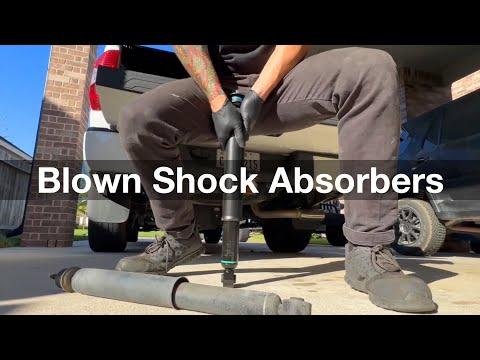







How to Replace Shock Absorbers on a 2016 Toyota Tundra
Step-by-step instructions with tools, parts, safety tips, and torque specs for 2007, 2008, 2009, 2010, 2011, 2012, 2013, 2014, 2015, 2016, 2017, 2018, 2019, 2020, 2021
How to Replace Shock Absorbers on a 2016 Toyota Tundra
Step-by-step instructions with tools, parts, safety tips, and torque specs for 2007, 2008, 2009, 2010, 2011, 2012, 2013, 2014, 2015, 2016, 2017, 2018, 2019, 2020, 2021


🔧 Shock Absorbers - Replacement
On your Tundra, the shock absorbers are replaced one axle at a time, and the exact access points differ between the front and rear. The job is straightforward if the truck is safely supported and the suspension is unloaded before you remove the mounting bolts.
Difficulty Level: Intermediate | Estimated Time: 2-4 hours
⚠️ Safety & Precautions
- Support the truck securely with jack stands; never rely on a jack alone.
- Work on level ground and chock the wheels.
- Keep hands clear when lowering or raising the suspension.
- If you are replacing front shocks, steering and suspension components may move suddenly when bolts are removed.
- No battery disconnect is required for this repair.
🔧 Required Tools
You'll need the following tools for this repair:
- Floor jack (rated 3-ton minimum)
- Jack stands (rated 3-ton minimum)
- Wheel chocks
- Safety glasses
- Mechanic gloves
- Metric socket set
- Metric wrench set
- Breaker bar
- Torque wrench
- Penetrating oil
- Trim clip tool
- Spring compressor (specialty)
🔩 Required Parts
HowToo sells all the parts you need for this repair:
- Front shock absorber - Qty: 2
- Rear shock absorber - Qty: 2
- Shock absorber hardware kit - Qty: 1
📋 Before You Begin
- Park on level ground and set the parking brake.
- Chock the wheels on the opposite end of the truck.
- Loosen any accessible wheel lug nuts slightly before lifting.
- Raise the truck and support it with jack stands at the frame.
- For best results, replace shocks in pairs on the same axle.
🔨 Step-by-Step Instructions
Follow these steps in order:
Step 1: Raise and secure the truck
- Use the floor jack to lift the truck at the proper frame point.
- Place jack stands under the frame and lower the truck onto them.
- Remove the wheel if it blocks access to the shock.
Step 2: Soak the hardware
- Use penetrating oil on the upper and lower shock bolts.
- Let it sit a few minutes so the bolts come out more easily.
- Rusty bolts break easily.
Step 3: Support the suspension
- Use the floor jack to lightly support the control arm or axle near the shock.
- This helps take pressure off the bolts before removal.
Step 4: Remove the shock absorber
- Use the correct metric socket and metric wrench to remove the lower shock bolt first.
- Remove the upper bolt or upper nut with the same tools.
- Pull the shock out of the truck once both ends are free.
Step 5: Install the new shock absorber
- Position the new shock in place by hand.
- Start the upper and lower fasteners by hand first so the threads do not cross.
- Tighten the hardware evenly with the metric socket and metric wrench.
- Torque to factory specification using the service manual for the exact fasteners on your axle.
Step 6: Reinstall the wheel and lower the truck
- Put the wheel back on and snug the lug nuts with a metric socket.
- Raise the truck slightly with the floor jack, remove the jack stands, then lower it to the ground.
- Torque the lug nuts to factory specification in a star pattern.
Step 7: Repeat on the matching side
- Replace the shock on the other side of the same axle so ride height and damping stay balanced.
- If both front or both rear shocks are being replaced, do them as a pair.
✅ After Repair
- Drive slowly at first and listen for clunks or rattles.
- Check that the truck sits level and tracks straight.
- Recheck all fasteners after a short test drive.
- If the steering feels off after front shock work, inspect related suspension parts.
💰 DIY vs Shop Cost
Shop Cost: $500-$1,000 (parts + labor)
DIY Cost: $180-$400 (parts only)
You Save: $320-$600 by doing it yourself!
Shop labor rates vary but typically run $100-$150/hour. This repair takes a shop approximately 2-4 hours.
🎯 Ready to get started?
HowToo makes it easy: same-day/2-day shipping on every part, plus all the tools and specialty tools you need! Check out the parts and tools sections below to add everything to your cart.