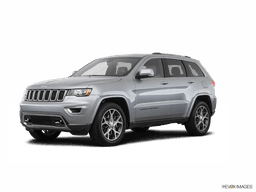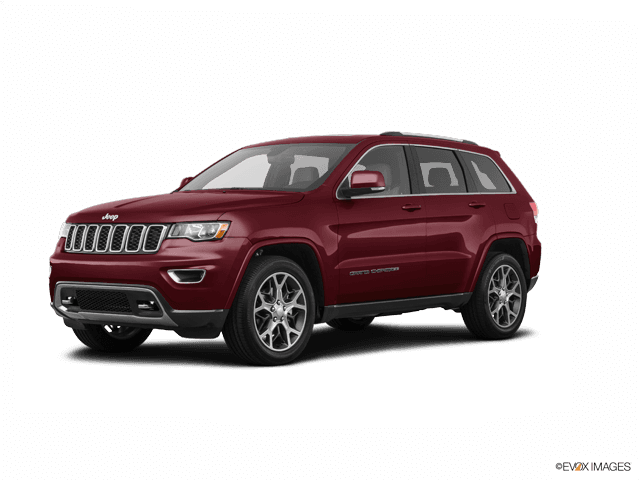









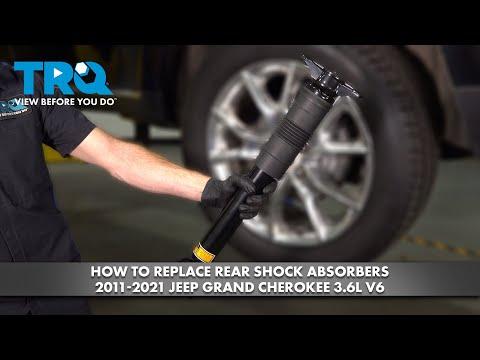







How to Replace Shock Absorbers on a 2016-2021 Jeep Grand Cherokee (Engine: V8 5.7L)
Step-by-step rear shock and front strut guidance with tools, parts, torque specs, and safety tips
How to Replace Shock Absorbers on a 2016-2021 Jeep Grand Cherokee (Engine: V8 5.7L)
Step-by-step rear shock and front strut guidance with tools, parts, torque specs, and safety tips for 2016, 2017, 2018, 2019, 2020, 2021


🔧 Grand Cherokee - Shock Absorber Replacement
This job replaces the shock absorbers that control bounce and help keep the tires planted on the road. On your Grand Cherokee, the rear uses separate shock absorbers; the front suspension uses strut-style assemblies, so the steps are different depending on which end you are replacing.
Assumption: This guide covers rear shock absorbers first, plus a front strut assembly overview for your Grand Cherokee with standard suspension.
Difficulty Level: Intermediate | Estimated Time: 1.5-3 hours rear, 3-5 hours front
⚠️ Safety & Precautions
- ⚠️ Always support your Grand Cherokee with jack stands. Never work under a vehicle held only by a jack.
- ⚠️ Work on level, solid ground and chock the wheels that stay on the ground.
- ⚠️ Suspension parts can move suddenly when bolts are removed. Keep hands clear of pinch points.
- ⚠️ If replacing front strut assemblies, do not disassemble the coil spring unless you have the correct spring compressor and experience. The spring is under very high force.
- ⚠️ If your Grand Cherokee has Quadra-Lift air suspension, stop and use the correct air suspension service procedure before lifting or removing suspension parts.
- ⚠️ Battery disconnect is not normally required for rear shock replacement on standard suspension.
🔧 Required Tools
You'll need the following tools for this repair:
- Floor jack (rated 3-ton minimum)
- Jack stands (rated 3-ton minimum)
- Wheel chocks
- Breaker bar 1/2-inch drive
- Torque wrench 1/2-inch drive
- 22mm socket
- 21mm socket
- 18mm socket
- 16mm socket
- 15mm socket
- 13mm socket
- 10mm socket
- Ratchet 1/2-inch drive
- Ratchet 3/8-inch drive
- 18mm wrench
- 21mm wrench
- Trim clip removal tool
- Pry bar 18-inch
- Rubber mallet
- Penetrating oil
- Paint marker
- Safety glasses
- Mechanic gloves
🔩 Required Parts
HowToo sells all the parts you need for this repair:
- Rear shock absorbers - Replace in pairs - Qty: 2
- Front complete strut assemblies - Replace in pairs if doing front - Qty: 2
- Rear shock mounting hardware kit - Qty: 1
- Front strut mounting hardware kit - Qty: 1 if doing front
📋 Before You Begin
- 🅿️ Park your Grand Cherokee on level ground, shift to Park, and apply the parking brake.
- 🧱 Place wheel chocks at the wheels staying on the ground.
- 🛞 Loosen the wheel lug nuts 1/2 turn before lifting. Do not remove them yet.
- 🔎 Check whether your Grand Cherokee has standard coil suspension or Quadra-Lift air suspension. Quadra-Lift has air springs and suspension height controls; it needs service-mode handling before work.
- 🧰 A torque wrench tightens bolts to a measured force. This matters on suspension parts so bolts do not loosen or get damaged.
🔨 Step-by-Step Instructions
Follow these steps in order:
Step 1: Loosen the Rear Wheels
- Use a 22mm socket and breaker bar 1/2-inch drive to loosen each rear wheel lug nut 1/2 turn.
- Do this while the tires are still touching the ground.
- Loosen first, lift second.
Step 2: Lift and Support the Rear
- Use a floor jack (rated 3-ton minimum) to lift the rear of your Grand Cherokee at a safe rear lift point.
- Place jack stands (rated 3-ton minimum) under the rear structural support points.
- Gently lower the vehicle onto the jack stands.
- Keep the floor jack lightly supporting the rear lower control arm or axle-side suspension area. This prevents the suspension from dropping suddenly.
Step 3: Remove the Rear Wheels
- Use a 22mm socket and ratchet 1/2-inch drive to remove the loosened lug nuts.
- Remove both rear wheels and place them flat under the side of the vehicle as an extra safety backup.
Step 4: Inspect the Shock Mounting Area
- Use safety glasses and mechanic gloves.
- Spray penetrating oil on the upper and lower shock bolts.
- Use a paint marker to mark the old shock orientation before removal.
- A shock absorber is the cylinder-shaped part between the body and suspension arm that controls up-and-down bounce.
Step 5: Support the Lower Suspension Arm
- Use the floor jack (rated 3-ton minimum) under the lower control arm near the shock mount.
- Raise the jack just enough to hold the arm. Do not lift the vehicle off the jack stand.
- This removes pressure from the shock bolts and makes them easier to remove.
Step 6: Remove the Lower Rear Shock Bolt
- Use an 18mm socket, 18mm wrench, and ratchet 1/2-inch drive to remove the lower shock bolt and nut.
- If the bolt is tight, use the breaker bar 1/2-inch drive.
- If needed, use a rubber mallet to gently tap the bolt out.
- Do not hammer threaded ends hard.
Step 7: Remove the Upper Rear Shock Bolts
- Use a 16mm socket and ratchet 3/8-inch drive to remove the upper shock mounting bolts.
- Hold the shock with one hand while removing the final bolt.
- Lower the shock out of the wheel well.
Step 8: Compare Old and New Rear Shocks
- Place the old and new shocks side by side.
- Check that the overall length, mounting ends, and bushing locations match.
- Use the paint marker to mark left/right if needed.
- A bushing is a rubber insert that reduces noise and vibration at the mounting point.
Step 9: Install the New Rear Shock Upper Mount
- Position the new rear shock in the same orientation as the old one.
- Start the upper bolts by hand first to avoid cross-threading.
- Use a 16mm socket and ratchet 3/8-inch drive to snug the upper bolts.
- Use a torque wrench 1/2-inch drive and 16mm socket to tighten the upper shock bolts to Torque to 75 Nm (55 ft-lbs).
Step 10: Install the Lower Rear Shock Bolt
- Use the floor jack (rated 3-ton minimum) to slowly raise or lower the lower control arm until the shock eye lines up with the mounting hole.
- Slide the lower bolt through by hand.
- Install the nut by hand.
- Use an 18mm socket, 18mm wrench, and ratchet 1/2-inch drive to snug the lower bolt.
- Final tightening should be done with the suspension at normal ride height.
Step 11: Repeat on the Other Rear Shock
- Use the same 18mm socket, 18mm wrench, 16mm socket, and ratchet steps on the opposite side.
- Replace rear shocks in pairs so the vehicle handles evenly.
Step 12: Reinstall Rear Wheels
- Place the wheels back on the hubs.
- Use a 22mm socket and ratchet 1/2-inch drive to snug the lug nuts in a star pattern.
- A star pattern means tightening across from the last nut, not around in a circle.
Step 13: Lower to Ride Height and Final Torque
- Use the floor jack (rated 3-ton minimum) to lift slightly and remove the jack stands.
- Lower your Grand Cherokee until the tires are on the ground and the suspension is carrying vehicle weight.
- Use a torque wrench 1/2-inch drive, 18mm socket, and 18mm wrench to tighten the lower rear shock bolts to Torque to 115 Nm (85 ft-lbs).
- Use a torque wrench 1/2-inch drive and 22mm socket to tighten wheel lug nuts to Torque to 176 Nm (130 ft-lbs).
Step 14: Front Strut Assembly Overview
- The front of your Grand Cherokee uses strut-style assemblies, not simple rear shocks.
- Use a 22mm socket and breaker bar 1/2-inch drive to loosen the front wheel lug nuts before lifting.
- Use a floor jack (rated 3-ton minimum) and jack stands (rated 3-ton minimum) to safely support the front.
- Use a 10mm socket and trim clip removal tool to move any splash shields or brake hose brackets that block access.
- Use 18mm socket, 21mm socket, 18mm wrench, and 21mm wrench to remove the lower strut mounting hardware.
- Use a 13mm socket or 15mm socket to remove upper strut mount nuts from the engine bay side, depending on installed mount hardware.
- Remove the complete strut assembly as one unit. Do not loosen the center spring nut.
- Install the new complete strut assembly in reverse order.
- Use a torque wrench 1/2-inch drive to torque front suspension fasteners to the specification supplied with the replacement strut assembly when exact hardware style differs.
- Use a torque wrench 1/2-inch drive and 22mm socket to tighten wheel lug nuts to Torque to 176 Nm (130 ft-lbs).
- Complete struts avoid spring compressor danger.
✅ After Repair
- ✅ Bounce each rear corner by hand. The body should settle quickly, not keep bouncing.
- ✅ Test drive slowly first. Listen for clunks, rattles, or rubbing noises.
- ✅ Recheck the lug nut torque after 25-50 miles using a torque wrench 1/2-inch drive and 22mm socket.
- ✅ If front struts were replaced, get a professional wheel alignment. Front strut work can change steering alignment.
- ✅ If your Grand Cherokee has Quadra-Lift air suspension, verify ride height returns normally before driving at highway speed.
💰 DIY vs Shop Cost
Shop Cost: $450-$850 rear shocks, $900-$1,600 front strut assemblies
DIY Cost: $120-$350 rear shocks, $350-$900 front complete strut assemblies
You Save: $300-$700 on rear shocks and $500-$900 on front struts by doing it yourself!
Shop labor rates vary but typically run $100-$150/hour. This repair takes a shop approximately 1-2 hours rear or 3-4 hours front.
🎯 Ready to get started?
HowToo makes it easy: same-day/2-day shipping on every part, plus all the tools and specialty tools you need! Check out the parts and tools sections below to add everything to your cart.
Guide for Suspension Shock Absorber replace for these Jeep vehicles
| Year Make Model | Sub Model | Engine | Body Style |
|---|---|---|---|
| 2021 Jeep Grand Cherokee | - | V6 3.6L | - |
| 2021 Jeep Grand Cherokee | - | V8 5.7L | - |
| 2020 Jeep Grand Cherokee | - | V6 3.6L | - |
| 2020 Jeep Grand Cherokee | - | V8 5.7L | - |
| 2019 Jeep Grand Cherokee | - | V6 3.6L | - |
| 2019 Jeep Grand Cherokee | - | V8 5.7L | - |
| 2018 Jeep Grand Cherokee | - | V6 3.6L | - |
| 2018 Jeep Grand Cherokee | - | V8 5.7L | - |
| 2017 Jeep Grand Cherokee | - | V6 3.6L | - |
| 2017 Jeep Grand Cherokee | - | V8 5.7L | - |
| 2016 Jeep Grand Cherokee | - | V6 3.6L | - |
| 2016 Jeep Grand Cherokee | - | V8 5.7L | - |