















How to Replace Shock Absorbers on a 2012 Ford F-150
Step-by-step instructions with tools, parts, torque specs, and safety tips for 2009, 2010, 2011, 2012, 2013
How to Replace Shock Absorbers on a 2012 Ford F-150
Step-by-step instructions with tools, parts, torque specs, and safety tips for 2009, 2010, 2011, 2012, 2013


Assumption: This guide covers both the front shock/strut assemblies and the rear shock absorbers on your F-150.
🔧 Shock Absorbers - Replacement
The front suspension uses shock/strut assemblies, while the rear uses separate shock absorbers. Replacing worn shocks helps restore ride control, braking stability, and tire wear, especially on a 4WD truck used for hauling or rough roads.
Difficulty Level: Intermediate | Estimated Time: 3-5 hours
⚠️ Safety & Precautions
- Support the truck with jack stands before working underneath it.
- Front coil spring assemblies are under high tension; do not disassemble the spring without a proper spring compressor.
- Rear shocks are easier than the front, but the axle must be safely supported.
- If your truck has rusted hardware, use care when loosening bolts to avoid breakage.
- Disconnect the battery is not required for this repair.
🔧 Required Tools
You'll need the following tools for this repair:
- Floor jack (rated 3-ton minimum)
- Jack stands (rated for truck weight)
- Wheel chocks
- Ratchet set
- 15mm socket
- 18mm socket
- 21mm socket
- 24mm socket
- Deep socket set
- Torque wrench
- Breaker bar
- Box-end wrench set
- Pry bar
- Penetrating oil
- Safety glasses
- Gloves
🔩 Required Parts
HowToo sells all the parts you need for this repair:
- Front shock/strut assembly - Qty: 2
- Rear shock absorbers - Qty: 2
- Upper shock mounting hardware kit - Qty: 2
- Lower shock mounting hardware kit - Qty: 2
📋 Before You Begin
- Park on level ground and set the parking brake.
- Place wheel chocks at the wheels staying on the ground.
- Loosen the lug nuts slightly before lifting if you are removing the wheels.
- Work one side at a time to keep the suspension stable.
- Penetrating oil helps on rusted bolts.
🔨 Step-by-Step Instructions
Follow these steps in order:
Step 1: Lift and secure the truck
- Use the floor jack to lift the truck at the proper frame or axle support points.
- Place jack stands under the frame and lower the truck onto them.
- If needed, remove the wheels with a 21mm socket to get access.
Step 2: Remove the rear shock absorber
- Use a 15mm socket and box-end wrench set to remove the lower shock bolt.
- Use a 15mm socket and box-end wrench set to remove the upper shock bolt.
- Pull the old shock out of the mount.
- Support the axle lightly if the shock binds.
Step 3: Install the rear shock absorber
- Position the new rear shock in the same orientation as the old one.
- Start the upper bolt by hand first, then the lower bolt.
- Tighten the hardware with a torque wrench.
- Torque to 98 Nm (72 ft-lbs) for the rear shock mounting bolts.
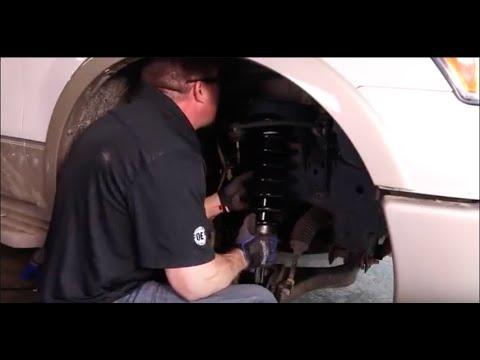
Step 4: Remove the front shock/strut assembly
- Use a 21mm socket to remove the front wheel.
- Use a 21mm socket and breaker bar to loosen the lower strut-to-knuckle bolts.
- Use a 15mm socket to remove the upper strut mount nuts from the engine bay.
- Carefully remove the strut assembly from the truck.
- Do not loosen the spring itself.
Step 5: Install the front shock/strut assembly
- Set the new strut assembly into place by hand.
- Install the upper mount nuts finger-tight first.
- Align the lower holes and install the lower bolts.
- Tighten everything with a torque wrench.
- Torque to 175 Nm (129 ft-lbs) for the lower strut-to-knuckle bolts.
- Torque to 25 Nm (18 ft-lbs) for the upper strut mount nuts.
Step 6: Reassemble and repeat on the other side
- Reinstall the wheels with a 21mm socket if removed.
- Lower the truck off the jack stands with the floor jack.
- Tighten the lug nuts with a torque wrench.
- Torque to 204 Nm (150 ft-lbs) for the wheel lug nuts.
- Repeat the full process on the opposite side.
✅ After Repair
- Start the truck and listen for clunks or rubbing.
- Drive slowly at first and check that the ride feels stable.
- Inspect all shock mounts again after the test drive.
- Get a front-end alignment if you replaced the front struts or notice steering pull.
💰 DIY vs Shop Cost
Shop Cost: $500-$1,200 (parts + labor)
DIY Cost: $180-$500 (parts only)
You Save: $320-$700 by doing it yourself!
Shop labor rates vary but typically run $100-$150/hour. This repair takes a shop approximately 3-5 hours.
🎯 Ready to get started?
HowToo makes it easy: same-day/2-day shipping on every part, plus all the tools and specialty tools you need! Check out the parts and tools sections below to add everything to your cart.