









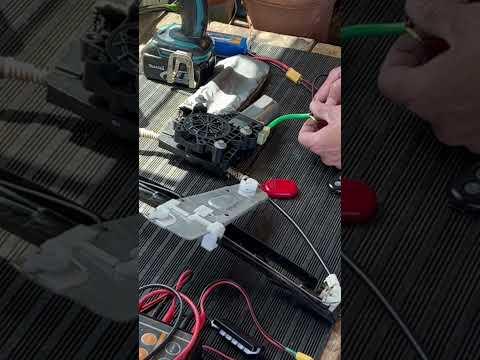





How to Replace Rear Window Regulators on a 2017 Toyota Tacoma
Step-by-step DIY rear door window regulator and motor replacement with tools, parts list, torque specs, and safety tips for 2005, 2006, 2007, 2008, 2009, 2010, 2011, 2012, 2013, 2014, 2015, 2016, 2017, 2018
How to Replace Rear Window Regulators on a 2017 Toyota Tacoma
Step-by-step DIY rear door window regulator and motor replacement with tools, parts list, torque specs, and safety tips for 2005, 2006, 2007, 2008, 2009, 2010, 2011, 2012, 2013, 2014, 2015, 2016, 2017, 2018


🔧 Tacoma - Rear Window Regulator Replacement
You’ll be removing the rear door trim panel, unbolting the glass, and swapping out the window regulator and motor assembly on your Tacoma. This restores smooth up/down movement when the window is slow, stuck, or making grinding noises.
Difficulty Level: Intermediate | Estimated Time: 1.5–2.5 hours per side
⚠️ Safety & Precautions
- ⚠️ Disconnect the negative battery terminal before starting to avoid accidental window movement and to protect electronics.
- ⚠️ Rear doors have wiring for power locks and windows; avoid pulling hard on the door panel to prevent breaking connectors.
- ⚠️ Use tape to support the glass once unbolted so it does not drop and shatter.
- ⚠️ Work with the truck on level ground and keep the parking brake firmly set.
- ⚠️ Wear safety glasses and gloves; door edges and inner metal can be very sharp.
🔧 Required Tools
You'll need the following tools for this repair:
- 🧰 10mm socket
- 🧰 12mm socket
- 🧰 1/4" drive ratchet
- 🧰 3/8" drive ratchet
- 🧰 3" socket extension
- 🧰 Phillips #2 screwdriver
- 🧰 Flathead screwdriver (small)
- 🧰 Trim removal tool set (plastic)
- 🧰 Panel clip pliers (specialty)
- 🧰 Needle-nose pliers
- 🧰 Torque wrench (inch-lb and ft-lb capable)
- 🧰 Razor blade or plastic scraper
- 🧰 Masking tape (1" or 2")
- 🧰 Shop light or headlamp
- 🧰 Mechanic gloves
- 🧰 Safety glasses
🔩 Required Parts
HowToo sells all the parts you need for this repair:
- 🧱 Rear left window regulator with motor (power) - Qty: 1
- 🧱 Rear right window regulator with motor (power) - Qty: 1
- 🧱 Rear door moisture barrier butyl tape/sealer - Qty: 1 roll
- 🧱 Rear door panel push clips - Qty: 10–15 (have spares)
- 🧱 Masking tape - Qty: 1 roll
- 🧱 Dielectric grease (for electrical connectors) - Qty: small tube
📋 Before You Begin
- Park your Tacoma on level ground, set the parking brake, and open the rear door you’re working on fully.
- Lower the rear window until it is about halfway down if it still moves; this helps access the glass bolts later.
- Turn ignition OFF and remove the key.
- Disconnect the negative battery terminal using a 10mm socket and move the cable aside so it cannot accidentally touch.
- Lay a clean towel on the door sill to avoid scratching paint with tools or the door panel.
🔨 Step-by-Step Instructions
Follow these steps in order:
Step 1: Remove rear door trim panel
- Use the trim removal tool set (plastic) to gently pry off the small cover behind the interior door handle to expose a screw.
- Use a Phillips #2 screwdriver to remove the screw behind the interior handle.
- Remove any screw in the armrest/door pull pocket using the Phillips #2 screwdriver (look at the bottom of the pocket).
- Starting at the bottom edge of the door, slide a trim removal tool between the door panel and metal and gently pop out each plastic clip. Work around the door slowly.
- Once clips are loose, lift the door panel straight up and off the window ledge using your hands.
- Support the panel and disconnect the window switch connector by pressing the tab and pulling it off with your fingers or needle-nose pliers if tight.
- Set the door panel somewhere safe where it won’t get stepped on or scratched.
Step 2: Remove the moisture barrier
- The moisture barrier is the plastic sheet stuck to the inner door using a sticky sealant called butyl.
- Carefully peel back the plastic using your hands; use a razor blade or plastic scraper to cut the butyl if it stretches too much.
- Peel it back enough to access the large opening where you can see the window regulator and glass clamps. Try to keep the plastic intact to reuse it.
- Keep the sticky side of the plastic clean; fold it upward and tape it to the door frame with masking tape.
Step 3: Secure the glass
- If the window still moves, reconnect the window switch briefly (battery still disconnected), reconnect the battery negative with a 10mm socket, move window to where you can see the glass clamp bolts through the access holes, then disconnect battery again and remove the switch.
- Once the glass is in position, place several strips of masking tape from the outside of the glass up over the top of the door frame and down the inside to hold the glass up. Use at least 4–6 strips.
Step 4: Unbolt the glass from the regulator
- Look through the large opening to find the two clamps holding the bottom edge of the glass.
- Use a 10mm socket and 1/4" drive ratchet to loosen and remove the two glass bolts. Do not drop them inside the door.
- Gently push the glass up by hand to the fully closed position and add extra masking tape over the top edge to secure it firmly to the door frame.
Step 5: Disconnect the window motor and regulator
- Locate the power connector going to the window motor inside the door.
- Press the locking tab and unplug the connector by hand or with needle-nose pliers if needed.
- Trace the regulator arms and mounting points; typically there are several 10mm or 12mm bolts holding the regulator and the motor to the inner door panel.
Step 6: Remove the regulator and motor assembly
- Use a 10mm socket or 12mm socket on a 1/4" drive ratchet to remove the bolts holding the regulator track and motor to the door. There are usually 5–7 bolts total.
- Keep one hand under the regulator so it does not fall when you remove the last bolts.
- Carefully maneuver the regulator and motor assembly out through the large opening in the inner door. Rotate it as needed to clear the opening. Take your time and don’t force it.
Step 7: Transfer any needed hardware to the new regulator
- Compare the old regulator to the new one on a bench or table.
- If any brackets, clips, or rubber pieces are on the old one but not pre-installed on the new one, transfer them over using a Phillips #2 screwdriver or 10mm socket as needed.
- If the motor is separate from the regulator and being reused, remove the motor bolts with a 10mm socket and install the motor on the new regulator. Torque to 7 Nm (62 in-lb).
Step 8: Install the new regulator and motor
- Feed the new regulator and motor assembly into the door through the same opening, positioning it like the original.
- Install the mounting bolts by hand first to avoid cross-threading.
- Use a 10mm socket or 12mm socket with a 1/4" drive ratchet to snug all regulator and motor bolts.
- Then use a torque wrench with the same sockets to tighten all regulator and motor bolts to 7–9 Nm (62–80 in-lb). Do not overtighten; threads strip easily.
- Reconnect the motor electrical connector and apply a small dab of dielectric grease to the terminals if available.
Step 9: Reattach the glass to the regulator
- Carefully remove some of the top masking tape so you can lower the glass slightly by hand while still controlling it.
- Guide the glass down into the new regulator clamps. Make sure the glass sits evenly in both clamps.
- Install the glass bolts by hand, then tighten them with a 10mm socket and 1/4" drive ratchet.
- Use a torque wrench and 10mm socket to tighten the glass bolts to 13 Nm (9 ft-lb). Just snug plus a bit, not gorilla tight.
- Remove the remaining tape from the outside of the glass and door frame.
Step 10: Test window operation
- Temporarily reconnect the window switch to the door harness.
- Reconnect the negative battery terminal using a 10mm socket.
- Turn the ignition to ON (engine not required) and run the window up and down several times using the switch to ensure smooth movement and no noises.
- If the window binds or makes clicking sounds, stop immediately and check that the glass is properly seated and clamps are tight and even.
- Turn ignition OFF and disconnect the negative battery terminal again before reassembly.
Step 11: Reinstall the moisture barrier
- Peel the plastic moisture barrier down from where you taped it earlier.
- If the old butyl is still sticky and clean, press the plastic back into place by hand.
- If it is not sticking well, apply fresh moisture barrier butyl tape/sealer around the edges and press the plastic firmly into it using your fingers.
- Ensure all openings are sealed to keep water out of the interior.
Step 12: Reinstall the door trim panel
- Reconnect the window switch and any other connectors to the door panel.
- Hook the top of the door panel over the window ledge first, aligning it with the door frame.
- Once the top edge is seated, press along the sides and bottom of the panel to engage all the clips with your hands. You should hear them snap in.
- Reinstall the screws in the armrest/door pull pocket and behind the interior handle using a Phillips #2 screwdriver. Torque to 2–3 Nm (18–27 in-lb) (snug only).
- Snap the small cover back over the screw behind the interior handle by hand.
- Reconnect the negative battery terminal with a 10mm socket.
✅ After Repair
- Turn ignition to ON and test the rear window from both the rear door switch and the driver’s master switch.
- Listen for smooth, even movement with no grinding or popping noises.
- Confirm the window seals properly when fully closed and that there are no wind whistles when driving.
- Check that the rear door locks and handles still work normally from inside and outside.
- After a short drive in rain or after washing, check the rear door interior for any signs of water leaks.
💰 DIY vs Shop Cost
Shop Cost: $450–$650 per side (parts + labor)
DIY Cost: $120–$220 per side (parts only)
You Save: $330–$430 per side by doing it yourself!
Shop labor rates vary but typically run $100–$150/hour. This repair takes a shop approximately 1.0–1.5 hours per side.
🎯 Ready to get started?
HowToo makes it easy: same-day/2-day shipping on every part, plus all the tools and specialty tools you need! Check out the parts and tools sections above to add everything to your cart.