









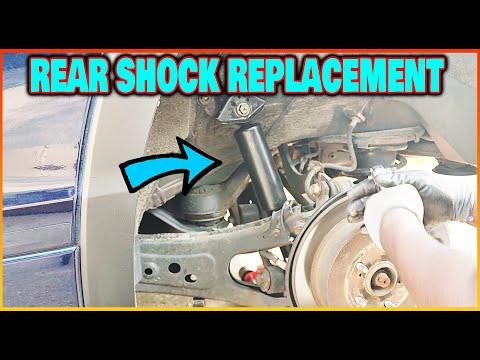






How to Replace Rear Shock Absorbers on a 2016 Toyota Highlander
Step-by-step instructions with tools, parts, torque specs, and safety tips for 2014, 2015, 2016, 2017, 2018, 2019
How to Replace Rear Shock Absorbers on a 2016 Toyota Highlander
Step-by-step instructions with tools, parts, torque specs, and safety tips for 2014, 2015, 2016, 2017, 2018, 2019


🔧 Rear Shock Absorbers - Replacement
On your Highlander, the rear shock absorbers are separate from the front struts, so this job covers the rear only. You’ll remove each rear shock, transfer any mount hardware if needed, and install the new shocks with the suspension at normal ride height as much as possible.
Assumption: Rear shock absorber replacement on both sides.
Difficulty Level: Intermediate | Estimated Time: 2-3 hours
⚠️ Safety & Precautions
- Support the vehicle with jack stands; never rely on a floor jack alone.
- Keep hands clear of the suspension while lowering or raising the vehicle.
- If your Highlander has an electronic parking brake, make sure it is fully released before lifting.
- Use extra caution around the rear brake hose and ABS wiring near the shock area.
- No battery disconnect is required for this repair.
🔧 Required Tools
You'll need the following tools for this repair:
- Floor jack (rated 3-ton minimum)
- Jack stands (rated for vehicle weight)
- Wheel chocks
- 21mm socket
- 14mm socket
- 17mm socket
- 3/8-inch drive ratchet
- 1/2-inch drive ratchet
- Breaker bar
- Torque wrench
- Penetrating oil
- Trim clip removal tool
- Flat-blade screwdriver
- Safety glasses
- Mechanic gloves
🔩 Required Parts
HowToo sells all the parts you need for this repair:
- Rear shock absorber - Qty: 2
- Rear shock upper mount hardware kit - Qty: 1
- Rear shock lower mounting bolt and nut kit - Qty: 1
📋 Before You Begin
- Park on level ground, shift to Park, and set the parking brake.
- Chock the front wheels before lifting the rear.
- Loosen the rear wheel lug nuts slightly before raising the vehicle.
- If rust is present, spray the shock bolts and nuts with penetrating oil and let it soak.
- Replace shocks in pairs to keep ride quality balanced.
🔨 Step-by-Step Instructions
Follow these steps in order:
Step 1: Raise and support the rear of the vehicle
- Use the floor jack to lift the rear of the Highlander at the approved lift point.
- Place jack stands under the rear support points and lower the vehicle onto them.
- Remove both rear wheels using the 21mm socket.
Step 2: Access the upper shock mount
- Open the rear cargo area and remove the side trim access panel on the shock side using a trim clip removal tool and flat-blade screwdriver.
- Expose the top shock mounting nuts.
- Keep hardware organized.
Step 3: Remove the lower shock bolt
- Support the rear suspension lightly with the floor jack so the shock is not under load.
- Use the 17mm socket and breaker bar to remove the lower shock bolt and nut.
- Torque on reassembly: 87 Nm (64 ft-lbs)
Step 4: Remove the upper shock nuts
- Use the 14mm socket to remove the upper shock mount nuts.
- Lower the shock out of the wheel well once all fasteners are free.
- Torque on reassembly: 25 Nm (18 ft-lbs)
Step 5: Install the new shock absorber
- Position the new shock in place by hand.
- Start the upper nuts first using the 14mm socket, but do not fully tighten yet.
- Align the lower mount and install the lower bolt and nut with the 17mm socket.
- Tighten the lower fastener first, then the upper nuts.
- Torque the lower bolt to 87 Nm (64 ft-lbs)
- Torque the upper nuts to 25 Nm (18 ft-lbs)
- Snug everything before final torque.
Step 6: Reinstall trim and wheels
- Reinstall the cargo-area trim panel.
- Mount the rear wheels and tighten the lug nuts by hand using the 21mm socket.
- Lower the vehicle and torque the lug nuts to 103 Nm (76 ft-lbs) with a torque wrench.
✅ After Repair
- Bounce each rear corner once to confirm normal movement.
- Test drive slowly over small bumps and listen for clunks.
- Recheck the shock fasteners and wheel lug nuts after the test drive.
- If the vehicle pulls, feels unstable, or makes noise, stop and inspect the mount hardware again.
💰 DIY vs Shop Cost
Shop Cost: $450-$900 (parts + labor)
DIY Cost: $180-$420 (parts only)
You Save: $270-$480 by doing it yourself!
Shop labor rates vary but typically run $100-$150/hour. This repair takes a shop approximately 2-3 hours.
🎯 Ready to get started?
HowToo makes it easy: same-day/2-day shipping on every part, plus all the tools and specialty tools you need! Check out the parts and tools sections below to add everything to your cart.