









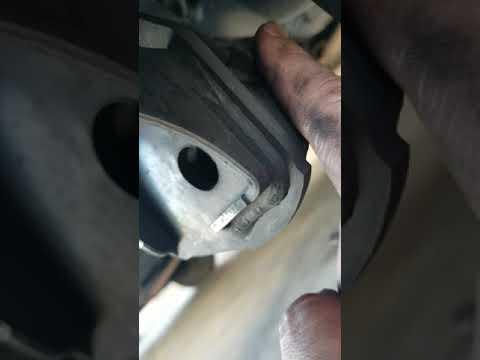






How to Replace Rear Shock Absorbers on a 2006-2018 Toyota RAV4 (Trim: Hybrid SE | Engine: Inline 4 2.5L)
Step-by-step instructions with tools, parts, torque specs, and safety tips
How to Replace Rear Shock Absorbers on a 2006-2018 Toyota RAV4 (Trim: Hybrid SE | Engine: Inline 4 2.5L)
Step-by-step instructions with tools, parts, torque specs, and safety tips for 2006, 2007, 2008


🔧 Rear Shock Absorbers - Replacement
Assumption: This procedure covers the rear shock absorbers only. On your RAV4, the front suspension uses struts, not shocks.
The rear shocks control bounce and keep the tires planted. Replacing them in pairs restores ride quality and handling. This job is straightforward for a beginner if you work safely and support the suspension correctly.
Difficulty Level: Beginner | Estimated Time: 1.5-3 hours
⚠️ Safety & Precautions
- Work on level ground with the parking brake set and the front wheels chocked.
- Lift one rear corner at a time and support the vehicle with jack stands. Never rely on a jack alone.
- Keep your hands clear of the suspension while lowering or raising the control arm.
- No hybrid high-voltage disconnect is required for rear shock replacement.
- Wear safety glasses and gloves. Rust and road debris may fall when bolts are removed.
🔧 Required Tools
You'll need the following tools for this repair:
- Floor jack (rated 3-ton minimum)
- Jack stands (rated for vehicle weight)
- Wheel chocks
- 21mm socket
- 17mm socket
- 14mm socket
- Ratchet
- Breaker bar
- Torque wrench
- Penetrating oil
- Trim panel tool
- Safety glasses
- Mechanic gloves
🔩 Required Parts
HowToo sells all the parts you need for this repair:
- Rear shock absorbers - Replace in pairs - Qty: 2
- Rear shock upper mounting nuts - Qty: 4
- Rear shock lower mounting bolts - Qty: 2
- Rear shock upper bushings and insulators - Qty: 2
📋 Before You Begin
- Park on a flat surface and set the parking brake.
- Loosen the rear wheel lug nuts slightly before lifting the vehicle.
- If the upper shock mounts are behind interior trim, move cargo trim panels out of the way first.
- Spray the lower shock bolt with penetrating oil if it looks rusty.
- Replace shocks in pairs for balanced handling.
🔨 Step-by-Step Instructions
Follow these steps in order:
Step 1: Lift and support the rear of the vehicle
- Use a floor jack to lift the rear of the vehicle at the proper lift point.
- Place jack stands under the rear support points and lower the vehicle onto them.
- Keep the floor jack lightly supporting the suspension if needed.
Step 2: Remove the rear wheel
- Use a 21mm socket to remove the lug nuts.
- Take off the wheel and set it aside.
Step 3: Access the upper shock mount
- Open the cargo area and remove any trim panels covering the upper shock mount.
- Use a trim panel tool to gently pop loose the clips.
- Locate the upper shock nuts.
Step 4: Support the suspension
- Place the floor jack under the rear suspension arm to hold it in a neutral position.
- Keep the arm from dropping suddenly.
Step 5: Remove the lower shock bolt
- Use a 17mm socket and breaker bar to remove the lower shock bolt.
- If the bolt sticks, apply more penetrating oil and work it back and forth.
Step 6: Remove the upper shock nuts
- Use a 14mm socket to remove the upper mounting nuts.
- Hold the shock body by hand as the last nut comes off so it does not fall.
Step 7: Remove the old shock absorber
- Lower the suspension arm slightly with the floor jack if needed.
- Slide the old shock out of the wheel well.
- Compare the new part to the old one before installing it.
Step 8: Install the new shock absorber
- Position the new shock in place and start the upper nuts by hand using a 14mm socket.
- Install the lower bolt by hand first with the 17mm socket.
- Tighten the fasteners evenly.
Step 9: Torque the shock fasteners
- Use a torque wrench to tighten the lower shock bolt to 80 Nm (59 ft-lbs).
- Use a torque wrench to tighten the upper shock nuts to 25 Nm (18 ft-lbs).
- Do not overtighten the upper nuts.
Step 10: Reinstall the wheel
- Put the wheel back on and thread the lug nuts by hand.
- Lower the vehicle enough to keep the wheel from spinning, then use a 21mm socket to snug the lug nuts.
- Torque the lug nuts to 103 Nm (76 ft-lbs) with a torque wrench.
Step 11: Repeat on the other side
- Replace the opposite rear shock using the same steps.
- Always replace shocks in pairs.
✅ After Repair
- Check that all fasteners are torqued and the trim panels are reinstalled.
- Start the vehicle and road test at low speed first.
- Listen for clunks, squeaks, or rattles over bumps.
- Recheck lug nut torque after the first short drive.
- If the ride still feels unstable, have the rear suspension inspected for worn bushings or links.
💰 DIY vs Shop Cost
Shop Cost: ₹10,000-₹22,000 (parts + labor)
DIY Cost: ₹4,000-₹12,000 (parts only)
You Save: ₹6,000-₹10,000 by doing it yourself!
Shop labor rates vary but typically run ₹1,500-₹4,000/hour. This repair takes a shop approximately 1.5-3 hours.
🎯 Ready to get started?
HowToo makes it easy: same-day/2-day shipping on every part, plus all the tools and specialty tools you need! Check out the parts and tools sections below to add everything to your cart.
Guide for Suspension Shock Absorber replace for these Toyota vehicles
| Year Make Model | Sub Model | Engine | Body Style |
|---|---|---|---|
| 2018 Toyota RAV4 | Limited | Inline 4 2.5L | - |
| 2018 Toyota RAV4 | LE | Inline 4 2.5L | - |
| 2018 Toyota RAV4 | XLE | Inline 4 2.5L | - |
| 2018 Toyota RAV4 | Hybrid Limited | Inline 4 2.5L | - |
| 2018 Toyota RAV4 | Hybrid XLE | Inline 4 2.5L | - |
| 2018 Toyota RAV4 | SE | Inline 4 2.5L | - |
| 2018 Toyota RAV4 | Hybrid SE | Inline 4 2.5L | - |
| 2018 Toyota RAV4 | Platinum | Inline 4 2.5L | - |
| 2018 Toyota RAV4 | Adventure | Inline 4 2.5L | - |
| 2017 Toyota RAV4 | Limited | Inline 4 2.5L | - |
| 2017 Toyota RAV4 | LE | Inline 4 2.5L | - |
| 2017 Toyota RAV4 | XLE | Inline 4 2.5L | - |
| 2017 Toyota RAV4 | Hybrid Limited | Inline 4 2.5L | - |
| 2017 Toyota RAV4 | Hybrid XLE | Inline 4 2.5L | - |
| 2017 Toyota RAV4 | SE | Inline 4 2.5L | - |
| 2017 Toyota RAV4 | Hybrid SE | Inline 4 2.5L | - |
| 2017 Toyota RAV4 | Platinum | Inline 4 2.5L | - |
| 2016 Toyota RAV4 | Limited | Inline 4 2.5L | - |
| 2016 Toyota RAV4 | LE | Inline 4 2.5L | - |
| 2016 Toyota RAV4 | XLE | Inline 4 2.5L | - |
| 2016 Toyota RAV4 | Hybrid Limited | Inline 4 2.5L | - |
| 2016 Toyota RAV4 | Hybrid XLE | Inline 4 2.5L | - |
| 2016 Toyota RAV4 | SE | Inline 4 2.5L | - |
| 2015 Toyota RAV4 | Limited | Inline 4 2.5L | - |
| 2015 Toyota RAV4 | LE | Inline 4 2.5L | - |
| 2015 Toyota RAV4 | XLE | Inline 4 2.5L | - |
| 2014 Toyota RAV4 | Limited | Inline 4 2.5L | - |
| 2014 Toyota RAV4 | LE | Inline 4 2.5L | - |
| 2014 Toyota RAV4 | XLE | Inline 4 2.5L | - |
| 2013 Toyota RAV4 | Limited | Inline 4 2.5L | - |
| 2013 Toyota RAV4 | LE | Inline 4 2.5L | - |
| 2013 Toyota RAV4 | XLE | Inline 4 2.5L | - |
| 2012 Toyota RAV4 | Limited | V6 3.5L | - |
| 2012 Toyota RAV4 | Limited | Inline 4 2.5L | - |
| 2011 Toyota RAV4 | Limited | V6 3.5L | - |
| 2011 Toyota RAV4 | Limited | Inline 4 2.5L | - |
| 2010 Toyota RAV4 | Limited | V6 3.5L | - |
| 2010 Toyota RAV4 | Limited | Inline 4 2.5L | - |
| 2009 Toyota RAV4 | Limited | V6 3.5L | - |
| 2009 Toyota RAV4 | Limited | Inline 4 2.5L | - |
| 2008 Toyota RAV4 | Limited | Inline 4 2.4L | - |
| 2008 Toyota RAV4 | Limited | V6 3.5L | - |
| 2007 Toyota RAV4 | Limited | Inline 4 2.4L | - |
| 2007 Toyota RAV4 | Limited | V6 3.5L | - |
| 2006 Toyota RAV4 | Limited | Inline 4 2.4L | - |
| 2006 Toyota RAV4 | Limited | V6 3.5L | - |