














How to Replace Rear Drum Brakes on a 2016-2018 Toyota Yaris (Trim: L)
Step-by-step repair guide with tools, parts, torque specs, and safety tips
How to Replace Rear Drum Brakes on a 2016-2018 Toyota Yaris (Trim: L)
Step-by-step repair guide with tools, parts, torque specs, and safety tips for 2016, 2017, 2018


🔧 Rear Brake Service - Inspection and Drum Brake Replacement
Assumption: Your Yaris L hatchback uses rear drum brakes, not rear rotors. On this trim, the rear “brake and rotor” job is a rear drum brake service, so the rotor step does not apply.
Rear brake wear on this setup usually means replacing the shoes, hardware, and sometimes the wheel cylinders if there is a leak. This repair restores braking performance and prevents noise, pulling, and poor parking brake function.
Difficulty Level: Intermediate | Estimated Time: 2-4 hours
⚠️ Safety & Precautions
- Brake dust can be harmful. Do not blow it off with compressed air.
- Use jack stands. Never work under a vehicle supported only by a jack.
- Do not press the brake pedal with a drum removed unless needed for diagnosis.
- If the parking brake is stuck or poorly adjusted, fix that before driving.
- Brake fluid can damage paint. Wipe spills immediately.
- Battery disconnect is not required for this repair.
🔧 Required Tools
You'll need the following tools for this repair:
- Floor jack (rated 3-ton minimum)
- Jack stands
- Wheel chocks
- 21mm lug wrench
- 10mm wrench
- 12mm socket
- 14mm socket
- Ratchet
- Torque wrench
- Flat-blade screwdriver
- Brake spring tool (specialty)
- Needle-nose pliers
- Brake cleaner
- Drain pan
- Safety glasses
- Nitrile gloves
🔩 Required Parts
HowToo sells all the parts you need for this repair:
- Rear brake shoe set - Qty: 1 set
- Rear drum hardware kit - Qty: 1 set
- Rear wheel cylinders - Qty: 2, replace in pairs if leaking or sticking
- Rear brake drums - Qty: 2, if worn or scored
- Brake cleaner - Qty: 1 can
- Brake fluid - Qty: as needed
📋 Before You Begin
- Park on level ground and engage the parking brake.
- Loosen the rear lug nuts before lifting the vehicle.
- Chock the front wheels.
- Release the parking brake before removing the drums.
- If the drum will not come off, back off the shoe adjuster through the access slot.
🔨 Step-by-Step Instructions
Follow these steps in order:
Step 1: Loosen and lift the rear of the vehicle
- Use the 21mm lug wrench to loosen both rear wheel nuts a little before lifting.
- Use the floor jack to raise the rear of the vehicle at the approved center lift point.
- Place jack stands under the rear support points and lower the vehicle onto them.
- Remove the rear wheels.
Step 2: Remove the brake drum
- Pull the drum straight off by hand first.
- If it is stuck, use a flat-blade screwdriver through the adjuster slot to back off the shoes.
- Tap lightly. Do not crack the drum.
Step 3: Inspect the drum brake assembly
- Use a bright light to inspect the shoes, springs, adjuster, and wheel cylinder.
- Look for fluid leaks, uneven wear, broken springs, or heat damage.
- If the wheel cylinder is wet or rusty, replace it.
Step 4: Remove the old brake shoes and hardware
- Use the brake spring tool and needle-nose pliers to remove the return springs and hold-down hardware.
- Remove the shoes, adjuster, and parking brake lever assembly.
- Keep the left and right sides organized so the new parts go back the same way.
Step 5: Replace the wheel cylinder if needed
- Place a drain pan under the backing plate.
- Use the 10mm wrench and 12mm socket to disconnect the brake line and wheel cylinder bolts.
- Install the new wheel cylinder and snug the bolts.
- Torque to 12 Nm (106 in-lbs).
- Reconnect the brake line carefully and do not cross-thread it.
Step 6: Install the new shoes and hardware
- Use the old parts as a guide and install the new parking brake lever, adjuster, springs, and hold-down pins.
- Use the brake spring tool to install the return springs safely.
- Make sure the shoes sit correctly against the anchor points.
- Compare both sides before closing up.
Step 7: Clean and reinstall the drum
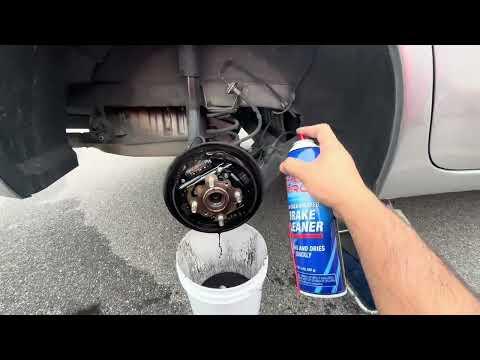
- Use brake cleaner to clean the drum and backing plate contact areas.
- Install the drum over the shoes.
- If the drum is tight, back off the adjuster slightly until it slides on.
Step 8: Reinstall wheels and torque hardware
- Install the rear wheels by hand.
- Use the 21mm lug wrench to snug the lug nuts.
- Lower the vehicle with the floor jack.
- Use a torque wrench to tighten the lug nuts in a star pattern.
- Torque to 103 Nm (76 ft-lbs).
Step 9: Adjust the rear brakes
- Use the flat-blade screwdriver to fine-tune the adjuster through the access slot.
- Set the shoes so the drum has a slight, even drag when turned by hand.
- Adjust both sides evenly.
✅ After Repair
- Press the brake pedal several times before moving the vehicle.
- Check brake fluid level and top off if needed.
- Test the parking brake on a safe incline.
- Listen for scraping or dragging during the first drive.
- If the pedal feels soft, bleed the rear brakes.
💰 DIY vs Shop Cost
Shop Cost: $350-$650 (parts + labor)
DIY Cost: $90-$220 (parts only)
You Save: $260-$430 by doing it yourself!
Shop labor rates vary but typically run $100-$150/hour. This repair takes a shop approximately 2-4 hours.
🎯 Ready to get started?
HowToo makes it easy: same-day/2-day shipping on every part, plus all the tools and specialty tools you need! Check out the parts and tools sections below to add everything to your cart.