









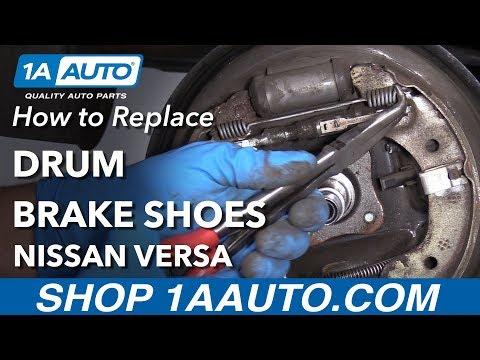






How to Replace Rear Brake Shoes & Drums on a 2019 Nissan Kicks (Rear Brake Service)
Step-by-step DIY rear drum brake guide with required tools, parts list, adjustment tips, and lug-nut torque specs for 2018, 2019, 2020, 2021, 2022, 2023, 2024
How to Replace Rear Brake Shoes & Drums on a 2019 Nissan Kicks (Rear Brake Service)
Step-by-step DIY rear drum brake guide with required tools, parts list, adjustment tips, and lug-nut torque specs for 2018, 2019, 2020, 2021, 2022, 2023, 2024


🔧 Kicks - Rear Brake Service (Shoes & Drums)
On your Kicks, the rear brakes are typically drum brakes (they use brake shoes and a brake drum, not pads and rotors). This job replaces the rear shoes and drums, then adjusts them so the pedal feels normal and the parking brake works correctly.
Difficulty Level: Intermediate | Estimated Time: 2-4 hours
Quick check: If you see a flat “rotor” and a caliper at the rear wheel, you have rear discs—tell me and I’ll give you the rear pad/rotor procedure for your Kicks. If you see a closed “drum” with no caliper, follow the steps below.
⚠️ Safety & Precautions
- Work on level ground and chock the front wheels so the car cannot roll.
- Release the parking brake before removing rear drums (parking brake holds the shoes outward).
- Brake dust is unhealthy—wear a mask and use brake cleaner, not compressed air.
- Support the vehicle with jack stands; never rely on a floor jack alone.
- Do one side at a time so you can copy spring/layout from the other side.
🔧 Required Tools
You'll need the following tools for this repair:
- Floor jack (rated 2-ton minimum)
- Jack stands (rated 2-ton minimum)
- Wheel chocks
- 19mm socket
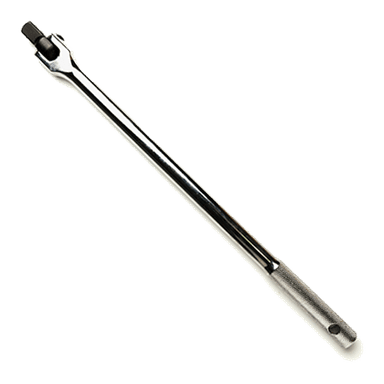
- Breaker bar (1/2-inch drive)
- Torque wrench (10–150 ft-lbs range)
- Flathead screwdriver (medium)
- Needle-nose pliers
- Brake spring pliers (specialty)
- Brake adjuster spoon (specialty)
- Dead-blow hammer
- Safety glasses
- Nitrile gloves
- Dust mask
🔩 Required Parts
HowToo sells all the parts you need for this repair:
- Rear brake shoe set - Qty: 1
- Rear brake drums - Qty: 2
- Rear brake hardware kit (springs/hold-downs/adjuster parts) - Qty: 1
- Brake cleaner - Qty: 1-2 cans
- High-temp brake grease - Qty: 1
📋 Before You Begin
- Park on level ground, shift to P, and place wheel chocks at the front tires.
- Make sure the parking brake is fully released.
- Loosen rear wheel lug nuts slightly before lifting the vehicle (do not remove them yet).
- Take a photo before removing springs.
🔨 Step-by-Step Instructions
Follow these steps in order:
Step 1: Lift the rear and remove the wheels
- Use a breaker bar (1/2-inch drive) with a 19mm socket to loosen the lug nuts 1/2 turn.
- Lift the rear using a floor jack at the correct rear jacking point, then support with jack stands.
- Remove the lug nuts with the 19mm socket and remove both rear wheels.
Step 2: Remove the brake drum
- Pull the drum straight off by hand.
- If it’s stuck, tap around the drum face with a dead-blow hammer.
- If the drum won’t come off because the shoes are hanging up, use a flathead screwdriver (medium) through the backing-plate access slot to back off the star-wheel adjuster (the “star wheel” is the toothed adjuster that spreads the shoes).
Step 3: Inspect and document the layout
- Spray the assembly with brake cleaner and let it drip dry.
- Take a clear photo of the springs, adjuster, and lever positions (left and right can be different).
Step 4: Remove springs and shoes (one side at a time)
- Remove the return springs using brake spring pliers (specialty). (These pliers are shaped to safely unhook strong brake springs.)
- Remove the shoe hold-downs using needle-nose pliers (hold-downs are the pins/caps that keep each shoe against the backing plate).
- Lift off the shoes and remove the adjuster assembly; keep parts oriented as removed.
Step 5: Clean and lubricate contact points
- Clean the backing plate and hardware area with brake cleaner.
- Apply a thin film of high-temp brake grease to the backing-plate “shoe pads” (the small raised spots where the shoes rub).
- Do not get grease on shoe friction material or inside the drum surface.
Step 6: Install the new shoes and hardware
- Match the new shoes to the old ones, then install them in the same positions.
- Install the hold-down pins/springs using needle-nose pliers.
- Reinstall the adjuster and springs using brake spring pliers (specialty).
- If it doesn’t look identical to your photo, stop and re-check.
Step 7: Adjust the shoes before installing the drum
- Turn the star wheel using a brake adjuster spoon (specialty) until the shoes just start to expand outward.
- Slide the drum on by hand; if it won’t go, back the adjuster off slightly with the brake adjuster spoon (specialty).
Step 8: Install the drum and fine-adjust
- With the drum installed, spin it by hand.
- Adjust through the access slot with a brake adjuster spoon (specialty) until you feel a very light, even drag while spinning.
Step 9: Reinstall wheels and torque lug nuts
- Reinstall the wheels and hand-thread the lug nuts.
- Lower the vehicle off the jack stands using the floor jack.
- Tighten lug nuts in a star pattern using a torque wrench: Torque to 113 Nm (83 ft-lbs).
✅ After Repair
- Press the brake pedal 10–15 times before driving (this centers the shoes).
- Test the parking brake: it should hold the car on a slight incline.
- Do a low-speed test drive and listen for grinding/scraping; mild rubbing can be normal right after adjustment.
- Recheck for even drag and proper adjustment if the pedal feels low or the parking brake travel is excessive.
💰 DIY vs Shop Cost
Shop Cost: ₹6,000-₹14,000 (parts + labor)
DIY Cost: ₹3,000-₹8,000 (parts only)
You Save: ₹3,000-₹6,000 by doing it yourself!
Local labor rates vary in Panipat, but many shops charge ₹800-₹1,500/hour. This repair takes a shop approximately 2-3 hours.
🎯 Ready to get started?
HowToo makes it easy: same-day/2-day shipping on every part, plus all the tools and specialty tools you need! Check out the parts and tools sections below to add everything to your cart.