









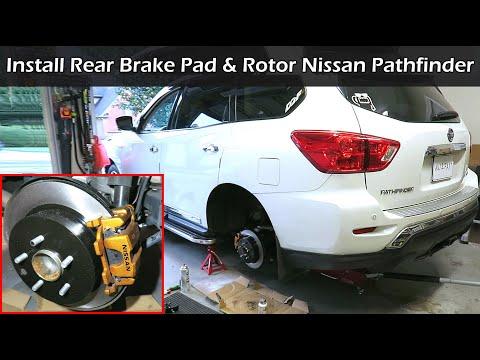







How to Replace Rear Brake Pads & Rotors on a 2018 Nissan Pathfinder
Step-by-step DIY guide with tools, parts list, EPB vs foot-pedal parking brake notes, and safety tips for 2013, 2014, 2015, 2016, 2017, 2018, 2019, 2020
How to Replace Rear Brake Pads & Rotors on a 2018 Nissan Pathfinder
Step-by-step DIY guide with tools, parts list, EPB vs foot-pedal parking brake notes, and safety tips for 2013, 2014, 2015, 2016, 2017, 2018, 2019, 2020


🔧 Pathfinder - Rear Brake Pads & Rotor Replacement
Replacing the rear brake pads and rotors on your Pathfinder means removing the rear calipers, swapping the rotors, and installing new pads (then verifying the parking brake and pedal feel). The one thing that changes the exact steps and torque specs is whether your Pathfinder uses an electronic parking brake (EPB) or a mechanical parking brake.
Difficulty Level: Intermediate | Estimated Time: 2-4 hours
⚠️ Safety & Precautions
- ⚠️ Support the vehicle with jack stands; never rely on a jack alone.
- ⚠️ Brakes can contain hazardous dust—use brake cleaner, don’t blow dust with compressed air.
- ⚠️ If equipped with EPB, the rear calipers must be put in service mode before pushing pistons back.
- ⚠️ Do not press the brake pedal with a caliper removed.
- ⚠️ Keep grease off rotor and pad friction surfaces.
🔧 Required Tools
You'll need the following tools for this repair:
- Floor jack (rated 3-ton minimum)
- Jack stands (rated 3-ton minimum)
- Wheel chocks
- Safety glasses
- Nitrile gloves
- Breaker bar (1/2")
- Torque wrench (20–200 ft-lbs range)
- Socket set (8mm–22mm, 3/8" and 1/2")
- Ratchet (3/8")
- Ratchet (1/2")
- Wrench set (10mm–19mm)
- C-clamp brake piston compressor
- Brake caliper hanger hook
- Flat trim tool
- Wire brush
- Rubber mallet
- Brake cleaner spray
- Small funnel
- Scan tool with EPB service mode (specialty)
🔩 Required Parts
HowToo sells all the parts you need for this repair:
- Rear brake pad set - Qty: 1
- Rear brake rotors - Qty: 2
- Brake pad hardware kit (clips/shims) - Qty: 1
- Brake caliper slide pin boot kit - Qty: 1 (if boots are torn)
- Brake lubricant (silicone or ceramic) - Qty: 1
- Threadlocker (medium strength) - Qty: 1 (if required by fasteners)
- DOT 3 brake fluid - Qty: 1 quart (top-off as needed)
📋 Before You Begin
- Park on level ground, turn the steering straight, and set the parking brake.
- Chock the front wheels with wheel chocks.
- Open the hood and locate the brake fluid reservoir; you’ll monitor fluid level while compressing pistons.
- If you have an EPB switch (electronic parking brake), plan to use a scan tool with EPB service mode (specialty) before piston compression.
🔨 Step-by-Step Instructions
Follow these steps in order:
Step 1: Confirm your parking brake type (needed for correct steps + torque specs)
- Look at your center console and lower dash area.
- If you have a parking brake button/switch, you likely have EPB (electronic parking brake).
- If you have a foot pedal parking brake, you have a mechanical parking brake.
- Please reply with: EPB switch or foot pedal.
Step 2: Confirm what you’re replacing
- Reply with: pads only or pads + rotors (most rotor replacements are done in pairs).
- Also confirm: both rear sides (recommended) or one side.
Step 3: Stop here to avoid damage
- I’ll give you the exact Pathfinder-specific procedure next (including Torque to XX Nm (YY ft-lbs) values) once you confirm EPB switch vs foot pedal.
- This prevents stripping bolts or EPB damage.
✅ After Repair
- After installation, pump the brake pedal until it feels firm before driving.
- Check the brake fluid level and top off with DOT 3 brake fluid as needed.
- Test brakes at low speed first, then recheck for leaks/noise.
- If equipped with EPB, exit service mode and confirm the parking brake applies/releases normally.
💰 DIY vs Shop Cost
Shop Cost: $450-$900 (parts + labor)
DIY Cost: $160-$450 (parts only)
You Save: $290-$450 by doing it yourself!
Shop labor rates vary but typically run $100-$150/hour. This repair takes a shop approximately 2-3 hours.
🎯 Ready to get started?
HowToo makes it easy: same-day/2-day shipping on every part, plus all the tools and specialty tools you need! Check out the parts and tools sections below to add everything to your cart.