









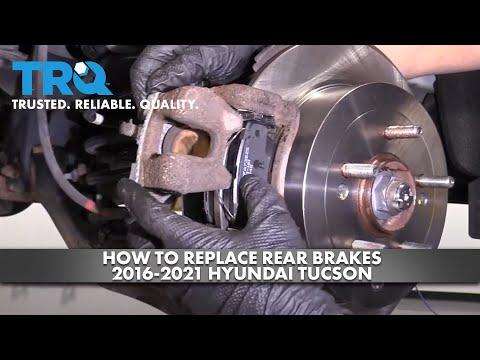







How to Replace Rear Brake Pads & Rotors on a 2018-2021 Hyundai Tucson (EPB/Cable)
Step-by-step DIY instructions, required tools/parts, parking brake service mode tips, and torque spec guidance
How to Replace Rear Brake Pads & Rotors on a 2018-2021 Hyundai Tucson (EPB/Cable)
Step-by-step DIY instructions, required tools/parts, parking brake service mode tips, and torque spec guidance for 2018, 2019, 2020, 2021


🔧 Tucson - Rear Brake Pads & Rotor Replacement
You’ll remove the rear wheels, take off the rear calipers and brackets, replace the pads and rotors, then reassemble and verify everything works correctly. The key is retracting the rear caliper piston the correct way for your parking brake type so you don’t damage the caliper.
Difficulty Level: Intermediate | Estimated Time: 2.5-4.5 hours
⚠️ Safety & Precautions
- ⚠️ Work on a flat surface; use jack stands—never rely on a jack.
- ⚠️ Let brakes cool fully; hot rotors can burn you.
- ⚠️ Do not press the brake pedal with a caliper removed.
- ⚠️ Brake dust is harmful—use brake cleaner, not compressed air.
- ⚠️ If your Tucson has an electronic parking brake (EPB), it must be placed into service mode before pushing the pistons back.
- ⚠️ Keep brake fluid off paint; it damages finishes quickly.
🔧 Required Tools
You'll need the following tools for this repair:
- Floor jack (rated 3-ton minimum)
- Jack stands (rated 3-ton minimum)
- Wheel chocks
- Safety glasses
- Nitrile gloves
- Breaker bar (1/2")
- Torque wrench (1/2")
- 21mm socket
- Ratchet (3/8")
- Ratchet (1/2")
- 14mm socket
- 17mm socket
- Torque bit set
- Phillips screwdriver #3
- Impact screwdriver (hand impact) (specialty)
- C-clamp (6")
- Disc brake piston rewind tool kit (specialty)
- Flat trim/pry tool
- Wire brush
- Rubber mallet
- Bungee cord
- Brake cleaner spray
- Small wire hook tool
🔩 Required Parts
HowToo sells all the parts you need for this repair:
- Rear brake pad set - Qty: 1
- Rear brake rotors - Qty: 2
- Rear pad hardware kit (clips/shims) - Qty: 1
- Brake caliper slide pin grease (silicone) - Qty: 1
- Brake cleaner - Qty: 1
- Brake fluid (DOT type as shown on reservoir cap) - Qty: 1
📋 Before You Begin
- Park on level ground, steering straight, transmission in P.
- Chock the front wheels with wheel chocks.
- Open the hood and locate the brake fluid reservoir so you can monitor the level while compressing pistons.
- If your Tucson has EPB (parking brake button/switch), plan to put it in service mode before piston retraction. If it has a foot pedal or hand lever parking brake, release it fully.
- Tip: Take one side apart at a time.
🔨 Step-by-Step Instructions
Follow these steps in order:
Step 1: Loosen lug nuts and lift the rear
- Use a 21mm socket and breaker bar (1/2") to loosen the rear lug nuts about 1 turn (do not remove yet).
- Use a floor jack (rated 3-ton minimum) to lift the rear at the approved rear jacking point.
- Set the vehicle on jack stands (rated 3-ton minimum) and lightly shake the vehicle to confirm it’s stable.
Step 2: Remove the rear wheels
- Remove the lug nuts with a 21mm socket and pull the wheels off.
Step 3: Identify your rear parking brake type (important)
- Look at the rear caliper: if there’s an electric motor bolted to it and your console has a P parking brake switch, you have EPB.
- If there’s a cable going to the caliper and the cabin uses a pedal/lever, it’s a cable parking brake.
- Tip: EPB pistons usually push straight in.
Step 4: Remove the caliper (pads still inside)
- Turn the steering slightly if needed for access (you’re working in the rear, so usually no need).
- Use a 14mm socket and ratchet (3/8") to remove the caliper slide pin bolts.
- Lift the caliper off the bracket. Support it with a bungee cord so it doesn’t hang by the hose.
Step 5: Remove old pads and pad hardware
- Pull the pads out by hand; use a flat trim/pry tool if they’re stuck.
- Remove the stainless hardware clips from the bracket.
- Clean the bracket pad “tracks” with a wire brush and spray with brake cleaner spray.
Step 6: Remove the caliper bracket
- Use a 17mm socket and ratchet (1/2") to remove the two caliper bracket bolts.
- Set the bracket aside.
- Torque to OEM specification on reassembly (use your Tucson’s service information).
Step 7: Remove the rotor
- If your rotor has retaining screws, remove them using a Phillips screwdriver #3 or a matching bit from your torque bit set.
- If the screw is stuck, use an impact screwdriver (hand impact) (specialty) to break it loose.
- Pull the rotor off. If it’s seized, tap around the rotor hat with a rubber mallet and remove.
Step 8: Prep the hub and install the new rotor
- Clean the hub face with a wire brush so the new rotor sits flat (prevents brake shake).
- Spray the new rotor friction surfaces with brake cleaner spray and wipe clean.
- Install the rotor. If your rotor uses retaining screws, reinstall them using a Phillips screwdriver #3 and snug them (they’re not what holds the wheel on).
Step 9: Retract the rear caliper piston (two different methods)
- Method A — EPB rear calipers:
- Do not force the piston until EPB is in service mode. If you have a scan tool capable of Hyundai EPB service, use it now: EPB Maintenance Mode / Pad Replacement Mode.
- Once in service mode, use a C-clamp (6") to slowly press the piston straight back in.
- Method B — Cable parking brake rear calipers:
- Use a disc brake piston rewind tool kit (specialty). This tool pushes and turns the piston at the same time (many rear calipers must rotate while compressing).
- Turn the tool slowly until the piston bottoms out. Stop if it becomes extremely hard—recheck setup.
- Watch the brake fluid reservoir while compressing; remove excess fluid if it gets too high.
Step 10: Service the slide pins and reinstall the caliper bracket
- Pull the slide pins out of the bracket (if accessible) using a small wire hook tool.
- Wipe old grease off, then apply fresh caliper slide pin grease and reinstall pins.
- Reinstall the bracket using a 17mm socket and ratchet (1/2").
- Torque to OEM specification.
Step 11: Install new pad hardware and pads
- Install the new hardware clips onto the bracket by hand.
- Install the new pads into the bracket. If the kit includes inner/outer specific pads, match them exactly as removed.
Step 12: Reinstall the caliper
- Slide the caliper over the new pads and rotor.
- Install the slide pin bolts using a 14mm socket and ratchet (3/8").
- Torque to OEM specification.
Step 13: Repeat on the other rear side
- Repeat Steps 4–12 on the other rear wheel.
- Tip: Compare both sides before lowering.
Step 14: Reinstall wheels and lower the vehicle
- Reinstall wheels and hand-thread lug nuts.
- Snug lug nuts using a 21mm socket in a star pattern.
- Lower the vehicle with the floor jack (rated 3-ton minimum).
- Tighten lug nuts using a torque wrench (1/2") to OEM specification in a star pattern.
✅ After Repair
- Before starting the engine, press the brake pedal slowly 10–15 times until it feels firm.
- Check the brake fluid level and top off only with DOT type as shown on the reservoir cap.
- If you have EPB, exit service mode using the scan tool, then apply/release the parking brake a few times.
- Test drive at low speed first. Confirm no pulling, grinding, or warning lights.
- Pad bedding (break-in): do several gentle stops from 30–40 mph, allowing cooling time between stops.
💰 DIY vs Shop Cost
Shop Cost: $650-$1,050 (parts + labor)
DIY Cost: $180-$450 (parts only)
You Save: $470-$600 by doing it yourself!
Shop labor rates vary but typically run $100-$150/hour. This repair takes a shop approximately 2.0-3.0 hours.
🎯 Ready to get started?
HowToo makes it easy: same-day/2-day shipping on every part, plus all the tools and specialty tools you need! Check out the parts and tools sections below to add everything to your cart.