









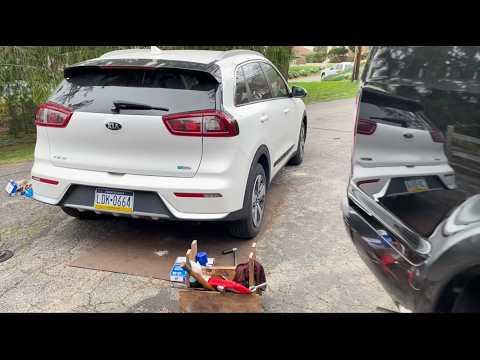







How to Replace Rear Brake Pads & Rotors on a 2017-2022 Kia Niro (EPB vs Cable Guide) (Trim: Plug-In Hybrid EX)
Step-by-step DIY instructions with required tools/parts, safety tips, caliper piston reset notes, and torque specs
How to Replace Rear Brake Pads & Rotors on a 2017-2022 Kia Niro (EPB vs Cable Guide) (Trim: Plug-In Hybrid EX)
Step-by-step DIY instructions with required tools/parts, safety tips, caliper piston reset notes, and torque specs for 2017, 2018, 2019, 2020, 2021, 2022


🔧 Niro - Rear Brake Pads & Rotor Replacement
On your Niro, replacing the rear brake pads and rotors involves removing the rear caliper and caliper bracket, swapping the rotor, then installing new pads and properly “resetting” the caliper piston before reassembly. The only catch is the parking-brake setup—some versions use a simple cable parking brake, while others use an Electronic Parking Brake (EPB), and the procedure differs.
Difficulty Level: Intermediate | Estimated Time: 2.0-3.5 hours
⚠️ Safety & Precautions
- 🛑 Never work under a vehicle supported only by a jack—use jack stands (rated 2-ton minimum).
- 🧤 Wear mechanic gloves and safety glasses; brake dust and rust flakes are common.
- 🔥 Brakes can be extremely hot after driving—let them cool fully.
- ⚡ Your Niro is a plug-in hybrid: you’re not opening the high-voltage system for brakes, but avoid touching any orange high-voltage cables/components.
- 🧷 Do not let the caliper hang by the brake hose—support it with a hook.
🔧 Required Tools
You'll need the following tools for this repair:
- Floor jack (rated 2-ton minimum)
- Jack stands (rated 2-ton minimum)
- Wheel chocks
- Breaker bar (1/2")
- Torque wrench (1/2")
- Torque wrench (3/8")
- Metric socket set (8mm-21mm)
- Metric wrench set (8mm-19mm)
- Flathead screwdriver
- C-clamp brake piston tool
- Brake caliper wind-back tool kit (specialty)
- Brake caliper hanger hook (specialty)
- Wire brush
- Rubber mallet
- Bungee cord
- Brake cleaner spray
- Shop towels
- Nitrile gloves
- Safety glasses
🔩 Required Parts
HowToo sells all the parts you need for this repair:
- Rear brake pad set - Qty: 1
- Rear brake rotors - Qty: 2 Replace in pairs
- Rear pad hardware/clip kit - Qty: 1
- Brake caliper slide pin grease (silicone) - Qty: 1
- Medium-strength threadlocker - Qty: 1
📋 Before You Begin
- Park on a flat surface, set the parking brake, and place wheel chocks at the front wheels.
- Loosen rear lug nuts 1/2 turn before lifting using a breaker bar and the correct lug socket.
- Open the hood and locate the brake fluid reservoir; do not remove fluid now, but be ready in case the level rises when compressing pistons.
- Two quick checks (please answer):
- Do you have an Electronic Parking Brake button (a switch), or a foot pedal/hand lever parking brake?
- When you look at the rear caliper piston face (with wheel off), does it have two small notches (screw-in style), or is it a smooth piston (push-in style)?
🔨 Step-by-Step Instructions
Follow these steps in order:
Step 1: Confirm parking-brake system and piston type (required)
- Reply with your answers from Before You Begin so I can give you the correct factory procedure and the correct caliper “reset” method.
- EPB and screw-in pistons change the steps.
Step 2: I’ll provide exact torque specs next
- Once I know your setup, I’ll list the correct caliper bolt, caliper bracket bolt, and wheel lug nut torque values for your Niro and lay out the full removal/installation steps.
✅ After Repair
- Do not drive until you have a firm brake pedal—after assembly you must pump the brake pedal to seat the pads.
- Check brake fluid level and look for leaks.
- Listen for abnormal scraping and verify the parking brake holds on a gentle incline.
- New pads need gentle break-in.
💰 DIY vs Shop Cost
Shop Cost: $450-$850 (parts + labor)
DIY Cost: $160-$420 (parts only)
You Save: $290-$430 by doing it yourself!
Shop labor rates vary but typically run $100-$150/hour. This repair takes a shop approximately 2.0-3.0 hours.
🎯 Ready to get started?
HowToo makes it easy: same-day/2-day shipping on every part, plus all the tools and specialty tools you need! Check out the parts and tools sections below to add everything to your cart.