














How to Replace Rear Brake Pads on a 2022 Ram 1500 Classic 3.6L
Step-by-step rear brake pad replacement with tools, torque specs, safety tips, and beginner mistakes to avoid for 2019, 2020, 2021, 2022, 2023
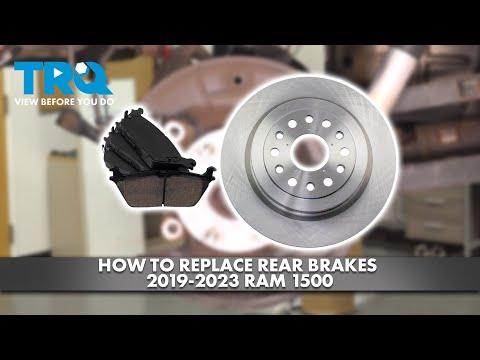
How to Replace Rear Brake Pads on a 2022 Ram 1500 Classic 3.6L
Step-by-step rear brake pad replacement with tools, torque specs, safety tips, and beginner mistakes to avoid for 2019, 2020, 2021, 2022, 2023


1500 Classic - Rear Brake Pad Replacement 🛠️
Got it—you want to replace the rear brake pads on your 2022 1500 Classic SLT 4WD with the 3.6L. I’ll walk you through the Ram-style procedure.
Two quick questions before we start:
- 🧰 Do you have a floor jack and jack stands (not just the factory scissor jack)?
- 🔧 Do you have a basic socket set and a C-clamp or disc brake piston tool?
I’ll assume “yes” and give you the full OEM-style process. If you’re missing something, tell me and I’ll adjust.
Safety First ⚠️
- 🧯 Work on a flat, solid surface (concrete is best). No dirt or sloped driveways.
- 🧱 Always use jack stands under the frame, never rely on the jack alone.
- 🧤 Wear gloves and safety glasses. Brake dust is nasty; avoid breathing it in.
- 🚗 Replace both rear sides as a pair so braking stays balanced.
- 🧪 Keep brake fluid off paint; it can damage it quickly.
Tools & Supplies Needed 🧰
- 🛠️ Floor jack and jack stands (rated for a full-size truck)
- 🛠️ Wheel chocks (blocks behind front wheels)
- 🛠️ Lug wrench or 1/2" drive with 22 mm socket (Ram lug size)
- 🛠️ Socket set:
- 13 mm (rear caliper guide pin bolts)
- 18 mm (caliper bracket bolts, if you remove bracket)
- Breaker bar for tight bolts
- 🛠️ Torque wrench (click-type; needed for proper tightening)
- 🛠️ C-clamp or disc brake piston compressor tool (tool that pushes the caliper piston back in)
- 🛠️ Flat screwdriver or small pry bar (to gently pry caliper)
- 🛠️ Wire brush (to clean bracket where pads sit)
- 🛠️ Bungee cord or wire (to hang caliper, not by hose)
- 🛠️ Brake cleaner spray
- 🛠️ High-temp brake grease (for pad contact points, not friction surfaces)
- 🛠️ New rear brake pads for your 1500 Classic
- 🛠️ Optional: new pad hardware clips (recommended if not included with pads)
Key Torque Specs 🔩
- 🧷 Rear wheel lug nuts: 130 ft-lb (176 N·m)
- 🧷 Rear caliper guide pin bolts: 26 ft-lb (35 N·m)
- 🧷 Rear caliper bracket bolts: 120 ft-lb (163 N·m)
Prep Steps 🚙
- 🧱 Chock the front wheels front and back.
- 🧷 Put the truck in PARK and set the parking brake OFF (you can’t remove rear pads with it on).
- 🧷 Pop the hood and locate the brake fluid reservoir (driver side near firewall). Remove the cap and set it loosely on top. This lets fluid move when you push pistons back.
Step 1 – Lift and Remove Rear Wheels 🏗️
- 🛞 Slightly loosen rear lug nuts (about 1/2 turn) while the truck is still on the ground.
- 🛞 Position the floor jack under the rear axle tube near the wheel you’re working on.
- 🛞 Lift until the tire is off the ground, then place jack stands under the frame or axle on both sides.
- 🛞 Lower the truck gently onto the stands and make sure it’s stable.
- 🛞 Remove the lug nuts and take off both rear wheels.
Step 2 – Inspect the Setup 👀
- 🔍 You’ll see:
- Rotor (big metal disc)
- Caliper (clamps the rotor)
- Caliper bracket (holds the pads)
- 🔍 Look for any wetness around the caliper (could be a leak). If you see fluid, stop and tell me.
Step 3 – Remove Caliper and Old Pads 🔧
- 🛠️ On the back of the caliper, locate the two guide pin bolts (top and bottom, usually 13 mm).
- 🛠️ Hold the slide pin with a wrench if it wants to spin while loosening the bolt.
- 🛠️ Remove both bolts and set them aside.
- 🛠️ Use a flat screwdriver to gently pry the caliper away from the rotor if it’s stuck.
- 🛠️ Lift the caliper off and hang it with a bungee from the spring or frame. Do not let it hang by the rubber hose.
- 🛠️ Slide the old pads out of the bracket. Note which side had the pad with the wear indicator tab (if present).
Step 4 – Compress the Caliper Piston 🧱
- 🧰 Place an old pad against the piston face inside the caliper.
- 🧰 Use a C-clamp or piston tool between the back of the caliper and the old pad.
- 🧰 Slowly tighten to push the piston fully back into the caliper. Go slow to avoid damaging seals.
- 🧰 Watch the brake fluid reservoir under the hood; if fluid gets close to the top, remove some with a clean syringe or turkey baster.
Step 5 – Clean and Prep the Bracket 🧼
- 🧽 Remove the old hardware clips from the caliper bracket (the thin metal pieces the pads sit in).
- 🧽 Use a wire brush to clean the areas where the clips sit and where pad ears contact the bracket.
- 🧽 Spray with brake cleaner and let dry.
- 🧽 Install new hardware clips if supplied with your pads.
- 🧽 Apply a thin layer of brake grease on:
- Where the pad ears slide in the clips
- The caliper slide pins (pull them out, clean, regrease, and reinstall if they’re sticky)
Step 6 – Install New Pads 🆕
- 🧷 Identify inner vs outer pads (inner often has a wear indicator tab or different backing plate).
- 🧷 Slide the new inner pad into the bracket on the inside of the rotor.
- 🧷 Slide the new outer pad into the bracket on the outside.
- 🧷 Make sure they move freely in the clips but don’t rattle loosely.
Step 7 – Reinstall Caliper 🔩
- 🛠️ Position the caliper over the new pads and rotor. The piston should now fit over the thicker pads.
- 🛠️ Align the caliper with the slide pin holes.
- 🛠️ Install the guide pin bolts by hand first to avoid cross-threading.
- 🛠️ Tighten them with a ratchet, then torque to 26 ft-lb (35 N·m).
Step 8 – Repeat on the Other Side 🔁
- 🔁 Do the exact same process on the other rear wheel.
- 🔁 Always replace pads on both sides of the axle.
Step 9 – Reinstall Wheels and Lower Truck 🛞
- 🛞 Put the wheels back on and hand-thread all lug nuts.
- 🛞 Snug the lug nuts in a star pattern with the truck still on stands.
- 🛞 Jack the truck slightly, remove jack stands, and lower it to the ground.
- 🛞 Torque lug nuts in a star pattern to 130 ft-lb (176 N·m).
Step 10 – Final Checks & Bed-In 🧪
- 🧪 Reinstall and tighten the brake fluid reservoir cap.
- 🧪 Sit in the driver’s seat and pump the brake pedal slowly 10–15 times until it feels firm. This is critical before driving.
- 🧪 Check around both rear calipers for any leaks.
- 🧪 For the first 200–300 miles, avoid hard panic stops unless needed.
- 🧪 To bed in pads: do 5–8 medium stops from ~30–40 mph down to 5–10 mph, letting brakes cool a bit between stops.
Common Beginner Mistakes to Avoid 🚫
- ⚙️ Letting the caliper hang by the hose (can damage the hose).
- ⚙️ Forgetting to pump the brake pedal before driving (pedal will go to floor).
- ⚙️ Getting grease or oil on pad surfaces or rotor (causes noise and poor braking).
- ⚙️ Not tightening lug nuts with a torque wrench (can warp rotors or loosen wheels).
Want Parts & Tools? 🧾
Below this answer, HowToo will show you rear brake pads, hardware kits, brake cleaner, grease, and the tools you need. You can add them to your cart directly from the parts section.
Next: Tell me if you’d like a super-short “checklist version” you can keep on your phone while you’re working, or if you want help picking pad type (ceramic vs semi-metallic) for your driving.
HowToo makes it easy: same-day/2-day shipping on every part, plus all the tools and specialty tools you need! 🚚