









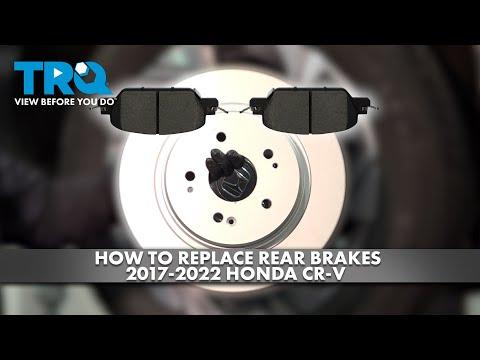





How to Replace Rear Brake Pads on a 2017-2024 Honda CR‑V with EPB
Step-by-step DIY rear brake pad change with tools, parts list, EPB service mode steps, torque specs, and safety tips
How to Replace Rear Brake Pads on a 2017-2024 Honda CR‑V with EPB
Step-by-step DIY rear brake pad change with tools, parts list, EPB service mode steps, torque specs, and safety tips for 2017, 2018, 2019, 2020, 2021, 2022, 2023, 2024


🔧 CR-V - Rear Brake Pad Replacement
You’ll be replacing the rear brake pads on your CR-V and safely retracting the electronic parking brake so the calipers can open. This restores braking performance and prevents grinding or rotor damage.
Difficulty Level: Intermediate | Estimated Time: 2-3 hours
⚠️ Safety & Precautions
- 🛑 Always support the vehicle with jack stands; never rely only on a floor jack.
- 🛑 Your CR-V has an electronic parking brake (EPB) on the rear wheels; you MUST put it into service mode using a scan tool before pushing the pistons back to avoid damage.
- 🛑 Work on a flat, solid surface with the transmission in PARK and front wheels chocked so the vehicle cannot roll.
- 🛑 Do not press the brake pedal with a caliper removed; it can push the piston out.
- 🛑 Use gloves and safety glasses; brake dust and cleaner are irritants.
- 🛑 Keep brake fluid off painted surfaces; it can damage paint quickly.
- 🛑 Battery can stay connected, but do not operate the parking brake switch while calipers are off the rotors.
🔧 Required Tools
You'll need the following tools for this repair:
- 🧰 Floor jack (rated 3-ton minimum)
- 🧰 Jack stands (rated 3-ton, set of 2)
- 🧰 Wheel chocks
- 🧰 Lug wrench (19mm)
- 🧰 3/8" drive ratchet
- 🧰 1/2" drive ratchet
- 🧰 12mm socket
- 🧰 17mm socket
- 🧰 19mm socket
- 🧰 Torque wrench (3/8" drive, 10–80 Nm range)
- 🧰 Torque wrench (1/2" drive, up to 150 Nm)
- 🧰 Flat-head screwdriver (medium size)
- 🧰 Brake caliper piston compression tool (wind-back or push type, specialty)
- 🧰 Brake cleaner spray
- 🧰 Small wire brush
- 🧰 C-clamp (4"–6")
- 🧰 Bungee cord or strong wire hanger
- 🧰 Shop towels or clean rags
- 🧰 OBD2 scan tool with Honda EPB service mode (specialty)
- 🧰 Work gloves
- 🧰 Safety glasses
🔩 Required Parts
HowToo sells all the parts you need for this repair:
- 🧱 Rear brake pad set (left and right) - Qty: 1 set
- 🧱 Rear brake pad hardware kit (anti-rattle clips/shims) - Qty: 1 set
- 🧱 High-temperature brake grease - Qty: 1 small tube
- 🧱 Brake cleaner - Qty: 1-2 cans
- 🧱 Rear brake rotors - Qty: 2 (only if worn or damaged)
- 🧱 Caliper slide pin boots - Qty: 4 (optional, if torn)
📋 Before You Begin
- 📝 Park on a flat surface, set the transmission to PARK, and turn off the engine.
- 📝 Release the electronic parking brake using the switch next to the shifter.
- 📝 Place wheel chocks in front of the front tires.
- 📝 Confirm your scan tool supports Honda EPB pad replacement/service mode and that you know how to navigate its menus.
- 📝 Loosen the rear wheel lug nuts slightly (about one turn) with the vehicle still on the ground.
🔨 Step-by-Step Instructions
Follow these steps in order:
Step 1: Lift and Support the Rear of the Vehicle
- Use the 19mm socket and lug wrench to slightly loosen, but not remove, the rear wheel lug nuts if you have not already.
- Position the floor jack (3-ton) under the rear jacking point (center of rear subframe crossmember) and raise the rear of your CR-V.
- Place jack stands under the reinforced pinch welds or frame points on both sides of the rear and carefully lower the vehicle onto them.
- Remove both rear wheels completely using the 19mm socket.
- Give the vehicle a shake to confirm it’s stable.
Step 2: Put the Electronic Parking Brake into Service Mode
- Turn the ignition to ON (engine not running).
- Connect your OBD2 scan tool with Honda EPB service mode to the diagnostic port under the dashboard.
- On the scan tool, navigate to: Brakes > EPB > Pad Replacement / Maintenance Mode (wording varies by tool).
- Follow the tool prompts to retract / open the rear calipers for pad replacement. You will hear the EPB motors operating.
- Wait for the scan tool to confirm that the EPB is in service mode.
- Do not use the parking brake switch while in service mode.
Step 3: Remove the Rear Caliper (One Side at a Time)
- Locate the rear brake caliper on one wheel.
- Use a wire brush to clean dirt around the caliper bolts and pad area.
- On the back of the caliper, use a 12mm socket and 3/8" ratchet to remove the upper and lower caliper slide pin bolts.
- Carefully lift the caliper off the bracket. If it sticks, gently pry with a flat-head screwdriver at the pad edge.
- Hang the caliper from the suspension spring using a bungee cord so the brake hose is not stretched.
- Never let the caliper hang by the hose.
Step 4: Remove Old Pads and Hardware
- Slide the old inner and outer pads out of the caliper bracket by hand.
- Use a flat-head screwdriver to gently pry off the metal pad clips (hardware) from the caliper bracket.
- Inspect the caliper slide pins (the pins the 12mm bolts thread into). They should slide in and out smoothly by hand.
- If they are sticky, pull them out, clean them with brake cleaner, wipe with a rag, and later apply fresh brake grease.
Step 5: Clean Bracket and Install New Hardware
- Spray the caliper bracket (especially where the pad clips sit) with brake cleaner and scrub using a wire brush.
- Dry with shop towels.
- Clip the new pad hardware (anti-rattle clips) onto the clean bracket by hand; they should snap firmly into place.
- Apply a thin film of high-temperature brake grease to the areas of the hardware where the pads will slide.
- If you cleaned the slide pins, apply a light coat of brake grease to each pin and reinstall it into its boot.
- Use only a thin layer of grease; don’t overdo it.
Step 6: Retract the Caliper Piston
- Check the brake fluid level in the master cylinder reservoir under the hood. If it is very full, remove some with a clean syringe or turkey baster into a suitable container to prevent overflow when pushing pistons in.
- Position a C-clamp or caliper piston compression tool over the caliper piston with an old pad or flat metal piece against the piston face.
- Slowly turn the tool to push the piston back fully into the caliper bore.
- If you feel strong resistance, stop and confirm EPB service mode is active with the scan tool.
- Slow and steady prevents seal damage.
Step 7: Install New Brake Pads
- Apply a light film of brake grease to the pad backing plates where they contact the caliper and the hardware, avoiding the pad friction surfaces.
- Slide the new inner and outer pads into the hardware on the caliper bracket; they should move smoothly by hand.
- Make sure the pads sit flat and secure, with any wear indicators oriented the same as the old pads.
Step 8: Reinstall the Caliper
- Lower the caliper over the new pads and onto the bracket.
- Align the caliper slide pin ears with the bracket and start the 12mm caliper slide pin bolts by hand to avoid cross-threading.
- Tighten the slide pin bolts with a 12mm socket and 3/8" ratchet.
- Use a torque wrench (3/8") with the 12mm socket and tighten both caliper slide pin bolts to 34 Nm (25 ft-lbs).
Step 9: Repeat for the Other Rear Wheel
- Repeat Steps 3–8 on the other rear wheel using the same tools and process.
- Always replace rear pads as a pair on both sides.
Step 10: Exit EPB Service Mode and Initialize Brakes
- With both sides reassembled and wheels still off the ground, turn the ignition to ON if it was turned off.
- On your OBD2 scan tool, select the function to exit EPB pad replacement / service mode and follow prompts to return the system to normal.
- You will hear the EPB motors operate again as they adjust to the new pad thickness.
- Press the brake pedal slowly 10–15 times until it feels firm; this seats the pads against the rotors.
- Do this before driving, every time you change pads.
Step 11: Reinstall Wheels and Lower the Vehicle
- Reinstall each rear wheel on its hub and thread the lug nuts on by hand.
- Use the 19mm socket and lug wrench to snug the lug nuts in a star pattern.
- Raise the vehicle slightly with the floor jack, remove the jack stands, and lower the vehicle to the ground.
- Use a torque wrench (1/2") with the 19mm socket to tighten the lug nuts in a star pattern to 108 Nm (80 ft-lbs).
Step 12: Final Checks
- Check the brake fluid reservoir under the hood and top off to the correct level if needed using the recommended brake fluid type.
- Apply and release the electronic parking brake using the interior switch a few times to ensure it operates smoothly and no warnings appear.
- Visually inspect around both rear calipers and hoses for any leaks or twisted hoses.
✅ After Repair
- 🧪 Start the engine and let it idle. Check for any brake or EPB warning lights on the dashboard.
- 🧪 With the area clear, gently test the brakes at low speed (5–10 km/h) in a safe, open space to confirm the pedal feels firm and the vehicle stops smoothly.
- 🧪 Perform a short test drive, using gentle to moderate braking, listening for abnormal noises.
- 🧪 Bed-in the new pads: make 5–10 slowdowns from about 50 km/h to 10 km/h with light to medium brake pressure, allowing some cooling time between each stop.
- 🧪 After the drive, recheck lug nut torque with the torque wrench and inspect for any leaks or smells of burning (light odor is normal at first).
💰 DIY vs Shop Cost
Shop Cost: $300–$450 (parts + labor)
DIY Cost: $80–$160 (parts only)
You Save: $220–$290 by doing it yourself!
Shop labor rates vary but typically run $100–$150/hour. This repair takes a shop approximately 1.5–2.0 hours.
🎯 Ready to get started?
HowToo makes it easy: same-day/2-day shipping on every part, plus all the tools and specialty tools you need! Check out the parts and tools sections above to add everything to your cart.
Guide for Disc Brake Pad Set replace for these Honda vehicles
| Year Make Model | Sub Model | Engine | Body Style |
|---|---|---|---|
| 2024 Honda CR-V | - | - | - |
| 2023 Honda CR-V | - | - | - |
| 2022 Honda CR-V | - | - | - |
| 2021 Honda CR-V | - | - | - |
| 2020 Honda CR-V | - | - | - |
| 2019 Honda CR-V | - | - | - |
| 2018 Honda CR-V | - | - | - |
| 2017 Honda CR-V | - | - | - |