









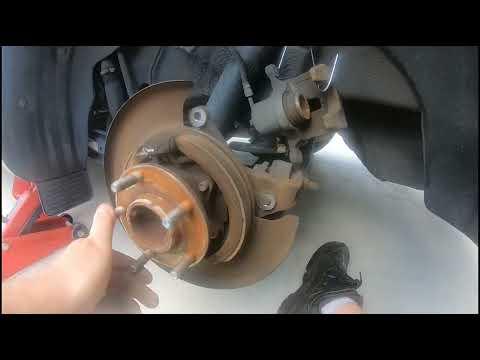







How to Replace Rear Brake Pads on a 2016 Kia Sedona (DIY Step-by-Step Guide)
Tools, parts, safety tips, and torque specs for caliper bolts, bracket bolts, and lug nuts for 2015, 2016, 2017, 2018, 2019, 2020, 2021
How to Replace Rear Brake Pads on a 2016 Kia Sedona (DIY Step-by-Step Guide)
Tools, parts, safety tips, and torque specs for caliper bolts, bracket bolts, and lug nuts for 2015, 2016, 2017, 2018, 2019, 2020, 2021


🔧 Sedona - Rear Brake Pad Replacement
You’ll be removing the rear wheels, swinging the rear brake calipers up, swapping the pads and hardware, then reassembling and pumping the brake pedal to restore pedal feel. This matters because worn pads reduce stopping power and can damage the rotors if they wear down too far.
Difficulty Level: Intermediate | Estimated Time: 1.5-3 hours
⚠️ Safety & Precautions
- ⚠️ Support the van with jack stands on solid ground—never rely on a jack alone.
- ⚠️ Keep the parking brake released while working on the rear brakes, or the pads/rotors may bind.
- ⚠️ Brake dust is harmful—use brake cleaner, not compressed air, and wear a dust mask.
- ⚠️ Do not let the caliper hang by the brake hose—support it with a hook/bungee cord.
- 🔋 Battery disconnect is not required for this job.
🔧 Required Tools
You'll need the following tools for this repair:
- Floor jack (rated 3-ton minimum)
- Jack stands (rated 3-ton minimum)
- Wheel chocks
- 21mm socket
- 1/2" drive breaker bar
- 1/2" drive torque wrench (20–200 Nm range)
- 14mm socket
- 17mm socket
- Ratchet (3/8" drive)
- 3/8" drive torque wrench (5–60 Nm range)
- Caliper piston compression tool (specialty)
- Flat trim/pry tool
- Wire brush
- Brake cleaner
- Shop towels
- Mechanic gloves
- Safety glasses
- Dust mask
- Bungee cord or caliper hook
🔩 Required Parts
HowToo sells all the parts you need for this repair:
- Rear brake pad set - Qty: 1
- Rear brake pad hardware/clip kit - Qty: 1
- Brake caliper grease (silicone) - Qty: 1
- Brake cleaner spray - Qty: 1
📋 Before You Begin
- Park on level ground, turn the engine off, and place wheel chocks at the front wheels.
- Release the parking brake fully.
- Loosen the rear wheel lug nuts 1/2 turn before lifting the van (use a 21mm socket and breaker bar).
- Tip: Take a photo of pad/hardware layout first.
🔨 Step-by-Step Instructions
Follow these steps in order:
Step 1: Lift and secure the rear
- Use a floor jack (rated 3-ton minimum) to lift the rear at the proper jacking point.
- Set the van onto jack stands (rated 3-ton minimum) on the rear support points.
- Remove the rear wheels using a 21mm socket and ratchet.
Step 2: Locate the caliper and bolts
- The caliper is the clamp that squeezes the pads; the caliper bracket is the metal mount the pads slide in.
- Find the two smaller caliper slide-pin bolts (commonly 14mm) on the back side.
Step 3: Remove the caliper (keep the hose safe)
- Use a 14mm socket and ratchet to remove the two slide-pin bolts.
- Carefully pivot the caliper up/off the pads.
- Support the caliper with a bungee cord or caliper hook so it does not hang by the hose.
Step 4: Remove old pads and hardware
- Pull the old inner and outer pads out of the bracket by hand. If stuck, use a flat trim/pry tool gently.
- Remove the stainless pad clips/hardware from the bracket.
- Clean the bracket pad “rails” with a wire brush, then spray with brake cleaner and wipe with shop towels.
Step 5: Check slide pins (important for even braking)
- Slide pins are the small guide pins the caliper moves on. Pull each pin out carefully (by hand).
- Wipe old grease off with shop towels and use brake cleaner if needed.
- Apply a thin coat of brake caliper grease (silicone) and reinstall the pins.
- Tip: Do not grease pad friction surfaces.
Step 6: Install new hardware clips and pads
- Install the new pad clips into the bracket (press in by hand).
- Apply a very thin film of brake caliper grease (silicone) on the clip contact points where the pad “ears” slide.
- Install the new pads into the bracket in the same orientation as the old ones.
Step 7: Compress the caliper piston
- Use a caliper piston compression tool (specialty) to slowly press the piston back into the caliper.
- If resistance is extreme, stop and re-check that the parking brake is released.
- Tip: Compress slowly to avoid fluid overflow.
Step 8: Reinstall the caliper and torque bolts
- Set the caliper back over the new pads.
- Install the slide-pin bolts by hand first (prevents cross-threading).
- Tighten using a 14mm socket and 3/8" drive torque wrench: Torque to 25–35 Nm (18–26 ft-lbs).
- Assumption: Typical Sedona rear slide-pin torque range used if exact spec varies by build.
Step 9: If you removed the bracket (only if needed)
- If the rotor must come off or the bracket was removed, reinstall bracket bolts using a 17mm socket.
- Tighten using a 1/2" drive torque wrench: Torque to 80–100 Nm (59–74 ft-lbs).
- Assumption: Common Kia rear bracket torque range used if exact spec varies.
Step 10: Reinstall wheels and torque lug nuts
- Reinstall the wheels and snug lug nuts with a 21mm socket and ratchet.
- Lower the van using the floor jack (rated 3-ton minimum).
- Tighten lug nuts in a star pattern with a 1/2" drive torque wrench: Torque to 110–125 Nm (81–92 ft-lbs).
- Assumption: Typical Kia lug torque range used; match your wheel spec if known.
✅ After Repair
- With the engine off, slowly press the brake pedal 8–12 times until it feels firm.
- Check the brake fluid level and top off only if needed (do not overfill).
- Do a low-speed test in a safe area: confirm normal stopping and no pulling/noise.
- Pad bedding (break-in): make 6–10 smooth stops from ~50 km/h down to ~10 km/h, allowing a short cool-down between stops.
- If you hear constant scraping or feel drag, recheck pad seating and hardware clip placement.
💰 DIY vs Shop Cost
Shop Cost: ₹6,000-₹14,000 (parts + labor)
DIY Cost: ₹2,500-₹7,000 (parts only)
You Save: ₹3,500-₹7,000 by doing it yourself!
Labor rates vary in Panipat; this job typically bills 1.5–2.5 hours.
🎯 Ready to get started?
HowToo makes it easy: same-day/2-day shipping on every part, plus all the tools and specialty tools you need! Check out the parts and tools sections below to add everything to your cart.