









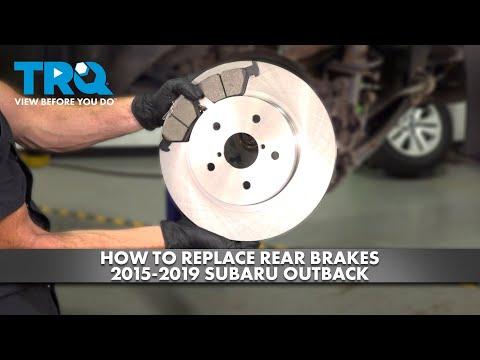







How to Replace Rear Brake Pads on a 2015-2024 Subaru Outback (EPB Service Mode Guide)
Step-by-step rear pad install with required tools/parts, EPB maintenance mode steps, and torque specs
How to Replace Rear Brake Pads on a 2015-2024 Subaru Outback (EPB Service Mode Guide)
Step-by-step rear pad install with required tools/parts, EPB maintenance mode steps, and torque specs


🔧 Outback - Rear Brake Pad Replacement
Replacing the rear brake pads on your Outback is straightforward mechanically, but your Outback uses an electronic parking brake (EPB), which must be put into brake service mode before you can safely compress the rear caliper pistons. Once in service mode, you’ll remove the caliper, swap pads/hardware, compress the piston, then reassemble and torque everything correctly.
Difficulty Level: Intermediate | Estimated Time: 1.5-3.0 hours
⚠️ Safety & Precautions
- ⚠️ Support the rear with jack stands; never rely on a jack.
- ⚠️ EPB warning: Do not work on rear brakes until the EPB is in service/maintenance mode, or you can damage the caliper/EPB system.
- ⚠️ Do not press the brake pedal while the caliper is off the rotor.
- ⚠️ Brake dust is harmful; use brake cleaner, not compressed air.
- ⚠️ Keep brake fluid off paint; wipe spills immediately.
- ⚠️ Battery disconnect is not typically required, but keep the key away and ignition off unless you’re entering EPB service mode.
🔧 Required Tools
You'll need the following tools for this repair:
- Floor jack (rated 3-ton minimum)
- Jack stands (rated 3-ton minimum)
- Wheel chocks
- 19mm socket
- 3/8" drive ratchet
- 1/2" drive breaker bar
- Torque wrench (10-200 N·m range)
- 14mm socket
- 17mm socket
- Flat-blade screwdriver
- C-clamp brake piston compressor
- Brake caliper hanger hook (specialty)
- Wire brush
- Shop towels
- Nitrile gloves
- Safety glasses
🔩 Required Parts
HowToo sells all the parts you need for this repair:
- Rear brake pad set - Qty: 1
- Rear brake pad hardware kit (abutment clips) - Qty: 1
- Silicone brake lubricant - Qty: 1
- Brake cleaner - Qty: 1
📋 Before You Begin
- 🅿️ Park on level ground, put the shifter in P, and chock the front wheels using wheel chocks.
- 🛑 Confirm the EPB is fully released before lifting.
- 🔍 Quick check: If your rear rotors are deeply grooved or heavily rust-lipped, plan on replacing or resurfacing them.
- ❓Two quick questions so I can give you the exact EPB step: (1) Are we talking about your Outback with the electronic parking brake button (not a foot pedal)? (2) Do you have a scan tool that can run EPB maintenance mode?
🔨 Step-by-Step Instructions
Follow these steps in order:
Step 1: Put the EPB into service/maintenance mode
- Use a scan tool capable of EPB service mode (specialty) to command the rear parking brake into maintenance/service mode before compressing pistons.
- Service mode prevents EPB motor damage.
- If you do not have EPB service mode capability, stop here and tell me what tool you have (or none). On this EPB system, forcing pistons back without service mode can cause costly damage.
Step 2: Loosen lug nuts and raise the rear
- Use a 19mm socket with a breaker bar to loosen the rear wheel lug nuts 1/2 turn while the tires are still on the ground.
- Lift the rear using a floor jack (rated 3-ton minimum) at the correct rear jack point, then support with jack stands (rated 3-ton minimum).
- Remove the lug nuts with a 19mm socket and take the rear wheels off.
Step 3: Remove the rear caliper (pads exposed)
- Turn the steering slightly if needed for access; keep the vehicle stable on jack stands.
- Use a 14mm socket and 3/8" drive ratchet to remove the two caliper slide pin bolts.
- Lift the caliper off the bracket and support it with a brake caliper hanger hook (specialty). A caliper hanger is a hook that holds the caliper so it doesn’t hang by the brake hose.
Step 4: Remove old pads and hardware
- Pull the inner and outer pads out of the bracket by hand; use a flat-blade screwdriver gently if they’re stuck.
- Remove the pad abutment clips (hardware) from the bracket using a flat-blade screwdriver.
- Clean the bracket pad lands (where clips sit) using a wire brush and brake cleaner.
Step 5: Compress the rear caliper piston
- Check the brake fluid level under the hood before compressing; if it’s near “MAX,” be ready with shop towels in case it rises.
- Use a C-clamp brake piston compressor to slowly push the caliper piston straight back into the caliper.
- Go slow to avoid fluid overflow.
Step 6: Install new hardware and pads
- Install the new abutment clips onto the bracket by hand (they should snap into place).
- Apply a thin film of silicone brake lubricant to the clip contact areas (where pad “ears” slide). Do not get lube on pad friction material or rotor.
- Install the new inner and outer pads into the bracket.
Step 7: Reinstall the caliper and torque bolts
- Set the caliper back over the new pads.
- Install the caliper slide pin bolts using a 14mm socket and 3/8" drive ratchet, then tighten with a torque wrench.
- Torque to 25 N·m (18 ft-lbs) for the rear caliper slide pin bolts.
Step 8: Reinstall wheels and torque lug nuts
- Reinstall the wheels and hand-thread lug nuts.
- Lower the vehicle off the jack stands using the floor jack.
- Torque lug nuts in a star pattern using a torque wrench and 19mm socket.
- Torque to 120 N·m (89 ft-lbs) for the wheel lug nuts.
Step 9: Exit EPB service mode
- Use your scan tool capable of EPB service mode (specialty) to exit maintenance/service mode and re-initialize the EPB as prompted.
- Cycle the EPB on and off once to confirm normal operation.
✅ After Repair
- With the vehicle on the ground, pump the brake pedal 10-15 times until it feels firm.
- Check brake fluid level and top off only if needed (use the correct DOT brake fluid listed on the cap).
- Do a slow test drive: verify normal braking, no pulling, and no abnormal noises.
- Pad bedding (recommended): do 6-8 moderate stops from 35 mph to 5 mph, allowing 30-60 seconds between stops for cooling.
- If the EPB warning light stays on, re-check that service mode was exited and scan for codes.
💰 DIY vs Shop Cost
Shop Cost: $250-$450 (parts + labor)
DIY Cost: $60-$150 (parts only)
You Save: $100-$300 by doing it yourself!
Shop labor rates vary but typically run $100-$150/hour. This repair takes a shop approximately 1.0-1.5 hours.
🎯 Ready to get started?
HowToo makes it easy: same-day/2-day shipping on every part, plus all the tools and specialty tools you need! Check out the parts and tools sections below to add everything to your cart.