









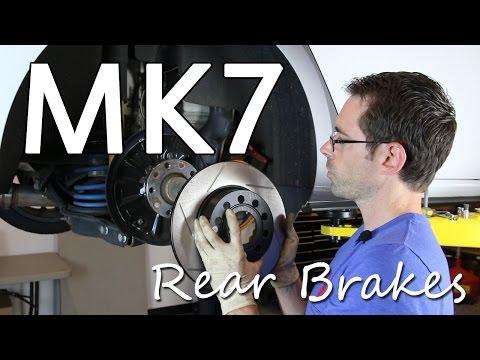






How to Replace Rear Brake Pads on a 2015-2018 Volkswagen GTI (Trim: S)
Step-by-step instructions with EPB service mode, tools, torque specs, and safety tips
How to Replace Rear Brake Pads on a 2015-2018 Volkswagen GTI (Trim: S)
Step-by-step instructions with EPB service mode, tools, torque specs, and safety tips for 2015, 2016, 2017, 2018


🔧 Rear Brake Pads - Replacement
Your GTI uses rear disc brakes with an electronic parking brake, so the rear calipers must be put into service mode before the pads come out. This keeps the parking brake motor from damaging the caliper and gives you room to install the new pads correctly.
Difficulty Level: Intermediate | Estimated Time: 2-3 hours
⚠️ Safety & Precautions
- Work on level ground with the transmission in gear and the front wheels chocked.
- Release the parking brake only when instructed. The rear caliper pistons must be retracted in service mode.
- Do not press the brake pedal with a caliper removed.
- Use jack stands. Never rely on a floor jack alone.
- If the brake fluid reservoir is full, remove a little fluid before compressing the pistons.
- Battery disconnect is not required for this repair.
🔧 Required Tools
You'll need the following tools for this repair:
- Floor jack (rated 3-ton minimum)
- Jack stands (rated 3-ton minimum)
- Wheel chocks
- 17mm socket
- 13mm socket
- Torx T30 screwdriver
- Torque wrench
- Brake caliper piston retraction tool (specialty)
- Electronic parking brake scan tool (specialty)
- Flat screwdriver
- Wire brush
- Bungee cord or mechanic's hook
- Brake cleaner
- Shop towels
- Gloves
- Safety glasses
🔩 Required Parts
HowToo sells all the parts you need for this repair:
- Rear brake pad set - Qty: 1
- Rear pad wear sensor - Qty: 1
- Rear caliper guide pin hardware kit - Qty: 1
- Brake cleaner - Qty: 1 can
- Brake grease - Qty: 1
📋 Before You Begin
- Park on level ground and chock the front wheels.
- Set the transmission in gear.
- Release the parking brake only after the rear calipers are put into service mode.
- If your scan tool has an EPB service function, run it before lifting the car.
- Keep the key away from the car during service mode.
🔨 Step-by-Step Instructions
Follow these steps in order:
Step 1: Put the rear parking brake in service mode
- Use the electronic parking brake scan tool to retract both rear calipers into service mode.
- Follow the scan tool prompts until the rear motors finish moving.
- Wait for both sides to finish fully.
Step 2: Raise and secure the car
- Use the floor jack to lift the rear of the car at the proper jacking point.
- Set the car on jack stands.
- Remove the rear wheel using the 17mm socket.
Step 3: Remove the caliper
- Use the Torx T30 screwdriver to remove the brake rotor retaining screw if needed.
- Use the 13mm socket to remove the caliper guide pin bolts.
- Lift the caliper off the bracket.
- Support it with a bungee cord or mechanic's hook. Do not let it hang by the hose.
Step 4: Remove the old pads
- Slide the old pads out of the caliper bracket.
- Remove the wear sensor from the pad if equipped.
- Inspect the rotor surface for deep grooves, cracks, or heavy rust.
Step 5: Clean and inspect the bracket
- Use a wire brush to clean the pad contact points on the bracket.
- Spray the contact areas with brake cleaner and wipe them dry with shop towels.
- Apply a thin film of brake grease only on the pad ears and contact points.
- Keep grease off the rotor and pad friction material.
Step 6: Retract the caliper piston fully
- Use the brake caliper piston retraction tool to push the piston fully back into the caliper.
- Make sure the piston face sits square and flush.
- If the piston does not move easily, stop and recheck service mode.
Step 7: Install the new pads
- Install the new pads into the bracket in the same orientation as the old ones.
- Install the new wear sensor if your pad set includes one.
- Make sure the pads slide freely in the bracket.
Step 8: Reinstall the caliper
- Set the caliper back over the new pads.
- Install the guide pin bolts using the 13mm socket.
- Torque to 35 Nm (26 ft-lbs).
Step 9: Reinstall the wheel
- Reinstall the wheel and hand-tighten the lug bolts.
- Lower the car and use the 17mm socket to snug the wheel bolts.
- Torque to 120 Nm (89 ft-lbs).
Step 10: Exit service mode and pump the pedal
- Use the electronic parking brake scan tool to exit service mode.
- Press the brake pedal several times until it feels firm.
- Apply and release the parking brake to confirm normal operation.
✅ After Repair
- Check brake fluid level and top off if needed.
- Verify the parking brake holds the car on a slight incline.
- Listen for rubbing or clicking on the first test drive.
- Perform a slow brake test in a safe area before normal driving.
- Expect a short break-in period for the new pads and rotors.
💰 DIY vs Shop Cost
Shop Cost: $300-$550 (parts + labor)
DIY Cost: $90-$220 (parts only)
You Save: $210-$330 by doing it yourself!
Shop labor rates vary but typically run $100-$150/hour. This repair takes a shop approximately 1.5-2.0 hours.
🎯 Ready to get started?
HowToo makes it easy: same-day/2-day shipping on every part, plus all the tools and specialty tools you need! Check out the parts and tools sections below to add everything to your cart.