















How to Replace Rear Brake Pads on a 2011-2018 Ram 3500 (Step-by-Step Guide)
Tools, parts list, safety tips, and install steps for rear disc brakes with proper torque specs
How to Replace Rear Brake Pads on a 2011-2018 Ram 3500 (Step-by-Step Guide)
Tools, parts list, safety tips, and install steps for rear disc brakes with proper torque specs


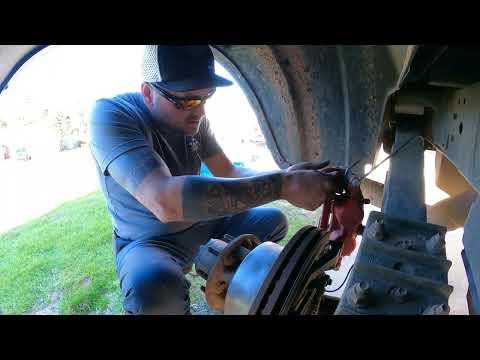
🔧 3500 - Rear Brake Pad Replacement
Rear pad replacement on your 3500 involves lifting and supporting the rear axle, removing the rear calipers, swapping the pads, and reinstalling everything with correct torque. The key is keeping the parking brake released and supporting the caliper so the brake hose isn’t strained.
Difficulty Level: Intermediate | Estimated Time: 1.5-3.0 hours
⚠️ Safety & Precautions
- 🛑 Work on level ground; chock the front wheels before lifting.
- 🛑 Support the truck with jack stands under the axle; never rely on a floor jack alone.
- 🛑 Keep the parking brake fully released during the job.
- 🛑 Do not let the caliper hang by the brake hose; support it with a hook.
- 🛑 Wear safety glasses and gloves; brake dust is irritating.
🔧 Required Tools
You'll need the following tools for this repair:
- Wheel chocks
- Floor jack (rated 3-ton minimum)
- Jack stands (rated 3-ton minimum)
- Safety glasses
- Nitrile gloves
- 1/2" drive breaker bar
- 1/2" drive torque wrench (50-250 ft-lbs range)
- Lug nut socket (size depends on your wheels)
- Socket set (metric)
- Ratchet (1/2" drive)
- Open-end wrench set (metric)
- Flat-blade screwdriver
- C-clamp brake piston compressor
- Brake caliper hanger hook
- Wire brush
- Brake cleaner spray
🔩 Required Parts
HowToo sells all the parts you need for this repair:
- Rear brake pad set - Qty: 1
- Rear pad hardware kit (clips/shims) - Qty: 1
- Brake caliper grease (silicone) - Qty: 1
📋 Before You Begin
- Park on a flat surface, shift to Park, and fully release the parking brake.
- Chock both front wheels using wheel chocks.
- Crack the rear lug nuts loose with a breaker bar and correct lug nut socket before lifting.
🔨 Step-by-Step Instructions
Follow these steps in order:
Step 1: Confirm your rear brake setup (needed for correct torque specs)
- Look at your rear wheels: is your 3500 single rear wheel (SRW) or dual rear wheel (DRW)?
- Also confirm whether the rear is disc brakes with a drum-in-hat parking brake (most 3500s) by looking through the caliper: you’ll see a rotor with a caliper on it.
- Reply with SRW or DRW and confirm rear discs, and I’ll give you the exact OEM torque specs for caliper bolts, bracket bolts, and lugs before you start loosening anything further.
Step 2: Lift and support the rear
- Use a floor jack to lift under the rear axle housing (center section).
- Place jack stands under both sides of the rear axle tubes.
- Lower the truck onto the stands and give it a gentle shake to confirm it’s stable.
Step 3: Remove the rear wheels
- Remove the lug nuts using a ratchet or breaker bar and your lug nut socket.
- Remove both rear wheels and set them aside.
Step 4: Remove the rear caliper (pads are inside)
- Turn the steering is not applicable; keep the axle straight and work from behind the hub.
- Remove the caliper slide/guide bolts using your socket set (metric) and ratchet.
- Lift the caliper off the bracket.
- Hang the caliper using a brake caliper hanger hook. Never let it hang by the hose.
Step 5: Remove old pads and hardware
- Slide the inner and outer pads out of the bracket by hand; use a flat-blade screwdriver gently if they’re stuck.
- Remove the pad clips/hardware from the bracket (if you’re replacing hardware) using a flat-blade screwdriver.
Step 6: Clean and prep the bracket and slide pins
- Spray the bracket pad lands with brake cleaner spray.
- Use a wire brush to clean rust where the pad clips sit (the “pad lands”).
- If the slide pins are accessible, pull them out and wipe them clean, then apply a thin coat of brake caliper grease (silicone) and reinstall them.
- Pads must slide freely or they’ll wear fast.
Step 7: Compress the caliper piston
- Remove the brake master cylinder cap under the hood (set it loosely on top) to allow fluid to move.
- Place an old pad against the piston face, then use a C-clamp brake piston compressor to slowly push the piston back into the caliper.
- Watch the brake fluid reservoir; if it gets close to full, stop and remove a little fluid before continuing.
Step 8: Install new hardware and pads
- Install new pad clips/hardware into the bracket by hand (or gently with a flat-blade screwdriver).
- Apply a very thin layer of brake caliper grease (silicone) where the pad ears touch the clips.
- Install the new inner and outer pads into the bracket.
Step 9: Reinstall the caliper
- Set the caliper back over the new pads.
- Start the slide/guide bolts by hand to avoid cross-threading.
- Tighten the slide/guide bolts using a ratchet, then final-tighten with a torque wrench to the OEM spec (I’ll provide once you confirm SRW/DRW).
Step 10: Reinstall wheels and torque lug nuts
- Reinstall the wheels and hand-thread all lug nuts.
- Snug the lugs in a star pattern using a ratchet.
- Lower the truck, then use a torque wrench to torque the lug nuts to the OEM spec (I’ll provide once you confirm SRW/DRW and wheel type).
✅ After Repair
- Before moving the truck, pump the brake pedal 10-15 times until it feels firm.
- Check the brake fluid level and reinstall the reservoir cap.
- Do a slow test drive in a safe area; verify normal braking and no pulling or grinding.
- If you installed new pads and new rotors, follow the pad manufacturer bedding procedure.
💰 DIY vs Shop Cost
Shop Cost: $350-$700 (parts + labor)
DIY Cost: $80-$250 (parts only)
You Save: $270-$450 by doing it yourself!
Shop labor rates vary but typically run $100-$150/hour. This repair takes a shop approximately 1.5-3.0 hours.
🎯 Ready to get started?
HowToo makes it easy: same-day/2-day shipping on every part, plus all the tools and specialty tools you need! Check out the parts and tools sections below to add everything to your cart.