















How to Replace Rear Brake Pads on a 2009-2022 Toyota Corolla – DIY Guide (Engine: Inline 4 1.8L)
Step-by-step rear brake pad replacement with tools, parts list, safety tips, torque specs, and cost savings for your 2017 Corolla
How to Replace Rear Brake Pads on a 2009-2022 Toyota Corolla – DIY Guide (Engine: Inline 4 1.8L)
Step-by-step rear brake pad replacement with tools, parts list, safety tips, torque specs, and cost savings for your 2017 Corolla for 2009, 2010, 2011, 2012, 2013, 2014, 2015, 2016, 2017, 2018, 2019, 2020, 2021, 2022


🔧 Corolla - Rear Brake Pad Replacement
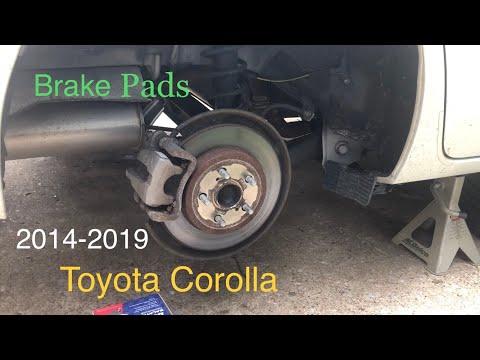
You’ll be removing the rear wheels, swinging the brake caliper off, winding the caliper piston back in, and installing new pads and hardware on your Corolla. This restores braking performance and prevents metal-on-metal damage to the rotors.
Difficulty Level: Beginner-Intermediate | Estimated Time: 2-3 hours
⚠️ Safety & Precautions
- 🛑 Always support the car with jack stands, never rely on the floor jack alone.
- 🧯 Work on cool brakes only; hot rotors and calipers can burn you.
- 🧱 Chock the front wheels and keep the transmission in PARK with the parking brake released while working on the rear.
- 🧪 Brake dust can be harmful; avoid blowing with compressed air. Use brake cleaner instead.
- 🔧 Do not press the brake pedal when a caliper is off the rotor; it can push the piston out.
- ⚙️ Your rear caliper piston must be turned (wound in), not just pushed, due to the built‑in parking brake mechanism.
- 🔋 Battery disconnection is not required for this job.
🔧 Required Tools
You'll need the following tools for this repair:
- 🧰 Floor jack (rated 3-ton minimum)
- 🧰 Jack stands (2-ton or higher, Qty: 2)
- 🧰 Wheel chocks (Qty: 2)
- 🧰 Lug wrench or 21mm socket
- 🧰 3/8" drive ratchet
- 🧰 1/2" drive ratchet
- 🧰 14mm socket
- 🧰 17mm socket
- 🧰 Torque wrench (10-150 ft-lbs range)
- 🧰 Brake caliper wind-back tool (specialty)
- 🧰 C-clamp or large adjustable pliers
- 🧰 Flathead screwdriver (medium size)
- 🧰 Wire brush (small)
- 🧰 Bungee cord or mechanic’s wire
- 🧰 Shop rags
- 🧰 Disposable nitrile gloves
- 🧰 Safety glasses
A brake caliper wind-back tool rotates and pushes the rear piston in safely.
🔩 Required Parts
HowToo sells all the parts you need for this repair:
- 🔩 Rear brake pad set - Qty: 1 (replace both sides)
- 🔩 Rear brake pad hardware kit (anti-rattle clips/shims) - Qty: 1
- 🔩 Brake cleaner spray - Qty: 1-2 cans
- 🔩 High-temperature silicone brake grease - Qty: 1 tube
- 🔩 Anti-seize compound - Qty: 1 small tube
- 🔩 Shop towels - Qty: 1 pack
📋 Before You Begin
- Park the Corolla on level ground, shift to PARK, and release the parking brake (hand/foot brake off).
- Place wheel chocks in front of and behind at least one front tire.
- Loosen, but do not remove, both rear wheel lug nuts with the lug wrench or 21mm socket.
- Open the hood and remove the brake fluid reservoir cap, then set it back on loosely. This allows fluid to move when you compress pistons.
- Lay out all tools and parts so you’re not searching mid-job. Good layout reduces stress.
🔨 Step-by-Step Instructions
Follow these steps in order:
Step 1: Lift and support the rear of the Corolla
- Use the floor jack under the rear center jacking point (under the rear subframe) to lift the rear of the car.
- Place jack stands under the pinch welds or designated rear support points on both sides.
- Lower the car gently onto the jack stands with the floor jack.
- Give the car a firm push to confirm it is stable before going under or removing wheels.
Step 2: Remove the rear wheels
- Use the lug wrench or 21mm socket with ratchet to remove the rear wheel lug nuts completely.
- Remove both rear wheels and set them aside.
- Place wheels under the car as backup safety.
Step 3: Inspect the rear brakes
- Visually inspect the rotor surface through the caliper: heavy grooves or deep rust may mean rotors need replacement.
- Check the rubber boots on the caliper slide pins for tears or leaks.
- If rotors are badly damaged, pause and plan a rotor replacement as well.
Step 4: Remove the caliper slide pin bolt and swing caliper up
- On one side, locate the two small bolts holding the caliper to the bracket (top and bottom).
- Use a 14mm socket and 3/8" ratchet to remove the lower caliper slide pin bolt.
- Leave the upper slide pin bolt in place, then rotate the caliper upward on the upper pin like a hinge, away from the rotor.
- Support the caliper with a bungee cord or mechanic’s wire to the suspension spring so it does not hang by the brake hose.
Step 5: Remove old pads and hardware
- Slide the inner and outer brake pads out of the caliper bracket by hand or with a flathead screwdriver to gently pry if needed.
- Remove the metal clips (pad hardware) from the caliper bracket, noting their orientation.
- Use a wire brush to clean the areas where the clips sit, removing rust and debris.
- Spray the bracket area and rotor contact area lightly with brake cleaner.
Step 6: Compress (wind back) the rear caliper piston
- The rear piston is part of the parking brake system, so it must be rotated while being pushed in.
- Fit the brake caliper wind-back tool into the notches on the piston face.
- Turn the tool clockwise while applying gentle inward pressure to retract the piston fully into the caliper body.
- If needed, you can use a C-clamp to help apply pressure while you rotate with the wind-back tool.
- Watch the brake fluid level in the reservoir so it does not overflow; remove excess with a shop rag if necessary.
Step 7: Lubricate slide pins and install new hardware
- Gently pull the caliper off the upper slide pin if needed and set it on the supported bungee.
- Use the 14mm socket and 3/8" ratchet to remove the upper slide pin bolt if you want to fully inspect pins (optional but recommended).
- Pull each slide pin out one at a time, wipe with a shop rag, and apply a light coat of high-temperature silicone brake grease to the pin.
- Slide each pin back into its boot until it seats fully; make sure they move smoothly.
- Install the new hardware clips into the caliper bracket by hand; ensure they snap fully into place.
Step 8: Install new brake pads
- Apply a thin layer of high-temperature silicone brake grease to the pad ears (the metal ends that sit in the clips), and the pad backing where it contacts the caliper/piston. Do not get grease on pad friction surfaces.
- Slide the new inner and outer pads into the caliper bracket by hand; they should move smoothly in the new clips.
- Make sure any wear indicator tab (small metal squealer) matches the position of the old pads (usually on the inner pad at the top or bottom).
Step 9: Reinstall the caliper
- Rotate the caliper back down over the new pads and onto the bracket.
- Line up the lower slide pin bolt hole.
- Install the lower caliper slide pin bolt by hand to avoid cross-threading, then tighten with a 14mm socket and 3/8" ratchet.
- If you removed the upper slide pin bolt earlier, reinstall and tighten it with the 14mm socket as well.
- Tighten both caliper slide pin bolts to 34 Nm (25 ft-lbs) using the torque wrench with 14mm socket.
Step 10: Repeat for the other side
- Perform Steps 4–9 on the opposite rear wheel.
- Always replace brake pads in pairs on the same axle.
Step 11: Final checks and reinstall wheels
- Lightly clean rotor surfaces and calipers with brake cleaner to remove grease or fingerprints.
- Optional: apply a very thin smear of anti-seize compound on the wheel hub face where it contacts the wheel to prevent future sticking (avoid studs and rotor face).
- Reinstall each wheel on the hub and hand-thread all lug nuts.
- Use the lug wrench or 21mm socket to snug lug nuts in a star pattern, but do not fully torque yet.
Step 12: Lower the Corolla and torque the lug nuts
- Use the floor jack to raise the car slightly off the jack stands, remove stands, then lower the car to the ground.
- Use the torque wrench with 21mm socket to torque all rear wheel lug nuts in a star pattern to 103 Nm (76 ft-lbs).
Step 13: Pump the brake pedal and set fluid level
- Before driving, sit in the driver’s seat and slowly pump the brake pedal 10–15 times until it becomes firm. This seats the pistons against the new pads.
- Check the brake fluid level in the reservoir. If it is above the “MAX” line, remove some with a shop rag; if below, top up with the correct brake fluid type listed on your cap.
- Reinstall the brake fluid reservoir cap securely.
- Confirm the parking brake (hand/foot brake) applies and releases normally.
✅ After Repair
- 🚗 Test the brakes at low speed in a safe area: gently apply brakes several times to confirm firm pedal and normal stopping.
- 🛑 Listen for abnormal noises like grinding, loud squealing, or clunks; light squeal for the first few stops can be normal.
- 🔧 Check for any fluid leaks around the calipers and brake lines after your test drive.
- 📏 Follow a pad break-in (bedding) process: 8–10 smooth stops from 30–40 km/h to near stop, with cool-down between stops. Avoid hard panic stops at first.
💰 DIY vs Shop Cost
Shop Cost: $300-$450 (parts + labor) for rear pads on a Corolla at a typical shop.
DIY Cost: $80-$150 (parts only), depending on pad quality and hardware.
You Save: $220-$300 by doing it yourself!
Shop labor rates vary but typically run $100-$150/hour. This repair takes a shop approximately 1.0-1.5 hours.
🎯 Ready to get started?
HowToo makes it easy: same-day/2-day shipping on every part, plus all the tools and specialty tools you need! Check out the parts and tools sections above to add everything to your cart.
Guide for Disc Brake Pad Set replace for these Toyota vehicles
| Year Make Model | Sub Model | Engine | Body Style |
|---|---|---|---|
| 2022 Toyota Corolla | - | Inline 4 1.8L | - |
| 2021 Toyota Corolla | - | Inline 4 1.8L | - |
| 2020 Toyota Corolla | - | Inline 4 1.8L | - |
| 2019 Toyota Corolla | - | Inline 4 1.8L | - |
| 2018 Toyota Corolla | - | Inline 4 1.8L | - |
| 2017 Toyota Corolla | - | Inline 4 1.8L | - |
| 2016 Toyota Corolla | - | Inline 4 1.8L | - |
| 2015 Toyota Corolla | - | Inline 4 1.8L | - |
| 2014 Toyota Corolla | - | Inline 4 1.8L | - |
| 2013 Toyota Corolla | - | Inline 4 1.8L | - |
| 2012 Toyota Corolla | - | Inline 4 1.8L | - |
| 2011 Toyota Corolla | - | Inline 4 1.8L | - |
| 2010 Toyota Corolla | - | Inline 4 1.8L | - |
| 2009 Toyota Corolla | - | Inline 4 1.8L | - |