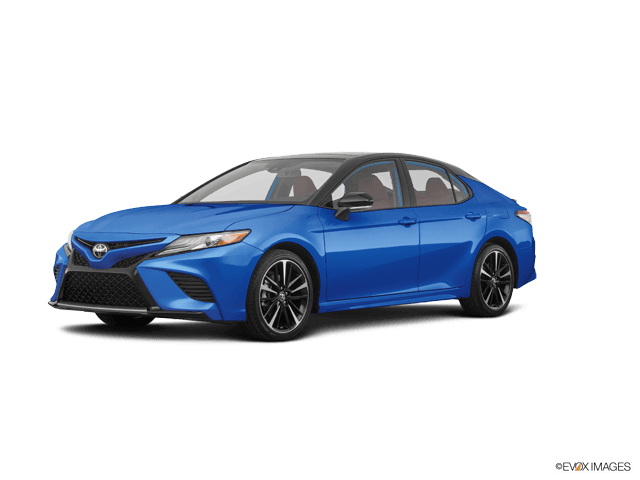















How to Replace Rear Brake Pads on a 2007-2023 Toyota Camry with EPB
Step-by-step DIY rear brake pad change with tools, parts list, torque specs, and electric parking brake service mode instructions
How to Replace Rear Brake Pads on a 2007-2023 Toyota Camry with EPB
Step-by-step DIY rear brake pad change with tools, parts list, torque specs, and electric parking brake service mode instructions for 2007, 2008, 2009, 2010, 2011, 2012, 2013, 2014, 2015, 2016, 2017, 2018, 2019, 2020, 2022, 2023


🔧 Camry - Rear Brake Pad Replacement
You’ll be replacing the rear brake pads and resetting the electric parking brake so the new pads don’t drag or wear out early. This job is very doable at home if you go slowly and follow each step.
Difficulty Level: Intermediate | Estimated Time: 2–3 hours
⚠️ Safety & Precautions
- ⚠️ Work on a cool car only – hot brakes and wheels can burn you.
- ⚠️ Always support the car with jack stands – never rely on a jack alone.
- ⚠️ Your Camry has an electric parking brake (EPB) – a small electric motor on each rear caliper that applies the parking brake. It must be put in service mode before pushing the piston back, or you can damage it.
- ⚠️ Turn ignition OFF and keep your foot off the brake pedal while calipers are removed so you don’t pop the pistons out by mistake.
- ⚠️ If at any point you feel unsure, stop and get help – brakes are safety‑critical.
🔧 Required Tools
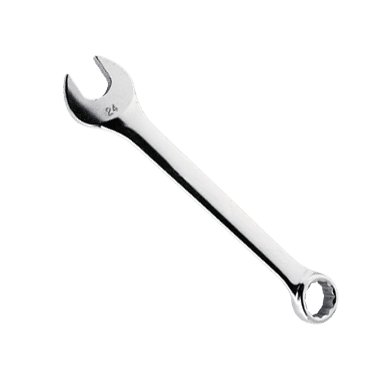
You'll need the following tools for this repair:
- 🧰 Floor jack (rated 2-ton or higher)
- 🧰 Jack stands (rated 2-ton or higher, Qty: 2)
- 🧰 Wheel chocks
- 🧰 Lug nut wrench (21mm)
- 🧰 Ratchet handle (3/8" drive)
- 🧰 Ratchet handle (1/2" drive)
- 🧰 10mm socket
- 🧰 14mm socket
- 🧰 17mm socket
- 🧰 21mm socket
- 🧰 Torque wrench (3/8" drive, up to 30 ft-lbs)
- 🧰 Torque wrench (1/2" drive, up to 120 ft-lbs)
- 🧰 Flathead screwdriver (medium)
- 🧰 Brake caliper piston tool (wind-back or cube type)
- 🧰 Needle-nose pliers
- 🧰 Wire brush (small)
- 🧰 Bungee cord or wire hanger
- 🧰 Shop rags
- 🧰 Safety glasses
- 🧰 Mechanic gloves
- 🧰 OBD2 scan tool with EPB service function (specialty, optional but ideal)
🔩 Required Parts
HowToo sells all the parts you need for this repair:
- 🔩 Rear brake pad set (left and right) - Qty: 1 set
- 🔩 Rear brake pad hardware kit (shims/anti-rattle clips) - Qty: 1 set
- 🔩 Synthetic brake grease (high-temperature) - Qty: 1 tube
- 🔩 Brake cleaner spray - Qty: 1–2 cans
- 🔩 Anti-seize compound - Qty: small tube
- 🔩 Disposable gloves - Qty: 1 box
- 🔩 Shop towels or paper towels - Qty: as needed
📋 Before You Begin
- Park your Camry on level ground, shift to P (Park), and set the parking brake, then you will release it when instructed.
- Loosen rear wheel lug nuts slightly before lifting the car.
- Open the hood and locate the brake fluid reservoir; make sure fluid is not over “MAX”, since pushing pistons back will raise the level.
- Battery disconnect is not required, but keep ignition OFF while working unless a step specifically says to turn it ON.
- A torque wrench is a tool that tightens bolts to a specific force so you don’t under‑ or over‑tighten them.
🔨 Step-by-Step Instructions
Follow these steps in order:
Step 1: Lift and Secure the Rear of the Car
- Place wheel chocks in front of both front wheels.
- Use the lug nut wrench (21mm) to loosen (do not remove) the rear wheel lug nuts about one turn each.
- Position the floor jack under the rear center jacking point (under the rear subframe crossmember) and lift until both rear wheels are off the ground.
- Place jack stands under the rear pinch welds or approved support points on both sides and slowly lower the car onto them using the floor jack.
- Remove the rear wheels completely with the 21mm socket and ratchet.
Step 2: Put Electric Parking Brake in Service Mode
- A scan tool with EPB function is the easiest and safest way. EPB is the electric parking brake system that uses small motors on the rear calipers.
- Option A – With EPB-capable scan tool (recommended):
- Turn ignition to ON (engine off).
- Connect the scan tool to the OBD2 port under the dash.
- In the scan tool, go to ABS/VSC/EPB menu > Utility > Pad Replacement / Maintenance Mode and follow on-screen prompts to retract the rear parking brake.
- Turn ignition OFF after retraction completes.
- Option B – Without scan tool (manual motor removal):
- Make sure the parking brake is released: ignition ON, press brake pedal, then press the EPB switch down to turn it off, and confirm EPB light on the dash is off.
- Turn ignition OFF and remove the key (or keep smart key away from car).
- You’ll carefully remove the EPB motor from each rear caliper in a later step to retract the pistons manually.
- Choose one option and stick with it.
Step 3: Remove the Rear Caliper (One Side at a Time)
- Turn the steering wheel straight; not critical for rear but keeps things clear.
- On the first rear wheel, locate the brake caliper and the two caliper slide pin bolts at the back (upper and lower).
- Use a 14mm socket and 3/8" ratchet to remove the lower caliper slide pin bolt, then the upper bolt.
- Lift the caliper off the bracket and support it with a bungee cord from the suspension spring so it does not hang by the brake hose.
- Remove the inner and outer brake pads from the bracket by hand or using a flathead screwdriver to gently pry them out.
Step 4: If No Scan Tool – Remove EPB Motor and Retract Piston
- Skip this step entirely if you used the scan tool EPB service mode and the pistons are already retracted.
- Locate the small black EPB motor on the back of the caliper (round or oval-shaped with an electrical connector).
- Unplug the motor’s connector by pressing the tab and pulling it off by hand.
- Use a 10mm socket and 3/8" ratchet to remove the two small EPB motor mounting bolts.
- Pull the motor straight back and set it aside carefully (keep the rubber O‑ring clean).
- Inside the opening in the caliper, you’ll see a small gear or hex drive. Use the correct bit on your ratchet handle (often a 6mm hex or similar) to turn it clockwise several turns until you feel it stop – this winds the piston back into the caliper.
- Turn slowly; don’t force past resistance.
Step 5: Retract the Caliper Piston Fully
- Look at the round piston inside the caliper.
- If it is still not fully retracted, use a brake caliper piston tool to push it back in. This tool presses the piston smoothly into the caliper.
- Position the tool between the piston and the opposite side of the caliper and rotate the handle until the piston is flush with the caliper housing.
- Check brake fluid reservoir under the hood; if fluid is close to or above MAX, remove a small amount with a clean syringe or turkey baster into a container.
Step 6: Clean and Prepare the Caliper Bracket
- Remove the old metal pad clips/shims from the caliper bracket by hand or with needle-nose pliers.
- Use a wire brush to clean rust and debris from the pad contact areas on the bracket.
- Spray the bracket area with brake cleaner and wipe with shop rags.
- Install the new pad hardware (clips) from the kit, pressing them into place by hand until fully seated.
- Apply a thin layer of synthetic brake grease on the metal surfaces where the pads will slide. Only on metal contact points, never on pad friction surface.
Step 7: Install New Rear Brake Pads
- Compare new pads to the old ones to ensure shape and size match.
- Install the inner pad and outer pad into the bracket, pressing them into the new clips until they click into place.
- If pads include shims on the back, ensure they are firmly attached; if separate, attach them per instructions and apply a very thin smear of brake grease on the shim where it touches the caliper and piston.
Step 8: Reinstall Caliper and EPB Motor
- Swing the caliper back over the new pads.
- Line up the caliper slide pin bolt holes.
- Apply a tiny amount of anti-seize compound to the threads of the 14mm slide pin bolts if they were dry (avoid getting any on rubber boots).
- Install the upper and lower caliper slide pin bolts by hand to avoid cross-threading.
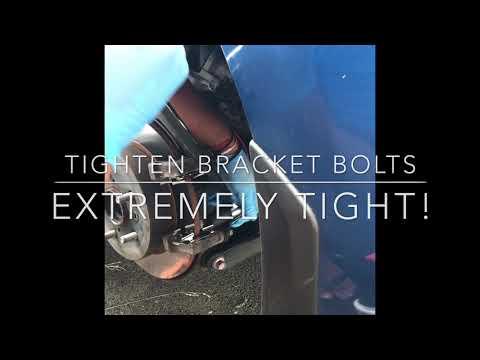
- Use a 14mm socket and 3/8" torque wrench to tighten each caliper slide pin bolt to 34 Nm (25 ft-lbs).
- If you removed the EPB motor (Option B):
- Reinstall the EPB motor onto the caliper, carefully aligning it with the gear.
- Install the two EPB motor bolts with a 10mm socket and 3/8" torque wrench and tighten to 5 Nm (44 in-lbs).
- Reconnect the EPB electrical connector by pushing it on until it clicks.
Step 9: Repeat on the Other Rear Wheel
- Repeat Steps 3–8 for the other rear wheel.
- Always do rear brake pads in pairs.
Step 10: Reassemble, Lower the Car, and Torque Wheels
- Reinstall both rear wheels on the hubs.
- Thread the lug nuts on by hand.
- Use the 21mm socket and 1/2" ratchet to snug the lug nuts in a star pattern while the car is still on jack stands.
- Raise the car slightly with the floor jack, remove the jack stands, and then lower the car fully to the ground.
- Use a 21mm socket and 1/2" torque wrench to tighten all lug nuts in a star pattern to 103 Nm (76 ft-lbs).
Step 11: Return EPB to Normal Mode and Seat Pads
- Get into the driver’s seat and turn ignition to ON (or start the engine).
- Firmly press the brake pedal 10–15 times until it feels solid; this seats the pads against the rotors.
- If you used a scan tool:
- In the scan tool, go to ABS/VSC/EPB menu > Utility > End Pad Replacement / Exit Maintenance Mode and follow prompts.
- If you removed the EPB motor manually:
- With ignition ON and foot on the brake pedal, pull up on the EPB switch to apply the parking brake, then push down to release it. Repeat 2–3 times to let the system self-adjust.
- Check that the EPB warning light on the dash turns off when the parking brake is released.
- Recheck brake fluid level; top up with correct brake fluid if below MIN.
✅ After Repair
- Start the engine and gently press the brake pedal; it should feel firm, not spongy.
- With the car in Drive, move slowly in an open area and test the brakes at low speed, then medium speed.
- Test the electric parking brake on a slight slope to confirm it holds the car and releases properly.
- For the first 300–500 km, avoid very hard braking unless necessary so the pads can bed in smoothly.
- Listen for grinding, scraping, or burning smells; if anything seems wrong, stop and recheck your work.
💰 DIY vs Shop Cost
Shop Cost: $350–$500 (parts + labor)
DIY Cost: $80–$160 (parts only)
You Save: $270–$340 by doing it yourself!
Shop labor rates vary but typically run $100–$150/hour. This repair takes a shop approximately 1.5–2.0 hours.
🎯 Ready to get started?
HowToo makes it easy: same-day/2-day shipping on every part, plus all the tools and specialty tools you need! Check out the parts and tools sections above to add everything to your cart.
Guide for Disc Brake Pad Set replace for these Toyota vehicles
| Year Make Model | Sub Model | Engine | Body Style |
|---|---|---|---|
| 2023 Toyota Camry | - | - | - |
| 2022 Toyota Camry | - | - | - |
| 2020 Toyota Camry | - | - | - |
| 2019 Toyota Camry | - | - | - |
| 2018 Toyota Camry | - | - | - |
| 2017 Toyota Camry | - | - | - |
| 2016 Toyota Camry | - | - | - |
| 2015 Toyota Camry | - | - | - |
| 2014 Toyota Camry | - | - | - |
| 2013 Toyota Camry | - | - | - |
| 2012 Toyota Camry | - | - | - |
| 2011 Toyota Camry | - | - | - |
| 2010 Toyota Camry | - | - | - |
| 2009 Toyota Camry | - | - | - |
| 2008 Toyota Camry | - | - | - |
| 2007 Toyota Camry | - | - | - |