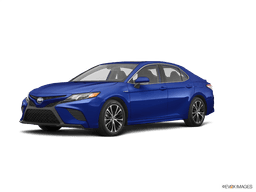















How to Replace Rear Brake Pads and Rotors on a 2018-2024 Toyota Camry (Trim: Hybrid LE | Engine: Inline 4 2.5L)
Step-by-step instructions with tools, parts, torque specs, and safety tips
How to Replace Rear Brake Pads and Rotors on a 2018-2024 Toyota Camry (Trim: Hybrid LE | Engine: Inline 4 2.5L)
Step-by-step instructions with tools, parts, torque specs, and safety tips for 2018, 2019, 2020, 2021, 2022, 2023, 2024


🔧 Camry - Rear Brake and Rotor Replacement
Replacing the rear pads and rotors will restore braking performance, reduce noise, and help prevent brake pulsation. On this hybrid, you also need to keep the vehicle fully OFF and handle the parking brake service mode correctly before pushing the calipers back.
Difficulty Level: Intermediate | Estimated Time: 2-3 hours
⚠️ Safety & Precautions
- Keep the vehicle in OFF mode and do not let it enter READY while working.
- The rear parking brake may be electronic. Put it in maintenance/service mode before retracting the calipers.
- Use jack stands. Never rely on a floor jack alone.
- Brake parts and rotors can be hot after driving. Let them cool first.
- Wear safety glasses and gloves. Brake dust should not be blown off with compressed air.
- If you disconnect the 12V battery, you may lose some settings; only do this if needed.
🔧 Required Tools
You'll need the following tools for this repair:
- Floor jack (rated 3-ton minimum)
- Jack stands
- Wheel chocks
- 21mm lug wrench or socket
- 14mm socket
- 17mm socket
- Ratchet
- Torque wrench
- Breaker bar
- Bungee cord or mechanic's wire
- C-clamp or caliper piston tool
- Flat-blade screwdriver
- Wire brush
- Brake cleaner
- Safety glasses
- Nitrile gloves
🔩 Required Parts
HowToo sells all the parts you need for this repair:
- Rear brake pad set - Qty: 1
- Rear brake rotors - Replace in pairs - Qty: 2
- Brake hardware kit - Qty: 1
- Brake lubricant - Qty: 1
- Brake cleaner - Qty: 1
📋 Before You Begin
- Park on level ground and set the parking brake.
- Shift to Park and power the vehicle fully OFF.
- Chock the front wheels before lifting the rear.
- If the car has an electronic parking brake, put it in service mode first using the parking brake switch sequence in the dash menu or service procedure for the rear brakes.
- Do not press the brake pedal with a caliper removed.
🔨 Step-by-Step Instructions
Follow these steps in order:
Step 1: Loosen the rear wheels
- Use the 21mm lug wrench or socket to break the rear lug nuts loose while the vehicle is still on the ground.
- Do not remove them yet.
Step 2: Raise and secure the rear
- Use the floor jack (rated 3-ton minimum) to lift the rear of the vehicle at the approved lift points.
- Place jack stands under the rear support points and lower the vehicle onto them.
- Remove the rear wheels with the 21mm lug wrench or socket.
Step 3: Remove the caliper
- Use the 14mm socket and ratchet to remove the caliper slide bolts.
- Lift the caliper off the bracket and hang it with a bungee cord or mechanic's wire.
- Do not let the caliper hang by the hose.
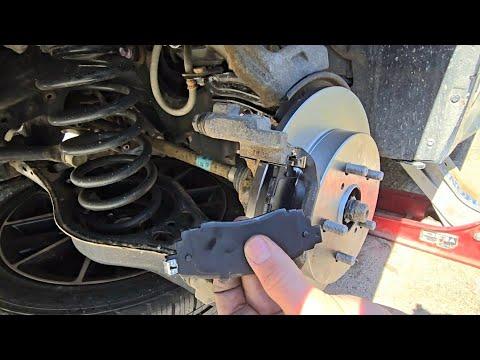
Step 4: Remove the brake pads and bracket
- Remove the brake pads from the bracket.
- Use the 14mm socket and ratchet to remove the caliper bracket bolts.
- Take off the bracket and set it aside.
Step 5: Remove the rotor
- Use the flat-blade screwdriver to back off the rotor retaining screw if equipped.
- Pull the rotor off the hub.
- If it is stuck, tap lightly from behind and use penetrating force by hand; avoid damaging the hub surface.
- Use the wire brush to clean rust from the hub face.
Step 6: Prepare the new rotor
- Spray the new rotor with brake cleaner and wipe it dry.
- Install the rotor onto the hub.
- Reinstall the rotor retaining screw if used.
Step 7: Reinstall the bracket and pads
- Reinstall the caliper bracket using the 14mm socket and ratchet.
- Torque to 79 Nm (58 ft-lbs).
- Apply a thin layer of brake lubricant to pad contact points and slide surfaces only.
- Install the new brake pads and hardware kit.
Step 8: Compress the caliper piston
- Use a C-clamp or caliper piston tool to slowly push the piston fully back in.
- If the electronic parking brake is installed, make sure service mode is active before compressing.
- Go slow to avoid seal damage.
Step 9: Reinstall the caliper
- Slide the caliper back over the new pads.
- Install the slide bolts with the 14mm socket and ratchet.
- Torque to 34 Nm (25 ft-lbs).
Step 10: Reinstall the wheel
- Put the wheel back on and hand-start the lug nuts.
- Lower the vehicle with the floor jack (rated 3-ton minimum).
- Use the torque wrench and 21mm socket to tighten the lug nuts in a star pattern.
- Torque to 103 Nm (76 ft-lbs).
Step 11: Repeat on the other side
- Replace the rear pads and rotors on the opposite side using the same steps.
- Always replace rotors in pairs.
✅ After Repair
- Press the brake pedal several times until it feels firm.
- Release the parking brake service mode if it was enabled.
- Start the vehicle and confirm no warning lights remain on.
- Test brakes at low speed in a safe area first.
- For the first 200 miles, avoid hard stops unless needed for safety.
💰 DIY vs Shop Cost
Shop Cost: $450-$900 (parts + labor)
DIY Cost: $180-$350 (parts only)
You Save: $270-$550 by doing it yourself!
Shop labor rates vary but typically run $100-$150/hour. This repair takes a shop approximately 2-3 hours.
🎯 Ready to get started?
HowToo makes it easy: same-day/2-day shipping on every part, plus all the tools and specialty tools you need! Check out the parts and tools sections below to add everything to your cart.
Guide for Disc Brake Pad Set replace for these Toyota vehicles
| Year Make Model | Sub Model | Engine | Body Style |
|---|---|---|---|
| 2024 Toyota Camry | Hybrid LE | Inline 4 2.5L | - |
| 2024 Toyota Camry | Hybrid SE | Inline 4 2.5L | - |
| 2024 Toyota Camry | Hybrid XLE | Inline 4 2.5L | - |
| 2024 Toyota Camry | LE | Inline 4 2.5L | - |
| 2024 Toyota Camry | SE | Inline 4 2.5L | - |
| 2024 Toyota Camry | XLE | Inline 4 2.5L | - |
| 2024 Toyota Camry | XSE | Inline 4 2.5L | - |
| 2024 Toyota Camry | SE Nightshade | Inline 4 2.5L | - |
| 2024 Toyota Camry | Hybrid XSE | Inline 4 2.5L | - |
| 2024 Toyota Camry | Hybrid SE Nightshade | Inline 4 2.5L | - |
| 2023 Toyota Camry | Hybrid LE | Inline 4 2.5L | - |
| 2023 Toyota Camry | Hybrid SE | Inline 4 2.5L | - |
| 2023 Toyota Camry | Hybrid XLE | Inline 4 2.5L | - |
| 2023 Toyota Camry | LE | Inline 4 2.5L | - |
| 2023 Toyota Camry | SE | Inline 4 2.5L | - |
| 2023 Toyota Camry | XLE | Inline 4 2.5L | - |
| 2023 Toyota Camry | XSE | Inline 4 2.5L | - |
| 2023 Toyota Camry | SE Nightshade | Inline 4 2.5L | - |
| 2023 Toyota Camry | Hybrid XSE | Inline 4 2.5L | - |
| 2023 Toyota Camry | Hybrid SE Nightshade | Inline 4 2.5L | - |
| 2022 Toyota Camry | Hybrid LE | Inline 4 2.5L | - |
| 2022 Toyota Camry | Hybrid SE | Inline 4 2.5L | - |
| 2022 Toyota Camry | Hybrid XLE | Inline 4 2.5L | - |
| 2022 Toyota Camry | LE | Inline 4 2.5L | - |
| 2022 Toyota Camry | SE | Inline 4 2.5L | - |
| 2022 Toyota Camry | XLE | Inline 4 2.5L | - |
| 2022 Toyota Camry | XSE | Inline 4 2.5L | - |
| 2022 Toyota Camry | SE Nightshade | Inline 4 2.5L | - |
| 2022 Toyota Camry | Hybrid XSE | Inline 4 2.5L | - |
| 2022 Toyota Camry | Hybrid SE Nightshade | Inline 4 2.5L | - |
| 2021 Toyota Camry | Hybrid LE | Inline 4 2.5L | - |
| 2021 Toyota Camry | Hybrid SE | Inline 4 2.5L | - |
| 2021 Toyota Camry | Hybrid XLE | Inline 4 2.5L | - |
| 2021 Toyota Camry | LE | Inline 4 2.5L | - |
| 2021 Toyota Camry | SE | Inline 4 2.5L | - |
| 2021 Toyota Camry | XLE | Inline 4 2.5L | - |
| 2021 Toyota Camry | XSE | Inline 4 2.5L | - |
| 2021 Toyota Camry | SE Nightshade | Inline 4 2.5L | - |
| 2021 Toyota Camry | Hybrid XSE | Inline 4 2.5L | - |
| 2020 Toyota Camry | Hybrid LE | Inline 4 2.5L | - |
| 2020 Toyota Camry | Hybrid SE | Inline 4 2.5L | - |
| 2020 Toyota Camry | Hybrid XLE | Inline 4 2.5L | - |
| 2020 Toyota Camry | LE | Inline 4 2.5L | - |
| 2020 Toyota Camry | SE | Inline 4 2.5L | - |
| 2020 Toyota Camry | XLE | Inline 4 2.5L | - |
| 2020 Toyota Camry | XSE | Inline 4 2.5L | - |
| 2020 Toyota Camry | SE Nightshade | Inline 4 2.5L | - |
| 2019 Toyota Camry | Hybrid LE | Inline 4 2.5L | - |
| 2019 Toyota Camry | Hybrid SE | Inline 4 2.5L | - |
| 2019 Toyota Camry | Hybrid XLE | Inline 4 2.5L | - |
| 2019 Toyota Camry | LE | Inline 4 2.5L | - |
| 2019 Toyota Camry | SE | Inline 4 2.5L | - |
| 2019 Toyota Camry | XLE | Inline 4 2.5L | - |
| 2019 Toyota Camry | XSE | Inline 4 2.5L | - |
| 2018 Toyota Camry | Hybrid LE | Inline 4 2.5L | - |
| 2018 Toyota Camry | Hybrid SE | Inline 4 2.5L | - |
| 2018 Toyota Camry | Hybrid XLE | Inline 4 2.5L | - |
| 2018 Toyota Camry | LE | Inline 4 2.5L | - |
| 2018 Toyota Camry | SE | Inline 4 2.5L | - |
| 2018 Toyota Camry | XLE | Inline 4 2.5L | - |
| 2018 Toyota Camry | XSE | Inline 4 2.5L | - |