









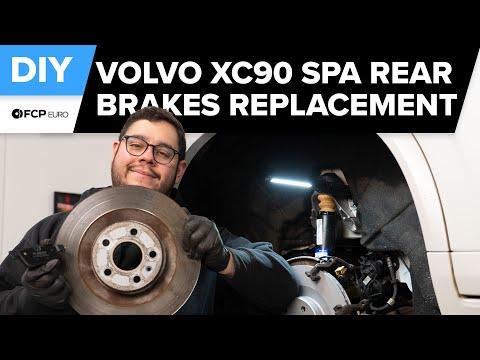







How to Replace Rear Brake Pads and Rotors on a 2016-2021 Volvo XC90
Step-by-step instructions with EPB service mode, tools, torque specs, and safety tips
How to Replace Rear Brake Pads and Rotors on a 2016-2021 Volvo XC90
Step-by-step instructions with EPB service mode, tools, torque specs, and safety tips for 2016, 2017, 2018, 2019, 2020, 2021


🔧 XC90 - Rear Brake and Rotor Replacement
The rear brakes on your XC90 use an electronic parking brake, so the system must be put into service mode before the rear calipers are removed. New rotors and pads restore stopping power, reduce noise, and help prevent vibration from worn or rusted parts.
Difficulty Level: Intermediate | Estimated Time: 2-3 hours
⚠️ Safety & Precautions
- Use the electronic parking brake service mode before opening the rear caliper.
- Do not press the brake pedal with the caliper removed.
- Support the vehicle securely on jack stands before removing wheels.
- Rear brake components may be hot if the vehicle was recently driven.
- Wear safety glasses and gloves.
- If the brake pad wear sensor is damaged, replace it.
🔧 Required Tools
You'll need the following tools for this repair:
- Floor jack (rated 3-ton minimum)
- Jack stands (rated for vehicle weight)
- Wheel chocks
- 21mm socket
- Ratchet
- Torque wrench
- Torx T45 screwdriver
- Torx T30 screwdriver
- Caliper piston compression tool (specialty)
- Brake hanger hook
- Wire brush
- Brake cleaner
- Flat blade screwdriver
- Safety glasses
- Mechanic gloves
🔩 Required Parts
HowToo sells all the parts you need for this repair:
- Rear brake pad set - Qty: 1
- Rear brake rotors - Qty: 2
- Brake pad wear sensor - Qty: 1
- Brake hardware kit - Qty: 1
- Brake cleaner - Qty: 1
📋 Before You Begin
- Park on level ground and engage the parking brake.
- Loosen the rear wheel bolts slightly before lifting.
- Put the electronic parking brake into service mode before starting.
- Keep the ignition on only as needed for service mode.
- Assumption: This XC90 has the factory electronic parking brake and standard rear floating calipers.
🔨 Step-by-Step Instructions
Follow these steps in order:
Step 1: Put the rear parking brake in service mode
- Use the center display to open the vehicle settings and place the rear parking brake into service mode.
- On many XC90 models, this is found under Settings > Parking brake > Service position.
- If the menu wording differs, select the brake service or maintenance function shown on the screen.
Step 2: Lift the rear of the vehicle
- Use the floor jack to raise the rear of the XC90.
- Place jack stands under the correct support points and lower the vehicle onto them.
- Install wheel chocks at the front wheels.
Step 3: Remove the rear wheels
- Use the 21mm socket and ratchet to remove the wheel bolts.
- Remove both rear wheels and set them aside.
- Keep the bolts organized.
Step 4: Remove the brake caliper
- Use the Torx T45 screwdriver to remove the caliper guide pin bolts.
- Lift the caliper off the bracket and hang it with the brake hanger hook.
- Do not let the caliper hang by the hose.
Step 5: Remove the caliper bracket and old rotor
- Use the Torx T30 screwdriver to remove the rotor retaining screw.
- Use the ratchet and correct socket on the bracket bolts if equipped with bracket-mounted hardware.
- Remove the bracket, then slide the rotor off the hub.
- If the rotor is stuck, tap it lightly from the back side with a rubber mallet.
Step 6: Clean the hub and install the new rotor
- Use the wire brush to clean rust from the hub face.
- Spray the hub and rotor mounting area with brake cleaner.
- Install the new rotor and secure it with the retaining screw.
- Torque rotor retaining screw to 10 Nm (7 ft-lbs).
Step 7: Install the brake pads and hardware
- Install the new hardware clips from the brake hardware kit.
- Apply a thin layer of brake grease to the pad contact points only if included in your hardware kit instructions.
- Install the new rear pads and the new wear sensor if equipped.
- Do not get grease on the friction material.
Step 8: Compress the rear caliper piston
- Use the caliper piston compression tool to fully retract the rear caliper piston.
- Turn and press the piston in slowly if the caliper design requires it.
- Make sure the piston boots do not twist or pinch.
Step 9: Reinstall the caliper and tighten fasteners
- Reinstall the caliper over the new pads and rotor.
- Use the Torx T45 screwdriver to tighten the guide pin bolts.
- Torque caliper guide pin bolts to 35 Nm (26 ft-lbs).
- If bracket bolts were removed, reinstall them and torque to 105 Nm (77 ft-lbs).
Step 10: Reinstall wheels and lower the vehicle
- Install both rear wheels by hand first.
- Use the 21mm socket to snug the wheel bolts in a star pattern.
- Lower the vehicle and torque wheel bolts to 140 Nm (103 ft-lbs).
✅ After Repair
- Exit the parking brake service mode from the center display.
- Press the brake pedal several times until it feels firm.
- Start the vehicle and confirm the brake warning light is off.
- Test the parking brake at low speed in a safe area.
- For the first 200 miles, avoid hard stops to help the pads bed in.
💰 DIY vs Shop Cost
Shop Cost: $650-$1,100 (parts + labor)
DIY Cost: $180-$400 (parts only)
You Save: $470-$700 by doing it yourself!
Shop labor rates vary but typically run $100-$150/hour. This repair takes a shop approximately 2-3 hours.
🎯 Ready to get started?
HowToo makes it easy: same-day/2-day shipping on every part, plus all the tools and specialty tools you need! Check out the parts and tools sections below to add everything to your cart.