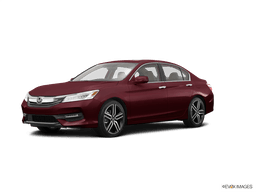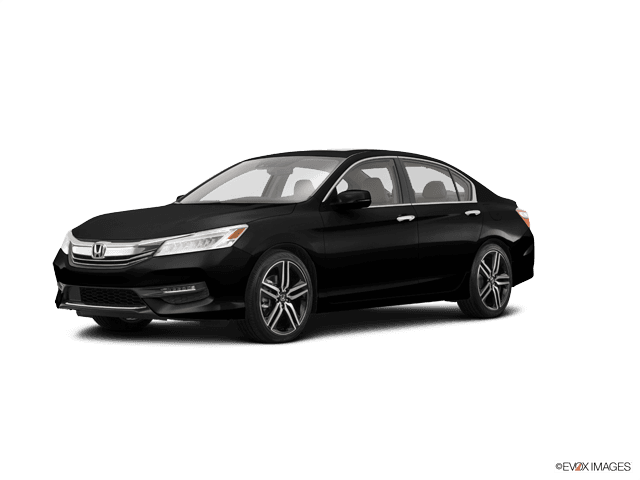
















How to Replace Rear Brake Pads and Rotors on a 2008-2017 Honda Accord (Trim: Touring | Engine: V6 3.5L)
Step-by-step instructions with tools, torque specs, safety tips, and EPB service mode guidance
How to Replace Rear Brake Pads and Rotors on a 2008-2017 Honda Accord (Trim: Touring | Engine: V6 3.5L)
Step-by-step instructions with tools, torque specs, safety tips, and EPB service mode guidance for 2008, 2009, 2010, 2011, 2012, 2013, 2014, 2015, 2016, 2017


🔧 Rear Brake Pads & Rotors - Replacement
The rear brake pads and rotors on your Accord wear together, so replacing both at the same time gives the best pedal feel and stopping performance. Because this model uses an electronic parking brake, you must put the rear brakes into service mode before pushing the calipers back.
Difficulty Level: Intermediate | Estimated Time: 2-4 hours
⚠️ Safety & Precautions
- Your Accord uses an electronic parking brake. Put it in brake service mode before removing the rear calipers.
- Do not press the brake pedal while a caliper is removed.
- Support the car with jack stands. Never work under a car held up only by a jack.
- Brake parts can be hot if the car was recently driven. Let them cool first.
- Use brake cleaner only in a well-ventilated area.
- No battery disconnect is required for this repair.
🔧 Required Tools
You'll need the following tools for this repair:
- Floor jack (rated 3-ton minimum)
- Jack stands (2)
- Wheel chocks
- 19mm socket
- 3/8-inch ratchet
- Breaker bar
- 14mm socket
- 17mm socket
- Torque wrench
- Micrometer or brake rotor gauge
- Bungee cord or hook
- C-clamp or disc brake piston tool
- Brake caliper hanger (specialty)
- Flat-blade screwdriver
- Wire brush
- Brake cleaner
- Shop rags
- Safety glasses
- Nitrile gloves
🔩 Required Parts
HowToo sells all the parts you need for this repair:
- Rear brake pad set - Qty: 1
- Rear brake rotors - Replace in pairs - Qty: 2
- Brake pad hardware clips - Qty: 1 set
- Brake caliper slide pin grease - Qty: 1
- Brake cleaner - Qty: 1
📋 Before You Begin
- Park on a flat surface and set the transmission to Park.
- Chock the front wheels.
- Release the parking brake before entering service mode.
- Put the rear brakes into electronic parking brake service mode before starting. On this Accord, use the parking brake switch and the brake pedal sequence until the system indicates maintenance mode.
- Keep the ignition on during service mode.
🔨 Step-by-Step Instructions
Follow these steps in order:
Step 1: Put the rear parking brake in service mode
- Use the parking brake switch and brake pedal sequence to retract the rear electronic parking brake motors into service mode.
- Verify the rear calipers are fully released before continuing.
- Listen for the motors to finish.
Step 2: Loosen the rear lug nuts
- Use a 19mm socket and breaker bar to loosen the rear wheel lug nuts one turn each while the car is still on the ground.
Step 3: Raise and support the rear of the car
- Use a floor jack at the rear lift point, then set the car on jack stands.
- Remove the rear wheels with the 19mm socket.
Step 4: Remove the rear caliper
- Use a 14mm socket to remove the caliper slide pin bolts.
- Lift the caliper off the bracket and hang it with a bungee cord or brake caliper hanger.
- Tighten on reassembly: Torque to 35 Nm (26 ft-lbs)
Step 5: Remove the caliper bracket
- Use a 17mm socket to remove the caliper bracket bolts.
- Remove the bracket from the knuckle.
- Tighten on reassembly: Torque to 108 Nm (80 ft-lbs)
Step 6: Remove the rotor
- Pull the rotor straight off.
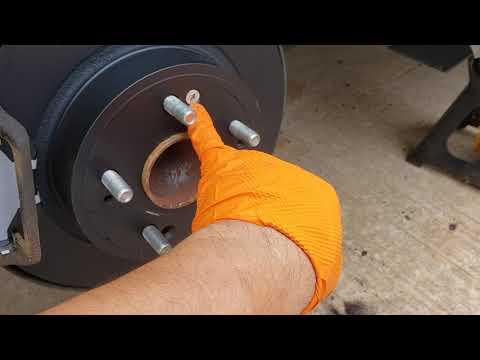
- If it is stuck, use a flat-blade screwdriver to back off the small rotor retainers if equipped, then tap the rotor hat lightly.
- Tap gently to avoid damage.
Step 7: Clean and inspect the hub
- Use a wire brush to clean rust and scale from the hub face.
- Spray the hub with brake cleaner and wipe it dry with shop rags.
- Check the caliper slide pins for smooth movement and clean them if needed.
Step 8: Install the new rotor
- Install the new rotor on the hub.
- If the rotor has a hold-down screw, install it and snug it with the correct screwdriver.
- Make sure the rotor sits flush against the hub.
Step 9: Reinstall the caliper bracket
- Use the 17mm socket to reinstall the bracket.
- Torque to 108 Nm (80 ft-lbs)
Step 10: Compress the caliper piston
- Use a C-clamp or disc brake piston tool to slowly push the piston back into the caliper.
- Push it in slowly and watch the brake fluid level in the master cylinder.
- Go slow to protect the seals.
Step 11: Install new pads and caliper
- Install the new pad hardware clips and apply a light coat of brake caliper slide pin grease to the slide pins.
- Install the new brake pads into the bracket.
- Place the caliper back over the pads and install the slide pin bolts with the 14mm socket.
- Torque to 35 Nm (26 ft-lbs)
Step 12: Repeat on the other rear wheel
- Perform the same rotor and pad replacement on the opposite side.
- Always replace brake parts in pairs.
Step 13: Reinstall wheels and lower the car
- Install the wheels and hand-tighten the lug nuts with the 19mm socket.
- Lower the car and torque the lug nuts in a crisscross pattern.
- Torque to 108 Nm (80 ft-lbs)
Step 14: Exit brake service mode
- Use the parking brake switch and ignition sequence to exit service mode.
- Confirm the electronic parking brake applies and releases normally.
✅ After Repair
- Press the brake pedal several times before driving to seat the pads against the rotors.
- Check the brake fluid level and top off if needed.
- Start with a slow test drive in a safe area.
- Listen for noise and feel for vibration.
- Bed in the new pads with several gentle stops from moderate speed.
💰 DIY vs Shop Cost
Shop Cost: $450-$850 (parts + labor)
DIY Cost: $180-$380 (parts only)
You Save: $270-$470 by doing it yourself!
Shop labor rates vary but typically run $100-$150/hour. This repair takes a shop approximately 2-4 hours.
🎯 Ready to get started?
HowToo makes it easy: same-day/2-day shipping on every part, plus all the tools and specialty tools you need! Check out the parts and tools sections below to add everything to your cart.
Guide for Disc Brake Pad Set replace for these Honda vehicles
| Year Make Model | Sub Model | Engine | Body Style |
|---|---|---|---|
| 2017 Honda Accord | EX | Inline 4 2.4L | - |
| 2017 Honda Accord | EX-L | Inline 4 2.4L | - |
| 2017 Honda Accord | EX-L | V6 3.5L | - |
| 2017 Honda Accord | LX | Inline 4 2.4L | - |
| 2017 Honda Accord | LX-S | Inline 4 2.4L | - |
| 2017 Honda Accord | Sport | Inline 4 2.4L | - |
| 2017 Honda Accord | Touring | V6 3.5L | - |
| 2017 Honda Accord | Sport Special Edition | Inline 4 2.4L | - |
| 2016 Honda Accord | EX | Inline 4 2.4L | - |
| 2016 Honda Accord | EX-L | Inline 4 2.4L | - |
| 2016 Honda Accord | EX-L | V6 3.5L | - |
| 2016 Honda Accord | LX | Inline 4 2.4L | - |
| 2016 Honda Accord | LX-S | Inline 4 2.4L | - |
| 2016 Honda Accord | Sport | Inline 4 2.4L | - |
| 2016 Honda Accord | Touring | V6 3.5L | - |
| 2015 Honda Accord | EX | Inline 4 2.4L | - |
| 2015 Honda Accord | EX-L | Inline 4 2.4L | - |
| 2015 Honda Accord | EX-L | V6 3.5L | - |
| 2015 Honda Accord | LX | Inline 4 2.4L | - |
| 2015 Honda Accord | LX-S | Inline 4 2.4L | - |
| 2015 Honda Accord | Sport | Inline 4 2.4L | - |
| 2015 Honda Accord | Touring | V6 3.5L | - |
| 2014 Honda Accord | EX | Inline 4 2.4L | - |
| 2014 Honda Accord | EX-L | Inline 4 2.4L | - |
| 2014 Honda Accord | EX-L | V6 3.5L | - |
| 2014 Honda Accord | LX | Inline 4 2.4L | - |
| 2014 Honda Accord | LX-S | Inline 4 2.4L | - |
| 2014 Honda Accord | Sport | Inline 4 2.4L | - |
| 2014 Honda Accord | Touring | V6 3.5L | - |
| 2013 Honda Accord | EX | Inline 4 2.4L | - |
| 2013 Honda Accord | EX-L | Inline 4 2.4L | - |
| 2013 Honda Accord | EX-L | V6 3.5L | - |
| 2013 Honda Accord | LX | Inline 4 2.4L | - |
| 2013 Honda Accord | LX-S | Inline 4 2.4L | - |
| 2013 Honda Accord | Sport | Inline 4 2.4L | - |
| 2013 Honda Accord | Touring | V6 3.5L | - |
| 2012 Honda Accord | EX | Inline 4 2.4L | - |
| 2012 Honda Accord | EX | V6 3.5L | - |
| 2012 Honda Accord | EX-L | Inline 4 2.4L | - |
| 2012 Honda Accord | EX-L | V6 3.5L | - |
| 2012 Honda Accord | LX | Inline 4 2.4L | - |
| 2012 Honda Accord | LX-P | Inline 4 2.4L | - |
| 2012 Honda Accord | LX-S | Inline 4 2.4L | - |
| 2011 Honda Accord | EX | Inline 4 2.4L | - |
| 2011 Honda Accord | EX | V6 3.5L | - |
| 2011 Honda Accord | EX-L | Inline 4 2.4L | - |
| 2011 Honda Accord | EX-L | V6 3.5L | - |
| 2011 Honda Accord | LX | Inline 4 2.4L | - |
| 2011 Honda Accord | LX-P | Inline 4 2.4L | - |
| 2011 Honda Accord | LX-S | Inline 4 2.4L | - |
| 2010 Honda Accord | EX | Inline 4 2.4L | - |
| 2010 Honda Accord | EX | V6 3.5L | - |
| 2010 Honda Accord | EX-L | Inline 4 2.4L | - |
| 2010 Honda Accord | EX-L | V6 3.5L | - |
| 2010 Honda Accord | LX | Inline 4 2.4L | - |
| 2010 Honda Accord | LX-P | Inline 4 2.4L | - |
| 2010 Honda Accord | LX-S | Inline 4 2.4L | - |
| 2009 Honda Accord | EX | Inline 4 2.4L | - |
| 2009 Honda Accord | EX | V6 3.5L | - |
| 2009 Honda Accord | EX-L | Inline 4 2.4L | - |
| 2009 Honda Accord | EX-L | V6 3.5L | - |
| 2009 Honda Accord | LX | Inline 4 2.4L | - |
| 2009 Honda Accord | LX-P | Inline 4 2.4L | - |
| 2009 Honda Accord | LX-S | Inline 4 2.4L | - |
| 2008 Honda Accord | EX | Inline 4 2.4L | - |
| 2008 Honda Accord | EX | V6 3.5L | - |
| 2008 Honda Accord | EX-L | Inline 4 2.4L | - |
| 2008 Honda Accord | EX-L | V6 3.5L | - |
| 2008 Honda Accord | LX | Inline 4 2.4L | - |
| 2008 Honda Accord | LX-P | Inline 4 2.4L | - |
| 2008 Honda Accord | LX-S | Inline 4 2.4L | - |