















How to Replace Ignition Coils on a 2020 Toyota Camry 2.5L
Step-by-step DIY ignition coil replacement with tools, parts list, torque specs, safety tips, and cost savings
How to Replace Ignition Coils on a 2020 Toyota Camry 2.5L
Step-by-step DIY ignition coil replacement with tools, parts list, torque specs, safety tips, and cost savings


🔧 Camry - Ignition Coil Replacement
You’ll be removing the plastic engine cover, unplugging each ignition coil, and swapping it with a new one. This restores proper spark if you have misfires, rough running, or coil-related trouble codes.
Difficulty Level: Beginner | Estimated Time: 0.5–1 hour
⚠️ Safety & Precautions
- ⚠️ Work on a completely cool engine to avoid burns.
- ⚠️ Turn the ignition OFF and remove the key/smart key from the car.
- ⚠️ Disconnect the negative battery terminal if you are nervous about working near wiring. This prevents accidental short circuits.
- ⚠️ Do not pull on wires; always pull on connectors and plastic parts.
- ⚠️ Keep tools and screws out of the open areas around the engine so nothing falls into the engine bay.
🔧 Required Tools
You'll need the following tools for this repair:
- 🛠️ 10mm socket
- 🛠️ 3/8" drive ratchet
- 🛠️ 3/8" drive extension (3–6")
- 🛠️ Torque wrench (inch-lb and ft-lb scale)
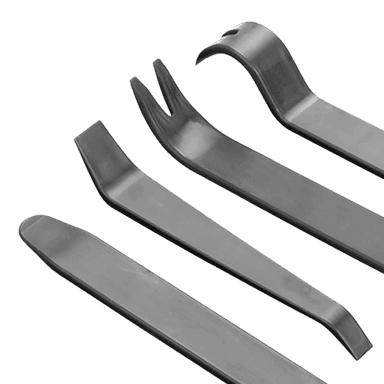
- 🛠️ Flat trim removal tool (plastic)
- 🛠️ Small flathead screwdriver
- 🛠️ Needle-nose pliers
- 🛠️ Shop rags
- 🛠️ Mechanic gloves
- 🛠️ Safety glasses
🔩 Required Parts
HowToo sells all the parts you need for this repair:
- 🔩 Ignition coil pack, 2.5L (A25A engine) - Qty: 4 (replace all four if budget allows)
- 🔩 Dielectric grease (for ignition components) - Qty: 1 small tube
- 🔩 Anti-seize compound (for spark plug threads, optional) - Qty: 1 small tube
- 🔩 Shop towels - Qty: 1 pack
📋 Before You Begin
- Park your Camry on level ground, shift to P (Park), and set the parking brake.
- Open the hood and secure it with the hood prop rod.
- If you prefer extra safety, disconnect the negative battery terminal using the 10mm socket and place the cable where it cannot spring back.
- Have a clean area ready to set coils and bolts so you don’t lose anything.
🔨 Step-by-Step Instructions
Follow these steps in order:
Step 1: Remove the engine cover
- Stand in front of the engine bay and locate the plastic cover on top of the engine with the Toyota logo.
- Grip the cover at both sides and pull straight up firmly; it is held by rubber grommets, not bolts.
- If it feels stuck, use the flat trim removal tool gently at the edges to help pop it up.
Step 2: Identify the ignition coils
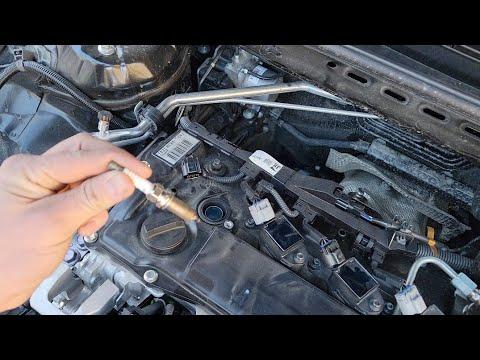
- With the cover off, you’ll see four black coils on top of the engine, each sitting over a spark plug hole.
- Each coil has an electrical connector at one end and is held by a small bolt.
- Coil location doesn’t matter as long as you move one at a time.
Step 3: Unplug the electrical connector from a coil
- Pick one coil to start with (for example, the one closest to the front of the car on the left).
- Locate the small plastic tab on the connector; press it down with your finger or use the small flathead screwdriver gently to depress the tab.
- While holding the tab down, pull the connector straight off the coil body. Do not pull on the wires.
Step 4: Remove the coil retaining bolt
- Place the 10mm socket on the 3/8" drive ratchet (add extension if needed) and fit it over the coil retaining bolt.
- Turn counterclockwise to remove the bolt and set it aside on a clean rag so it doesn’t get lost.
- Keep bolts in order to avoid losing any.
Step 5: Remove the ignition coil
- Grip the coil body and pull it straight upward. It may feel slightly stuck due to the rubber boot seal.
- Twist it gently left and right while pulling up to free it.
- Inspect the coil boot for oil or heavy carbon deposits; if you see oil, there may be a valve cover gasket issue.
Step 6: Prepare the new ignition coil
- Take the new coil and compare it side by side with the old one to confirm same length, connector, and bolt location.
- Place a tiny smear of dielectric grease inside the coil boot opening; this helps sealing and future removal.
- Use only a thin film, not a blob.
Step 7: Install the new ignition coil
- Slide the new coil down into the spark plug tube, ensuring it seats fully onto the spark plug.
- Align the bolt hole on the coil tab with the threaded hole in the engine.
- Install the original coil bolt by hand a few turns to avoid cross-threading.
Step 8: Tighten the coil bolt to spec
- Use the 10mm socket and 3/8" ratchet to snug the bolt lightly.
- Switch to the torque wrench with 10mm socket and tighten the bolt to 9 Nm (80 in-lbs).
- Do not overtighten; the bolt is small.
Step 9: Reconnect the electrical connector
- Push the connector straight onto the coil until you hear or feel a click.
- Lightly tug on the connector to confirm it is locked in place.
Step 10: Repeat for remaining coils
- Repeat Steps 3–9 for each of the remaining three coils, doing only one at a time so you don’t mix up connectors.
- If you are only replacing one failed coil, you can stop after that cylinder, but replacing all four gives more consistent performance on a higher-mileage engine.
Step 11: Reinstall the engine cover
- Line up the engine cover’s rubber grommets with the mounting pegs on top of the engine.
- Press down firmly at each corner and the center until it snaps into place.
Step 12: Reconnect battery (if disconnected)
- Place the negative battery cable back onto the negative terminal.
- Use the 10mm socket and ratchet to tighten the clamp securely. Do not overtighten.
✅ After Repair
- Start your Camry and let it idle. It should run smoothly with no shaking or misfire.
- Check that the check engine light is off. If it was on before, you may need an OBD2 scan tool to clear stored codes, though some codes may clear after several drive cycles.
- Take a short test drive, listening for smooth acceleration and no hesitation.
- After the drive, re-open the hood and check that all connectors are seated and nothing is loose.
💰 DIY vs Shop Cost
Shop Cost: $300–$550 (parts + labor, for 4 coils)
DIY Cost: $120–$260 (parts only, for 4 coils)
You Save: $180–$290 by doing it yourself!
Shop labor rates vary but typically run $100–$150/hour. This repair takes a shop approximately 0.5–1.0 hours.
🎯 Ready to get started?
HowToo makes it easy: same-day/2-day shipping on every part, plus all the tools and specialty tools you need! Check out the parts and tools sections above to add everything to your cart.