









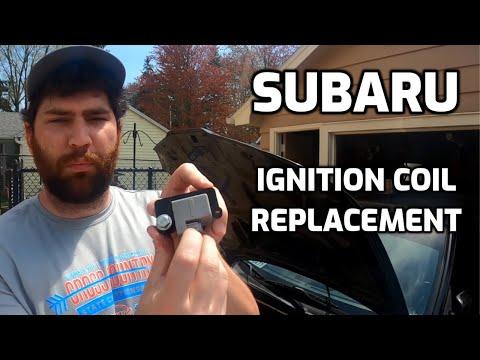




How to Replace Ignition Coils on a 2019-2023 Subaru Forester (Coil-on-Plug) (Engine: Flat 4 2.5L)
Step-by-step DIY instructions with required tools, parts list, and coil bolt torque spec (6.4 Nm)
How to Replace Ignition Coils on a 2019-2023 Subaru Forester (Coil-on-Plug) (Engine: Flat 4 2.5L)
Step-by-step DIY instructions with required tools, parts list, and coil bolt torque spec (6.4 Nm) for 2019, 2020, 2021, 2022, 2023


🔧 Forester - Ignition Coil Replacement
Your Forester uses one ignition coil per cylinder (coil-on-plug). Replacing weak or failed coils can fix misfires, rough idle, and flashing check-engine light, and it’s a good time to inspect connectors and boots for oil or moisture.
Difficulty Level: Intermediate | Estimated Time: 1.5–3.0 hours
⚠️ Safety & Precautions
- 🧤 Let the engine cool fully; coils sit near hot engine parts.
- 🧯 Keep fuel/vapors away from sparks; don’t smoke while working.
- 🔌 Turn ignition OFF and keep the key/fob away from the car.
- 🪫 If you disconnect the battery, you may lose radio presets/settings.
- 🧠 Pull on the connector body, not the wires, to avoid harness damage.
🔧 Required Tools
You'll need the following tools for this repair:
- 10mm socket
- 8mm socket
- 1/4" drive ratchet
- 3/8" drive ratchet
- 6" extension
- Universal joint adapter
- Torque wrench (inch-pound or low-range Nm)
- Flathead screwdriver
- Trim clip removal tool
- Needle-nose pliers
- Fender cover
- Nitrile gloves
- Safety glasses
🔩 Required Parts
HowToo sells all the parts you need for this repair:
- Ignition coil - Qty: 4
- Dielectric grease - Qty: 1
📋 Before You Begin
- 🅿️ Park on level ground, shift to Park, and set the parking brake.
- 🧊 Let the engine cool for at least 30–60 minutes.
- 🧼 Open the hood and install a fender cover to protect paint.
- 🪫 Optional (safer): Disconnect the negative battery cable using a 10mm socket.
🔨 Step-by-Step Instructions
Follow these steps in order:
Step 1: Remove the engine cover (if equipped)
- Use a trim clip removal tool to pop up any push-clips, then lift the cover off. (A trim clip tool is a small pry tool that removes plastic clips without breaking them.)
- Set the cover aside where it won’t get stepped on.
Step 2: Create access to the coils
- On the side with tighter space, loosen the intake hose clamp(s) using a flathead screwdriver or 8mm socket.
- If needed, remove the air inlet duct/air box fasteners with a 10mm socket and move the assembly slightly for more room.
- If you unplug any sensor connector, release the lock tab gently using a flathead screwdriver (do not force it).
Step 3: Unplug one coil electrical connector
- Work one coil at a time so nothing gets mixed up.
- Press the connector lock tab and pull the connector straight off the coil. Use needle-nose pliers only if necessary, and only on the connector body.
Step 4: Remove the coil hold-down bolt
- Use a 10mm socket, ratchet, and 6" extension to remove the coil bolt.
- If access is angled, add a universal joint adapter to reach the bolt.
Step 5: Remove the ignition coil
- Twist the coil gently left-right, then pull it straight out.
- If it feels stuck, keep twisting gently—don’t pry hard against plastic parts.
- Tip: A gentle twist breaks the boot seal.
Step 6: Prep and install the new coil
- Put a very small amount of dielectric grease inside the rubber boot. (Dielectric grease is a non-conductive grease that helps prevent moisture and makes future removal easier.)
- Push the new coil straight onto the spark plug until it fully seats.
Step 7: Reinstall and torque the coil bolt
- Start the coil bolt by hand to avoid cross-threading.
- Tighten with a 10mm socket, then use a torque wrench to finish: Torque to 6.4 Nm (4.7 ft-lbs). (A torque wrench tightens to an exact spec so you don’t strip threads.)
Step 8: Reconnect the coil electrical connector
- Push the connector on until you feel/hear a click.
- Give it a light tug to confirm it’s locked.
Step 9: Repeat for the remaining coils
- Repeat Steps 3–8 for each remaining coil.
- If you removed intake/air box parts for access, reinstall them using the 10mm socket and tighten hose clamps with a flathead screwdriver or 8mm socket.
Step 10: Reinstall the engine cover and reconnect battery (if removed)
- Reinstall the engine cover and clips using the trim clip removal tool as needed.
- If disconnected, reconnect the negative battery cable using a 10mm socket.
✅ After Repair
- 🔍 Start the engine and let it idle for 1–2 minutes; it should run smooth with no shaking.
- 🧪 Take a short test drive and verify there’s no flashing check-engine light.
- 🧰 If the check-engine light stays on, scan for codes—there may be a separate issue (spark plug, injector, vacuum leak, or wiring).
- 🧾 Recheck that all intake clamps and connectors you touched are fully seated.
💰 DIY vs Shop Cost
Shop Cost: $300–$700 (parts + labor)
DIY Cost: $160–$450 (parts only)
You Save: $140–$250 by doing it yourself!
Shop labor rates vary but typically run $100-$150/hour. This repair takes a shop approximately 1.5-2.5 hours.
🎯 Ready to get started?
HowToo makes it easy: same-day/2-day shipping on every part, plus all the tools and specialty tools you need! Check out the parts and tools sections below to add everything to your cart.
Guide for Direct Ignition Coil replace for these Subaru vehicles
| Year Make Model | Sub Model | Engine | Body Style |
|---|---|---|---|
| 2023 Subaru Forester | - | Flat 4 2.5L | - |
| 2022 Subaru Forester | - | Flat 4 2.5L | - |
| 2021 Subaru Forester | - | Flat 4 2.5L | - |
| 2020 Subaru Forester | - | Flat 4 2.5L | - |
| 2019 Subaru Forester | - | Flat 4 2.5L | - |