









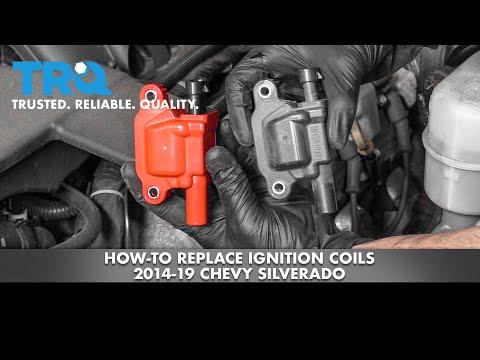





How to Replace Ignition Coils on a 2015-2019 Chevrolet Tahoe (Fix Misfire & Rough Idle) (Engine: V8 6.2L)
Step-by-step coil swap with required tools/parts, safety tips, and coil bolt torque spec (10 Nm / 89 in-lbs)
How to Replace Ignition Coils on a 2015-2019 Chevrolet Tahoe (Fix Misfire & Rough Idle) (Engine: V8 6.2L)
Step-by-step coil swap with required tools/parts, safety tips, and coil bolt torque spec (10 Nm / 89 in-lbs) for 2015, 2016, 2017, 2018, 2019


🔧 Tahoe - Ignition Coil Replacement
Your Tahoe’s ignition coil creates the high voltage needed to fire the spark plug. A weak or failed coil can cause a misfire (rough idle, flashing check engine light, loss of power) and should be replaced to restore smooth running.
Difficulty Level: Beginner | Estimated Time: 0.5-1.5 hours (one coil: ~15 minutes)
⚠️ Safety & Precautions
- ⚠️ Work on a fully cool engine to avoid burns.
- ⚠️ Keep keys/fob away from the vehicle so it can’t accidentally crank.
- ⚠️ Disconnect the negative battery cable to prevent accidental shorts.
- ⚠️ If the check engine light is flashing, avoid driving until repaired (can damage the catalytic converter).
🔧 Required Tools
You'll need the following tools for this repair:
- 10mm socket
- 1/4" ratchet
- 3/8" ratchet
- 3" extension
- 6" extension
- Torque wrench (in-lb or Nm)
- Flathead screwdriver
- Trim clip removal tool
- Needle-nose pliers
- Small pick tool
- Shop towels
- Nitrile gloves
- Safety glasses
- OBD2 scan tool
🔩 Required Parts
HowToo sells all the parts you need for this repair:
- Ignition coil - Qty: 1 (or Qty: 8 if replacing all)
- Spark plug wire (coil-to-plug lead) - Qty: 1 (recommended if boot is oil-soaked or torn)
- Dielectric grease - Qty: 1
📋 Before You Begin
- Park on level ground, shift to Park, set the parking brake, and open the hood.
- Disconnect the negative battery cable: use a 10mm socket and move the cable aside so it can’t spring back.
- If you have a misfire code, note which cylinder is affected (example: P0304 = cylinder 4). Use an OBD2 scan tool to read codes.
🔨 Step-by-Step Instructions
Follow these steps in order:
Step 1: Remove the engine cover (if equipped)
- Grip the cover and pull upward evenly to release the grommets, or remove any fasteners using a trim clip removal tool or 10mm socket (varies by cover style).
- Set the cover aside where it won’t get stepped on.
Step 2: Locate the coil you’re replacing
- The coils sit along the valve covers—one coil per cylinder.
- If you’re chasing a misfire, match the coil to the cylinder flagged by your scan tool.
- Tip: Take a quick photo before unplugging anything.
Step 3: Unplug the coil electrical connector
- Use a flathead screwdriver to gently lift the connector lock tab if needed, then pull the connector straight off.
- If it’s stubborn, use needle-nose pliers carefully on the connector body (not the wires).
Step 4: Remove the coil mounting bolt
- Use a 10mm socket with a 3" extension and 1/4" ratchet to remove the coil bolt.
- Place the bolt somewhere safe so it doesn’t fall into the engine bay.
Step 5: Disconnect the coil-to-plug wire and remove the coil
- Twist the coil-to-plug wire boot slightly to break it loose, then pull it off.
- If the boot is stuck, use a small pick tool to gently work around the boot edge—don’t tear it.
- Lift the coil off its bracket and remove it from the engine bay.
Step 6: Prep the new coil and boot
- Put a tiny dab of dielectric grease inside the wire boot. (Dielectric grease is a non-conductive grease that helps prevent moisture and makes future removal easier.)
- If the old boot is oil-soaked, cracked, or torn, replace the coil-to-plug wire with a new one.
- Wipe any dirt from the area using shop towels.
Step 7: Install the new coil
- Position the new coil on its mount and start the bolt by hand to avoid cross-threading.
- Tighten the coil bolt using a torque wrench: Torque to 10 Nm (89 in-lbs).
- Reconnect the coil-to-plug wire until you feel it seat securely.
Step 8: Reconnect the coil electrical connector
- Push the connector on until it clicks/locks.
- Gently tug-test the connector to confirm it’s fully seated.
Step 9: Reinstall engine cover and reconnect battery
- Reinstall the engine cover by aligning the grommets and pressing down evenly (or reinstall fasteners with a 10mm socket if applicable).
- Reconnect the negative battery cable using a 10mm socket and snug it firmly (do not overtighten).
✅ After Repair
- Use an OBD2 scan tool to clear codes and confirm misfire counters stay at zero on the test drive.
- Start the engine and listen for a smooth idle; verify no check engine light returns.
- Do a 10-15 minute drive with light and moderate acceleration, then recheck for codes.
- If the misfire remains on the same cylinder, the issue may be the spark plug, injector, compression, or wiring—not the coil.
💰 DIY vs Shop Cost
Shop Cost: $180-$450 (one coil) / $600-$1,200 (multiple coils as needed)
DIY Cost: $35-$120 (one coil, parts only) / $280-$900 (set of 8, parts only)
You Save: $145-$330 (one coil) / $320-$600 (multiple coils) by doing it yourself!
Shop labor rates vary but typically run $100-$150/hour. This repair takes a shop approximately 0.5-1.5 hours.
🎯 Ready to get started?
HowToo makes it easy: same-day/2-day shipping on every part, plus all the tools and specialty tools you need! Check out the parts and tools sections below to add everything to your cart.
Guide for Ignition Coil replace for these Chevrolet vehicles
| Year Make Model | Sub Model | Engine | Body Style |
|---|---|---|---|
| 2019 Chevrolet Tahoe | - | V8 5.3L | - |
| 2019 Chevrolet Tahoe | - | V8 6.2L | - |
| 2018 Chevrolet Tahoe | - | V8 5.3L | - |
| 2018 Chevrolet Tahoe | - | V8 6.2L | - |
| 2017 Chevrolet Tahoe | - | V8 5.3L | - |
| 2016 Chevrolet Tahoe | - | V8 5.3L | - |
| 2015 Chevrolet Tahoe | - | V8 5.3L | - |