









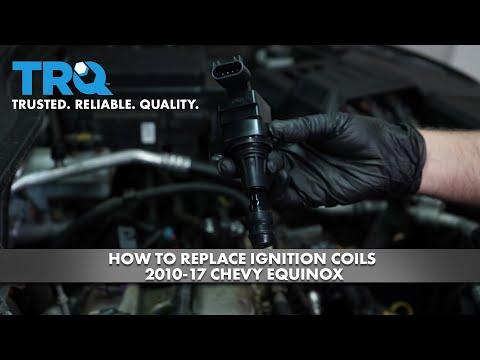




How to Replace Ignition Coils on a 2014 Chevy Equinox 3.6L V6
Step-by-step DIY ignition coil replacement with tools, parts list, torque specs, and safety tips for the 2014 Equinox 3.6L
How to Replace Ignition Coils on a 2014 Chevy Equinox 3.6L V6
Step-by-step DIY ignition coil replacement with tools, parts list, torque specs, and safety tips for the 2014 Equinox 3.6L


🔧 Equinox - Ignition Coil Replacement
You’ll be removing the engine cover, unplugging each ignition coil, and swapping it for a new one. On your Equinox, the front bank coils are easy to reach; the rear bank coils require removing the upper intake manifold.
Difficulty Level: Intermediate | Estimated Time: 2–3 hours (all 6 coils)
⚠️ Safety & Precautions
- ⚠️ Work on a cold engine to avoid burns from hot parts.
- ⚠️ Disconnect the battery negative cable before unplugging ignition components to avoid shorts.
- ⚠️ Keep dirt out of the spark plug wells and intake ports; debris can cause engine damage.
- ⚠️ Do not pull on wires; always release electrical connectors by their tabs.
- ⚠️ When the intake manifold is off, never drop anything into the intake ports.
🔧 Required Tools
You'll need the following tools for this repair:
- 🛠️ 3/8" ratchet
- 🛠️ 1/4" ratchet
- 🛠️ 10mm socket
- 🛠️ 8mm socket
- 🛠️ 13mm socket
- 🛠️ 3/8" drive torque wrench (in-lb and ft-lb capable)
- 🛠️ Short socket extension (3"–6")
- 🛠️ Flathead screwdriver (medium)
- 🛠️ Phillips screwdriver
- 🛠️ Needle-nose pliers
- 🛠️ Trim clip remover tool
- 🛠️ Pick tool set
- 🛠️ Fender cover
- 🛠️ Shop rags
- 🛠️ Small flashlight
- 🛠️ Safety glasses
- 🛠️ Mechanic gloves
🔩 Required Parts
HowToo sells all the parts you need for this repair:
- 🔩 Ignition coil pack (3.6L) - Qty: 6
- 🔩 Intake manifold upper gasket set - Qty: 1
- 🔩 Throttle body gasket - Qty: 1
- 🔩 Dielectric grease (for ignition boots) - Qty: 1
- 🔩 Brake cleaner or electronics cleaner spray - Qty: 1
- 🔩 Shop towels - Qty: 1 pack
📋 Before You Begin
- Park the Equinox on level ground, shift to Park, and set the parking brake.
- Turn off all accessories and remove the key from the ignition.
- Open the hood and install a fender cover to protect paint.
- Disconnect the battery negative terminal using a 10mm socket and move the cable aside.
- Let the engine cool completely if it was driven recently.
🔨 Step-by-Step Instructions
Follow these steps in order:
Step 1: Remove engine cover
- Use your hands to pull up on the plastic engine cover; it is held by rubber grommets, no bolts.
- Lift it straight up and set it aside in a safe place.
- Rock the cover gently side-to-side as you pull.
Step 2: Identify front vs rear cylinder banks
- The front bank (Bank 2) is closest to the radiator; you can see three coils directly.
- The rear bank (Bank 1) is closest to the firewall and is covered by the upper intake manifold.
- Front bank is much easier; start there.
Step 3: Replace front bank ignition coils (cylinders 2, 4, 6)
- Working one coil at a time helps avoid mixing connectors.
- On the first front coil, press the gray locking tab on the electrical connector with your thumb or a pick tool, then pull the connector straight off. Do not pull on the wires.
- Use a 10mm socket and ratchet to remove the single bolt holding the coil to the valve cover.
- Gently twist and pull the coil upward by hand to remove it from the spark plug.
- Wipe the coil boot area with a clean shop rag. Do not drop anything into the plug hole.
- Apply a very small amount of dielectric grease inside the new coil boot using your finger or a cotton swab.
- Install the new coil onto the spark plug, pushing straight down until it seats fully.
- Reinstall the coil bolt with a 10mm socket and torque to 10 Nm (89 in-lb) using a torque wrench.
- Reconnect the electrical connector until it clicks; make sure the lock is engaged.
- Repeat this process for the remaining two front bank coils.
Step 4: Prepare to remove the upper intake manifold (for rear bank access)
- The intake manifold is the large black plastic piece on top, running front to back.
- Before loosening anything, take a picture of vacuum hoses and connectors for reference.
- Remove any plastic engine covers or air inlet trim still in the way using a flathead screwdriver or trim clip remover tool.
Step 5: Loosen air intake duct from throttle body
- Locate the rubber air duct that connects the air filter box to the throttle body (front of intake manifold).
- Use an 8mm socket or flathead screwdriver to loosen the hose clamp at the throttle body.
- Loosen the clamp at the air box the same way.
- Carefully pull the duct off both ends and set it aside.
Step 6: Disconnect sensors and hoses from the intake manifold
- Unplug the throttle body electrical connector by pressing the lock tab with your finger or a pick tool and pulling straight off.
- Unplug the MAP sensor connector on the intake manifold using the same method.
- Use needle-nose pliers to gently squeeze and slide back any spring clamps on small vacuum hoses, then pull the hoses off the manifold nipples.
- If any brackets or wiring harness clips are attached to the manifold, release them with a trim clip remover tool or flathead screwdriver.
- Move hoses and wires aside but don’t stretch them.
Step 7: Remove throttle body (if needed for clearance)
- Use a 10mm socket to remove the four bolts holding the throttle body to the intake manifold.
- Carefully pull the throttle body straight off and set it aside with the coolant hoses still attached (do not kink the hoses).
- Remove the old throttle body gasket and clean the surface lightly with a shop rag.
- Note the bolts’ location for reinstallation. When reinstalling, torque throttle body bolts to 10 Nm (89 in-lb) with a torque wrench.
Step 8: Remove upper intake manifold
- Locate the series of bolts holding the intake manifold to the engine (along the top and sides).
- Use a 10mm socket and ratchet with extension to remove all upper intake bolts. Keep track of their locations.
- If there are any support bracket bolts at the rear or sides, remove them with a 13mm socket.
- Once all bolts are out, gently lift the intake manifold straight up. You may need to wiggle it side to side to break the seal.
- Immediately stuff clean shop rags into each exposed intake port on the cylinder head to prevent anything from falling in.
- Count rags so none are left inside later.
Step 9: Replace rear bank ignition coils (cylinders 1, 3, 5)
- With the intake manifold removed, the three rear coils are now visible on the back bank.
- Working one coil at a time, press the connector tab and unplug the ignition coil connector.
- Use a 10mm socket to remove the coil retaining bolt.
- Twist and pull the coil straight out by hand.
- Inspect the spark plug well for oil or heavy dirt. If present, lightly clean the top area with a rag (do not spray cleaner into the well).
- Apply a small amount of dielectric grease to the new coil boot.
- Install the new coil onto the spark plug and push down until fully seated.
- Reinstall the coil bolt with a 10mm socket and torque to 10 Nm (89 in-lb).
- Reconnect the electrical connector until it clicks.
- Repeat for the remaining two rear coils.
Step 10: Install new intake manifold gaskets
- Remove all old intake manifold gaskets from the cylinder head or manifold (depending on where they stayed).
- Wipe the gasket surfaces with a clean, dry shop rag. Do not use abrasive tools.
- Install the new intake manifold gaskets from your gasket set, making sure each one is fully seated in its groove.
- Remove all shop rags from the intake ports and count them to confirm none are left.
Step 11: Reinstall upper intake manifold
- Carefully lower the intake manifold back into position over the new gaskets without disturbing them.
- Start all manifold bolts by hand using a 10mm socket and extension; do not tighten yet.
- If there are support bracket bolts, start them by hand with a 13mm socket.
- Tighten the intake manifold bolts in a criss-cross pattern (from center outward) with a 10mm socket.
- Torque each intake manifold bolt to 25 Nm (18 ft-lb) using a torque wrench.
- Tighten any support bracket bolts with a 13mm socket and torque to 25 Nm (18 ft-lb).
Step 12: Reinstall throttle body and intake duct
- Install the new throttle body gasket onto the intake manifold.
- Position the throttle body, then install its four bolts by hand using a 10mm socket.
- Tighten and torque throttle body bolts evenly to 10 Nm (89 in-lb).
- Reconnect the throttle body electrical connector until it clicks.
- Reinstall the rubber air intake duct onto the throttle body and air box.
- Use an 8mm socket or flathead screwdriver to tighten both hose clamps snugly.
Step 13: Reconnect all sensors and hoses
- Reconnect the MAP sensor connector and any other electrical connectors you removed.
- Reconnect all vacuum hoses to their correct nipples and slide clamps back into place with needle-nose pliers.
- Reattach any wiring harness clips to the intake manifold using a trim clip remover tool or by pressing them back in by hand.
- Use your earlier photo to verify everything’s back.
Step 14: Reinstall engine cover and reconnect battery
- Align the engine cover grommets with the mounting posts on the engine.
- Press down firmly by hand until the cover snaps into place.
- Reconnect the battery negative terminal using a 10mm socket and tighten it snugly (do not over-tighten).
✅ After Repair
- Start the engine and let it idle for a few minutes. Listen for smooth idle and make sure there are no misfires or unusual noises.
- Check around the intake manifold area for any hissing sounds that might indicate a vacuum leak.
- If the Check Engine Light was on for misfire codes, use an OBD2 scan tool (if available) to clear codes, or the light will usually clear after some drive cycles.
- Take a short test drive, gradually applying throttle. Confirm there is no hesitation, stalling, or reduced power message.
- After the test drive, recheck under the hood to make sure all ducts and hoses are still tight.
💰 DIY vs Shop Cost
Shop Cost: $650–$950 (parts + labor)
DIY Cost: $220–$420 (parts only, all 6 coils plus gaskets)
You Save: $430–$530 by doing it yourself!
Shop labor rates vary but typically run $100–$150/hour. This repair takes a shop approximately 1.5–2.0 hours.
🎯 Ready to get started?
HowToo makes it easy: same-day/2-day shipping on every part, plus all the tools and specialty tools you need! Check out the parts and tools sections above to add everything to your cart.