














How to Replace Ignition Coils on a 2005-2023 Toyota Tacoma 4.0L V6 (Engine: Inline 4 2.7L)
Step-by-step DIY guide with tools, parts, torque specs, safety tips, and misfire checks
How to Replace Ignition Coils on a 2005-2023 Toyota Tacoma 4.0L V6 (Engine: Inline 4 2.7L)
Step-by-step DIY guide with tools, parts, torque specs, safety tips, and misfire checks for 2005, 2006, 2007, 2008, 2009, 2010, 2011, 2012, 2013, 2014, 2015, 2016, 2017, 2018, 2019, 2020, 2021, 2022, 2023


🔧 Tacoma - Ignition Coil Replacement
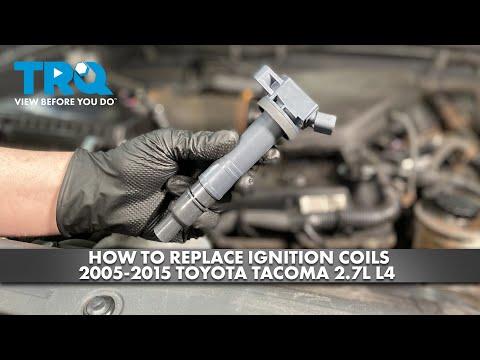
Replacing the ignition coils on your Tacoma helps fix misfires, rough idle, poor acceleration, and flashing check-engine-light conditions caused by weak or failed coils. The 4.0L V6 uses coil-on-plug ignition, meaning each ignition coil sits directly on top of a spark plug.
Difficulty Level: Beginner | Estimated Time: 1-2 hours
⚠️ Safety & Precautions
- ⚠️ Work only with the engine completely cool to avoid burns.
- ⚠️ Disconnect the negative battery cable before unplugging ignition coils.
- ⚠️ Do not pull on ignition coil wires; only press the connector tab and pull the connector body.
- ⚠️ Keep dirt and debris out of the spark plug wells. A spark plug well is the deep tube where the ignition coil and spark plug sit.
- ⚠️ Replace coils one at a time if you are not replacing all six, so parts and connectors do not get mixed up.
🔧 Required Tools
You'll need the following tools for this repair:
- 10mm socket
- 12mm socket
- 3/8-inch drive ratchet
- 3/8-inch drive 6-inch extension
- 3/8-inch drive torque wrench
- Flathead screwdriver
- Needle-nose pliers
- Compressed air nozzle
- Battery terminal wrench 10mm
- Shop towels
- Nitrile gloves
- Safety glasses
🔩 Required Parts
HowToo sells all the parts you need for this repair:
- Ignition coil - Qty: 1-6
- Dielectric grease - Qty: 1 small tube
Note: Replace only the failed coil if you diagnosed one bad cylinder. Replace all six if coils are original, mileage is high, or multiple misfire codes are present.
📋 Before You Begin
- Park your Tacoma on level ground and set the parking brake.
- Shift the manual transmission into 1st gear.
- Let the engine cool completely.
- Open the hood and support it securely.
- Use a 10mm battery terminal wrench to disconnect the negative battery cable.
- If replacing only one coil, match the repair to the misfire code: P0301 through P0306. Cylinder 1 is at the front passenger side, cylinder 2 is at the front driver side.
🔨 Step-by-Step Instructions
Follow these steps in order:
Step 1: Remove the Engine Cover
- Use a 10mm socket and ratchet to remove the engine cover fasteners, if equipped.
- Lift the cover straight up and set it aside on a clean towel.
- Keep bolts in a cup.
Step 2: Locate the Ignition Coils
- Find the six ignition coils on top of the engine valve covers.
- Each coil has one electrical connector and one small mounting bolt.
- The driver-side bank is easier to access. The passenger-side rear coils may need more patience because space is tighter.
Step 3: Clean Around the Coil Area
- Put on safety glasses.
- Use a compressed air nozzle to blow dirt away from the top of each ignition coil.
- Wipe the area with shop towels.
- This prevents dirt from falling into the spark plug well when the coil is removed.
Step 4: Unplug the Ignition Coil Connector
- Use your thumb to press the locking tab on the ignition coil electrical connector.
- If the connector is stuck, use a flathead screwdriver gently under the tab while pulling the connector body rearward.
- Do not pry hard. Older Toyota connectors can become brittle.
- Gentle pressure prevents broken clips.
Step 5: Remove the Ignition Coil Bolt
- Use a 10mm socket, 3/8-inch drive extension, and ratchet to remove the ignition coil mounting bolt.
- Set the bolt aside where it cannot fall into the engine bay.
Step 6: Remove the Old Ignition Coil
- Twist the ignition coil slightly by hand to loosen the rubber boot.
- Pull the coil straight upward.
- If it feels stuck, keep twisting gently while pulling upward.
- Use needle-nose pliers only to move nearby wire clips if needed, not to yank the coil.
Step 7: Inspect the Coil and Spark Plug Well
- Look inside the spark plug well with a flashlight.
- Check for oil, water, dirt, or corrosion.
- If there is oil in the well, the valve cover tube seal may be leaking and should be repaired before installing a new coil.
- If the old coil boot is torn, swollen, cracked, or burned, replacement is correct.
Step 8: Prepare the New Ignition Coil
- Apply a small pea-sized amount of dielectric grease inside the end of the rubber coil boot.
- Dielectric grease is an electrical-safe silicone grease that helps seal out moisture and makes future removal easier.
- Do not fill the boot with grease.
- A little grease is enough.
Step 9: Install the New Ignition Coil
- Push the new ignition coil straight down into the spark plug well by hand.
- You should feel the boot seat onto the spark plug.
- Align the coil mounting hole with the valve cover mounting point.
Step 10: Tighten the Ignition Coil Bolt
- Start the bolt by hand first to avoid cross-threading.
- Use a 10mm socket and 3/8-inch drive torque wrench to tighten the coil bolt.
- Torque to 8 Nm (71 in-lbs)
- Do not overtighten. The bolt is small and the mounting ear can crack.
Step 11: Reconnect the Electrical Connector
- Push the ignition coil connector onto the coil until it clicks.
- Gently tug the connector body to make sure it is locked.
Step 12: Repeat for Any Other Coils
- Use the same 10mm socket, extension, ratchet, and torque wrench for the remaining coils.
- Replace one coil at a time so each connector goes back to the correct coil.
- For tighter rear coils, move hoses or harnesses gently by hand as needed.
- If a small bracket blocks access, use a 12mm socket and ratchet to remove the bracket bolt, then reinstall it after the coil is replaced.
- Torque small 12mm bracket bolts to 19 Nm (14 ft-lbs)
Step 13: Reinstall the Engine Cover
- Set the engine cover back in place.
- Use a 10mm socket and ratchet to reinstall the engine cover fasteners.
- Snug them gently. Do not overtighten plastic cover hardware.
Step 14: Reconnect the Battery
- Use a 10mm battery terminal wrench to reconnect the negative battery cable.
- Make sure the terminal is fully seated and snug.
✅ After Repair
- Start your Tacoma and let it idle for 1-2 minutes.
- Listen for a smooth idle with no shaking or misfire.
- If the check engine light was on, use a basic OBD2 scan tool to clear the stored misfire code after confirming the engine runs correctly.
- Take a short test drive with light acceleration first.
- If the check engine light flashes during the test drive, stop driving and recheck the coil connectors.
- If a misfire remains on the same cylinder, inspect the spark plug, wiring connector, and fuel injector for that cylinder.
💰 DIY vs Shop Cost
Shop Cost: $180-$650, depending on how many coils are replaced
DIY Cost: $45-$360, depending on coil brand and quantity
You Save: $120-$300 by doing it yourself!
Shop labor rates vary but typically run $100-$150/hour. This repair takes a shop approximately 0.5-1.5 hours.
🎯 Ready to get started?
HowToo makes it easy: same-day/2-day shipping on every part, plus all the tools and specialty tools you need! Check out the parts and tools sections below to add everything to your cart.
Guide for Ignition Coil replace for these Toyota vehicles
| Year Make Model | Sub Model | Engine | Body Style |
|---|---|---|---|
| 2023 Toyota Tacoma | - | Inline 4 2.7L | - |
| 2022 Toyota Tacoma | - | Inline 4 2.7L | - |
| 2021 Toyota Tacoma | - | Inline 4 2.7L | - |
| 2020 Toyota Tacoma | - | Inline 4 2.7L | - |
| 2019 Toyota Tacoma | - | Inline 4 2.7L | - |
| 2018 Toyota Tacoma | - | Inline 4 2.7L | - |
| 2017 Toyota Tacoma | - | Inline 4 2.7L | - |
| 2016 Toyota Tacoma | - | Inline 4 2.7L | - |
| 2015 Toyota Tacoma | - | Inline 4 2.7L | - |
| 2015 Toyota Tacoma | - | V6 4.0L | - |
| 2014 Toyota Tacoma | - | Inline 4 2.7L | - |
| 2014 Toyota Tacoma | - | V6 4.0L | - |
| 2013 Toyota Tacoma | - | Inline 4 2.7L | - |
| 2013 Toyota Tacoma | - | V6 4.0L | - |
| 2012 Toyota Tacoma | - | Inline 4 2.7L | - |
| 2012 Toyota Tacoma | - | V6 4.0L | - |
| 2011 Toyota Tacoma | - | Inline 4 2.7L | - |
| 2011 Toyota Tacoma | - | V6 4.0L | - |
| 2010 Toyota Tacoma | - | Inline 4 2.7L | - |
| 2010 Toyota Tacoma | - | V6 4.0L | - |
| 2009 Toyota Tacoma | - | Inline 4 2.7L | - |
| 2009 Toyota Tacoma | - | V6 4.0L | - |
| 2008 Toyota Tacoma | - | Inline 4 2.7L | - |
| 2008 Toyota Tacoma | - | V6 4.0L | - |
| 2007 Toyota Tacoma | - | Inline 4 2.7L | - |
| 2007 Toyota Tacoma | - | V6 4.0L | - |
| 2006 Toyota Tacoma | - | Inline 4 2.7L | - |
| 2006 Toyota Tacoma | - | V6 4.0L | - |
| 2005 Toyota Tacoma | - | Inline 4 2.7L | - |
| 2005 Toyota Tacoma | - | V6 4.0L | - |