









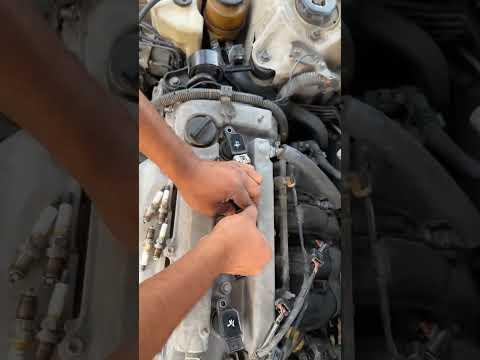




How to Replace Ignition Coils on a 2008-2022 Toyota Highlander V6 (Engine: V6 3.5L)
Step-by-step DIY ignition coil replacement with tools, parts list, torque specs, safety tips, and cost savings
How to Replace Ignition Coils on a 2008-2022 Toyota Highlander V6 (Engine: V6 3.5L)
Step-by-step DIY ignition coil replacement with tools, parts list, torque specs, safety tips, and cost savings for 2008, 2009, 2010, 2011, 2012, 2013, 2014, 2015, 2016, 2017, 2018, 2019, 2020, 2021, 2022


🔧 Highlander - Ignition Coil Replacement
You’ll be replacing the six ignition coils on your Highlander, which sit on top of the spark plugs. Bad coils can cause misfires, rough idle, and loss of power.
This V6 has three coils easy to reach in front, and three at the rear that require removing the upper intake manifold.
Difficulty Level: Intermediate | Estimated Time: 2.5–4 hours
⚠️ Safety & Precautions
- 🔹Disconnect the negative battery terminal before unplugging coils to avoid short circuits and accidental starts.
- 🔹Work on a cold engine to avoid burns from hot metal and coolant hoses.
- 🔹Do not pull on coil wires; always pull on the plastic connector housing.
- 🔹Keep dirt out of the intake ports when the upper intake manifold is removed. Any debris can damage the engine.
- 🔹Do not spray cleaner or liquids directly into the coil connectors.
- 🔹If you feel unsure at intake manifold removal, stop and get help.
🔧 Required Tools
You'll need the following tools for this repair:
- 🔹10mm socket
- 🔹12mm socket
- 🔹8mm socket
- 🔹3/8" drive ratchet
- 🔹1/4" drive ratchet
- 🔹3" socket extension
- 🔹6" socket extension
- 🔹Torque wrench (inch-pound, 30–150 in-lb range)
- 🔹Torque wrench (foot-pound, 10–80 ft-lb range)
- 🔹Flathead screwdriver (small)
- 🔹Phillips screwdriver
- 🔹Trim clip removal tool
- 🔹Needle-nose pliers
- 🔹Plastic fender cover or old towel
- 🔹Magnetic pickup tool
- 🔹Shop rags
- 🔹Dielectric grease packet
- 🔹OBD2 scan tool (basic)
- 🔹Safety glasses
- 🔹Mechanic’s gloves
🔩 Required Parts
HowToo sells all the parts you need for this repair:
- 🔹Ignition coil set (2GR-FKS V6, all cylinders) - Qty: 6
- 🔹Upper intake manifold gasket set - Qty: 1
- 🔹Throttle body gasket - Qty: 1
- 🔹PCV hose clamps - Qty: 2–4 (optional, replace if damaged)
- 🔹Engine cover clips - Qty: 2–4 (optional, if any break)
- 🔹Plastic intake duct clamps - Qty: 2 (optional, if brittle)
- 🔹Dielectric grease - Qty: 1 tube
- 🔹Throttle body cleaner - Qty: 1 (optional but good time to clean)
📋 Before You Begin
- Park on level ground, shift to Park, and set the parking brake.
- Open the hood and let the engine cool completely.
- Note or photograph how hoses and connectors are routed on top of the engine. Photos help a lot during reassembly.
- Disconnect the negative battery terminal using a 10mm socket and tuck the cable aside so it cannot spring back.
- If you have an OBD2 scan tool, read and save any current codes before starting.
🔨 Step-by-Step Instructions
Follow these steps in order:
Step 1: Remove the engine cover
- Lift off the plastic engine cover. It is held by rubber grommets and pulls straight up.
- If it feels stuck, gently pry at the edges with your hands, not a tool, to avoid cracking it.
Step 2: Remove the air intake duct
- Use an 8mm socket or flathead screwdriver to loosen the clamps on the big black hose between the airbox and throttle body.
- Unclip any electrical connectors or hoses attached to the duct using your hands or needle-nose pliers.
- Lift the duct off and set it aside on a clean surface.
Step 3: Identify front and rear ignition coils
- On the front side of the engine (toward the radiator) you’ll see three coils on top: cylinder 2, 4, 6.
- On the rear (toward the firewall), three coils (cylinders 1, 3, 5) are mostly hidden under the upper intake manifold.
- An ignition coil is a small rectangular unit with a single bolt and a connector, sitting directly over a spark plug tube.
Step 4: Replace the three front ignition coils
- Working on one coil at a time, press the tab on the coil connector with your thumb and pull the connector straight off. If tight, gently use a small flathead screwdriver to lift the tab.
- Use a 10mm socket and 1/4" ratchet to remove the single coil hold-down bolt. Do not drop it.
- Twist the coil gently, then pull it straight up to remove.
- Lightly apply a small amount of dielectric grease inside the rubber boot of the new coil.
- Install the new coil straight down onto the plug tube, pushing firmly until it seats.
- Reinstall the coil bolt with the 10mm socket and tighten to 10 Nm (89 in-lb) using the inch-pound torque wrench.
- Reconnect the electrical connector until it clicks.
- Repeat for the remaining two front coils.
Step 5: Prepare to remove upper intake manifold for rear coils
- Place clean shop rags over open areas to prevent dropping bolts.
- Unplug the connectors on the throttle body and any sensors on the top of the intake manifold using your hands or a small flathead screwdriver to help release tabs.
- Loosen and remove small vacuum and PCV hoses attached to the manifold. Note their positions or photograph them.
Step 6: Remove throttle body from intake manifold
- Use a 10mm socket and 3/8" ratchet to remove the four throttle body bolts.
- Gently pull the throttle body away from the manifold and move it aside without stretching the coolant hoses.
- Support it on a shop rag so it doesn’t hang by the hoses.
- Remove the old throttle body gasket. You will install a new one later.
- On reinstallation, you will torque these bolts to 10 Nm (89 in-lb).
Step 7: Remove the upper intake manifold
- Use a 12mm socket and 3/8" ratchet with an extension to remove the intake manifold bolts and any nuts at the front and rear (usually several along the top and sides).
- Keep track of where each bolt came from; some may be different lengths. Lay them out in order on the bench.
- Carefully lift the upper intake manifold straight up. If it resists, double-check for hidden bolts or hoses; do not force it.
- Once off, place it upside down on a clean surface.
- Remove and discard the old upper intake manifold gaskets.
- When reinstalling later, tighten the manifold bolts to 25 Nm (18 ft-lb) in a crisscross pattern.
Step 8: Access and replace the three rear ignition coils
- With the manifold removed, the three rear coils are now visible at the back of the engine.
- Working on one coil at a time, press the tab and unplug the connector.
- Use a 10mm socket and 1/4" ratchet to remove the coil bolt.
- Twist and pull the coil straight out.
- Apply a small amount of dielectric grease in the new coil boot.
- Install the new coil, seat it fully, and reinstall the bolt. Torque to 10 Nm (89 in-lb).
- Reconnect the connector until it clicks.
- Repeat for the remaining two rear coils.
Step 9: Install new intake manifold gaskets and refit manifold
- Wipe the intake port sealing surfaces on the cylinder head with a clean shop rag (dry, no abrasives).
- Install the new upper intake manifold gaskets into their grooves on the manifold.
- Carefully lower the manifold back into place, making sure the gaskets stay seated and no wires or hoses are trapped underneath.
- Hand-thread all manifold bolts and nuts using your fingers to avoid cross-threading.
- Use a 12mm socket and torque wrench to tighten the manifold bolts evenly in a crisscross pattern to 25 Nm (18 ft-lb).
Step 10: Reinstall throttle body with new gasket
- Place the new throttle body gasket onto the intake manifold.
- Position the throttle body and install the four bolts by hand.
- Use a 10mm socket and inch-pound torque wrench to tighten to 10 Nm (89 in-lb) in a crisscross pattern.
- Reconnect the throttle body electrical connector.
Step 11: Reconnect hoses and electrical connectors
- Reconnect all vacuum hoses, PCV hoses, and sensor connectors removed earlier, following your photos for reference.
- Make sure each hose is fully seated and each connector clicks into place.
- Use needle-nose pliers to reinstall any spring clamps on hoses.
Step 12: Reinstall air intake duct
- Reposition the air duct between the airbox and throttle body.
- Use an 8mm socket or flathead screwdriver to tighten the hose clamps snugly. Do not overtighten.
- Reconnect any small hoses or connectors you removed from the duct.
Step 13: Reinstall engine cover and reconnect battery
- Align the engine cover with its mounting grommets and press down firmly at each corner until it seats.
- Reconnect the negative battery terminal using a 10mm socket and tighten to about 5 Nm (44 in-lb)—snug, not overly tight.
✅ After Repair
- Turn the ignition to ON for a few seconds, then start the engine. It may idle slightly rough for a few seconds while the ECU relearns.
- Check around the intake manifold area for any obvious vacuum leaks (hissing sounds) and ensure no warning lights other than normal ones are on.
- Use your OBD2 scan tool to clear any stored misfire codes and confirm they do not return.
- Take a short, gentle test drive. Verify smooth acceleration, no misfires, and no Check Engine light.
- After the drive, recheck under the hood to confirm all hoses and connectors remain secure.
💰 DIY vs Shop Cost
Shop Cost: $650–$950 (parts + labor)
DIY Cost: $280–$540 (parts only, full set of coils and gaskets)
You Save: $370–$410 by doing it yourself!
Shop labor rates typically run $100–$150/hour. This repair takes a shop approximately 2.5–3.0 hours.
🎯 Ready to get started?
HowToo makes it easy: same-day/2-day shipping on every part, plus all the tools and specialty tools you need! Check out the parts and tools sections above to add everything to your cart.
Guide for Ignition Coil Set replace for these Toyota vehicles
| Year Make Model | Sub Model | Engine | Body Style |
|---|---|---|---|
| 2022 Toyota Highlander | - | V6 3.5L | - |
| 2021 Toyota Highlander | - | V6 3.5L | - |
| 2020 Toyota Highlander | - | V6 3.5L | - |
| 2019 Toyota Highlander | - | V6 3.5L | - |
| 2018 Toyota Highlander | - | V6 3.5L | - |
| 2017 Toyota Highlander | - | V6 3.5L | - |
| 2016 Toyota Highlander | - | V6 3.5L | - |
| 2015 Toyota Highlander | - | V6 3.5L | - |
| 2014 Toyota Highlander | - | V6 3.5L | - |
| 2013 Toyota Highlander | - | V6 3.5L | - |
| 2012 Toyota Highlander | - | V6 3.5L | - |
| 2011 Toyota Highlander | - | V6 3.5L | - |
| 2010 Toyota Highlander | - | V6 3.5L | - |
| 2009 Toyota Highlander | - | V6 3.5L | - |
| 2008 Toyota Highlander | - | V6 3.5L | - |