









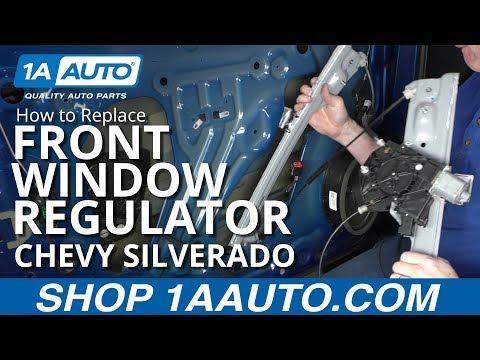





How to Replace Front Window Regulators on a 2019 GMC Sierra 1500
Step-by-step DIY guide with tools, parts list, torque specs, safety tips, and testing procedure
How to Replace Front Window Regulators on a 2019 GMC Sierra 1500
Step-by-step DIY guide with tools, parts list, torque specs, safety tips, and testing procedure


🔧 Sierra 1500 - Front Window Regulator Replacement
You’ll be removing the front door trim panel, unbolting the glass from the regulator, then swapping in a new regulator and testing the window. This procedure is the same on the driver and passenger front doors on your Sierra 1500.
Difficulty Level: Intermediate | Estimated Time: 1.5–2.5 hours per door
⚠️ Safety & Precautions
- ⚠️ Disconnect the negative battery cable before working on power windows to avoid accidental operation and to protect electronics.
- ⚠️ The door has sharp metal edges; wear gloves and move slowly to avoid cuts.
- ⚠️ Support the glass securely when the regulator is disconnected so it cannot fall and shatter.
- ⚠️ Do not slam the door or move the truck until you confirm the glass is bolted back correctly.
- ⚠️ Keep keys out of the ignition while the door is apart so no one operates the window switch.
🔧 Required Tools
You'll need the following tools for this repair:
- 🛠️ Ratchet handle 3/8"
- 🛠️ Extension 3/8" drive (3"–6")
- 🛠️ 7mm socket
- 🛠️ 10mm socket
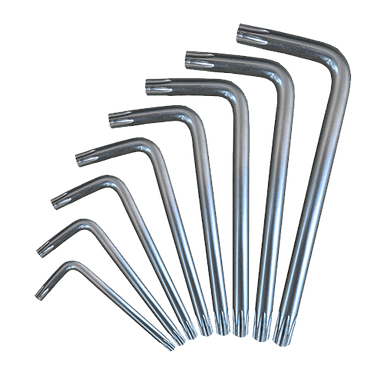
- 🛠️ T15 Torx screwdriver
- 🛠️ T20 Torx screwdriver
- 🛠️ Trim removal tool plastic (specialty)
- 🛠️ Flat blade screwdriver small
- 🛠️ Needle-nose pliers
- 🛠️ Painter’s tape 1" or 2"
- 🛠️ Work gloves
- 🛠️ Safety glasses
- 🛠️ Torque wrench 3/8" drive (in-lb and ft-lb scale)
- 🛠️ Magnetic pickup tool
- 🛠️ Shop light or headlamp
🔩 Required Parts
HowToo sells all the parts you need for this repair:
- 🔩 Front window regulator with motor assembly – driver side - Qty: 1
- 🔩 Front window regulator with motor assembly – passenger side - Qty: 1
- 🔩 Front door panel push clips - Qty: 10–15 per door in case some break
- 🔩 Butyl door vapor barrier tape/sealer - Qty: 1 roll
- 🔩 Electrical contact cleaner spray - Qty: 1
- 🔩 Blue threadlocker (medium strength) - Qty: 1 tube
📋 Before You Begin
- Park the Sierra 1500 on level ground, set the parking brake, and open the front door you will be working on fully.
- Lower the window to about halfway if it still moves; this helps access the glass mounting bolts.
- Turn ignition OFF and remove the key from the truck.
- Disconnect the negative battery cable using the 10mm socket, then wait at least 2–3 minutes before unplugging any electrical connectors in the door.
- Lay down a clean blanket or cardboard to protect the door panel and trim pieces you remove.
🔨 Step-by-Step Instructions
Follow these steps in order:
Step 1: Remove door handle and switch trim pieces
- Use the trim removal tool plastic to gently pry up the window/lock switch panel at the armrest; work from the rear edge.
- Lift the panel and use the flat blade screwdriver small to release the locking tabs on the electrical connectors, then unplug the connectors and set the panel aside.
- Pry off the small trim cover inside the interior door pull handle with the trim removal tool plastic to expose a screw.
- On some trucks, there is a small trim piece behind the interior door release handle; carefully pop it off with the trim removal tool plastic.
Step 2: Remove door panel fasteners
- Use the T15 Torx screwdriver or T20 Torx screwdriver (varies by position) to remove the screws behind the armrest handle and behind the door release handle trim.
- Use the 7mm socket with the ratchet handle 3/8" to remove all visible screws at the bottom edge and sides of the door panel. There are usually several 7mm screws along the lower edge.
- Check carefully around the perimeter and inside the pull pocket so no screws are missed. Missing one makes panel removal hard
Step 3: Remove the door panel
- Starting at the bottom corner of the door, slide the trim removal tool plastic between the panel and the metal door and gently pry outward to pop the push clips loose.
- Work your way around the sides and bottom of the panel until all clips have released. You will hear them pop.
- Lift the panel straight up and away from the door to release it from the top window channel.
- Reach behind the panel and disconnect any remaining electrical connectors (courtesy light, door handle cable) using the flat blade screwdriver small if needed to release tabs.
- Set the door panel aside on the blanket, face up, to avoid scratching.
Step 4: Remove the moisture barrier (vapor barrier)
- The thin plastic or foam sheet on the door is the vapor barrier; it keeps water out of the cabin.
- Carefully peel it back starting at a corner using your hands and the trim removal tool plastic, trying not to tear it. The sticky material is butyl sealer.
- Peel it back far enough to access the window regulator and motor but do not remove any wiring clips you don’t need to.
- If the butyl gets dirty, you can add new butyl sealer later for a good seal.
Step 5: Secure the window glass
- If the glass is not roughly halfway up, gently move it by reconnecting the window switch temporarily and cycling it, OR by hand if the regulator is already failed in a safe position.
- Once you can see the glass mounting clamps through the access holes, turn ignition OFF again and disconnect the switch if you reconnected it.
- Use painter’s tape 1" or 2" to tape the top edge of the glass to the door frame on the outside of the door. Run several strips from the glass over the top of the door to the inside.
- Use extra tape; falling glass is expensive
Step 6: Detach the glass from the regulator
- Locate the two bolts or clamps where the regulator attaches to the glass through access holes.
- Use the 10mm socket with the ratchet handle 3/8" to loosen and remove these glass clamp bolts.
- Do not overtighten or strip these; keep the bolts for reuse.
- Once the bolts are out, carefully slide the glass fully up into the door frame by hand and add more painter’s tape to hold it firmly in the fully raised position.
Step 7: Disconnect the window motor wiring
- Find the electrical connector going to the window motor.
- Press the tab with your thumb or the flat blade screwdriver small and pull the connector straight out.
- If there is any corrosion, use a quick shot of electrical contact cleaner spray and let it dry.
Step 8: Remove the old window regulator and motor
- Locate the bolts holding the regulator tracks and the motor to the door (usually several 10mm bolts around the regulator and motor).
- Use the 10mm socket, extension 3/8" drive (3"–6"), and ratchet handle 3/8" to remove all regulator and motor mounting bolts.
- Keep track of bolt locations; some may be different lengths.
- Support the regulator assembly with one hand and guide it out through the large opening in the inner door skin.
- If it catches, rotate or angle it slightly until it comes free. Do not force; change angle
Step 9: Install the new regulator and motor assembly
- Compare the new regulator to the old one on the ground to make sure all mounting points and connectors match.
- Feed the new regulator and motor into the door opening in the same orientation as the old one.
- Align the mounting holes in the regulator and motor with the holes in the door.
- Apply a small drop of blue threadlocker (medium strength) to each mounting bolt thread.
- Install all the 10mm mounting bolts by hand first to avoid cross-threading.
- Tighten the regulator track bolts with the 10mm socket and ratchet handle 3/8" to 10 Nm (89 in-lbs).
- Tighten the motor bolts with the 10mm socket to 10 Nm (89 in-lbs) as well.
Step 10: Reconnect the motor and attach the glass
- Plug the motor electrical connector back in until it clicks.
- Reconnect the window switch temporarily by plugging its harness back into the switch panel, but leave the panel hanging safely.
- Reconnect the negative battery cable using the 10mm socket and tighten to 15 Nm (11 ft-lbs).
- Turn the ignition to ON (engine off) and use the switch to move the regulator clamps to the position where they line up with the glass mounting points, then turn ignition OFF.
- Carefully remove the painter’s tape holding the glass and lower the glass slowly into the clamps by hand.
- Reinstall the glass clamp bolts using the 10mm socket and tighten them to 10 Nm (89 in-lbs). Do not overtighten glass clamps
Step 11: Test window operation before reassembly
- With the door panel still off, turn ignition ON.
- Operate the window switch and run the glass fully up and down several times.
- Listen for scraping, clicking, or binding; the glass should move smoothly and at normal speed.
- If it binds or tilts, loosen the glass clamp bolts with the 10mm socket, gently adjust the glass position, then re-tighten and retest.
- Turn ignition OFF once you are satisfied.
Step 12: Reinstall vapor barrier and tidy wiring
- Press the vapor barrier back into place, lining it up with its original position.
- If the butyl sealer no longer sticks well, add fresh butyl door vapor barrier tape/sealer along the edges and press firmly.
- Make sure no wiring is pinched and that harnesses are clipped back to their holders using your fingers or needle-nose pliers if needed.
Step 13: Reinstall the door panel
- Reconnect all electrical connectors to the door panel (switches, courtesy light) by hand until they click.
- Hook the top of the door panel over the window channel and press it down into place.
- Align the push clips with their holes in the door and press around the edges of the panel with your hands to snap them in.
- Install any new front door panel push clips where old ones broke.
- Reinstall the 7mm screws at the bottom and sides using the 7mm socket and tighten to 3–4 Nm (27–35 in-lbs) (snug, not very tight).
- Reinstall the Torx screws with the T15 Torx screwdriver or T20 Torx screwdriver behind the pull handle and door release; tighten to 3–4 Nm (27–35 in-lbs).
- Snap the trim covers back over the screws and reinstall the switch panel by plugging in the connectors and pressing it down until it clicks.
Step 14: Final functional check
- Turn ignition ON and check the window again (auto-down and auto-up if equipped), as well as door locks and mirror switches.
- Close the door and check for rattles by gently closing it and tapping the inner panel with your hand.
- Repeat the process on the other front door if you are replacing both regulators.
✅ After Repair
- Operate each front window fully up and down at least 5–10 times to ensure the regulator is seated and the glass tracks smoothly.
- Verify the one-touch (auto) up/down feature, if equipped, works properly; if not, perform a learn cycle by holding the switch up for 2–5 seconds after the window fully closes.
- Confirm all door switches, locks, and speakers work correctly.
- Listen for wind noise or rattles during a short drive; if present, recheck the door panel clips and vapor barrier.
💰 DIY vs Shop Cost
Shop Cost: $450–$700 per front door (parts + labor)
DIY Cost: $120–$220 per front door (parts only)
You Save: $330–$480 per door by doing it yourself!
Shop labor rates typically run $100–$150/hour. This repair takes a shop about 1.5–2.0 hours per door.
🎯 Ready to get started?
HowToo makes it easy: same-day/2-day shipping on every part, plus all the tools and specialty tools you need! Check out the parts and tools sections above to add everything to your cart.