









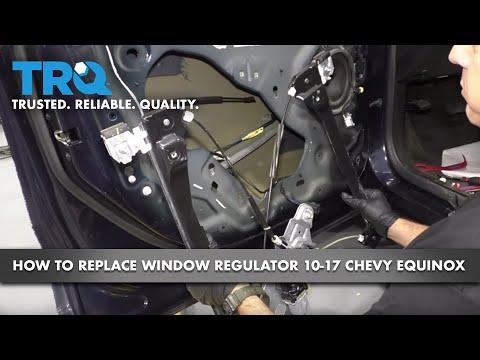



How to Replace Front Window Regulators on a 2018-2024 Chevy Equinox
Step-by-step DIY guide with tools, parts list, safety tips, torque specs, and testing instructions
How to Replace Front Window Regulators on a 2018-2024 Chevy Equinox
Step-by-step DIY guide with tools, parts list, safety tips, torque specs, and testing instructions for 2018, 2019, 2020, 2021, 2022, 2023, 2024


🔧 Equinox - Front Window Regulator Replacement
This guide shows you how to replace a front power window regulator (the mechanism that moves the glass up and down) on your Equinox. The steps are almost the same for the driver and passenger front doors.
Difficulty Level: Intermediate | Estimated Time: 2–3 hours per door
⚠️ Safety & Precautions
- ⚠️ Disconnect the negative battery cable before working to avoid accidental window movement or airbag issues.
- ⚠️ Your Equinox has a side airbag in the door area; do not poke or drill anywhere except where described.
- ⚠️ Support the glass securely before loosening the glass clamps so it does not drop and shatter.
- ⚠️ Use jack stands or blocks only if you raise the vehicle for better access, never rely on a jack alone.
- ⚠️ Wear safety glasses when drilling out rivets; metal chips can fly.
- ⚠️ Do not turn the ignition on while switches and airbags are unplugged.
🔧 Required Tools
You'll need the following tools for this repair:
- 🛠️ Ratchet handle 3/8"
- 🛠️ 7mm socket
- 🛠️ 10mm socket
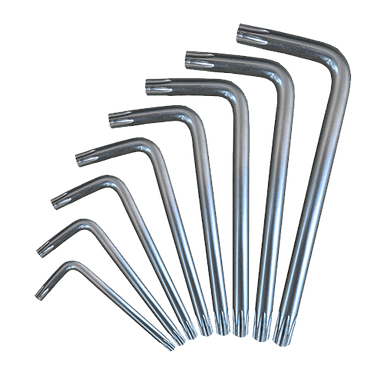
- 🛠️ T15 Torx screwdriver
- 🛠️ T20 Torx screwdriver
- 🛠️ T30 Torx bit
- 🛠️ Trim removal tool set (plastic)
- 🛠️ Flat blade screwdriver small
- 🛠️ Phillips screwdriver #2
- 🛠️ Electric drill
- 🛠️ 5mm drill bit for rivet removal
- 🛠️ Rivet gun (for 6.4mm rivets) (specialty)
- 🛠️ Torque wrench 3/8" drive (5–30 Nm range)
- 🛠️ Plastic masking tape 2"
- 🛠️ Clean shop rags
- 🛠️ Utility knife
- 🛠️ Panel clip pliers (specialty)
- 🛠️ Work gloves
- 🛠️ Safety glasses
🔩 Required Parts
HowToo sells all the parts you need for this repair:
- 🧩 Front power window regulator with motor (left or right, as needed) - Qty: 1
- 🧩 Door trim panel clips - Qty: 8–12
- 🧩 Window regulator mounting rivets 6.4mm (1/4") aluminum - Qty: 6–8
- 🧩 Butyl sealant or waterproof tape for vapor barrier - Qty: 1 roll
- 🧩 Replacement vapor barrier (if original tears badly) - Qty: 1
- 🧩 Dielectric grease for electrical connectors - Qty: small tube
- 🧩 Glass clamp bolts (if not reused, M6) - Qty: 2
📋 Before You Begin
- Park the Equinox on level ground, shift to Park, and set the parking brake.
- Turn ignition off and remove the key or fob from the vehicle.
- Open the affected front door fully for working space.
- Disconnect the negative battery terminal using the 10mm socket and move the cable aside so it cannot touch the post.
- Lower the window until you can see the glass clamp bolts through the access holes; if the regulator is dead, you will adjust the glass by hand after loosening it.
🔨 Step-by-Step Instructions
Follow these steps in order:
Step 1: Remove door handle and switch trim
- Use a plastic trim removal tool to gently pry up the window switch panel from the armrest starting at the rear edge.
- Lift the panel and disconnect the electrical connectors by pressing the tabs with a flat blade screwdriver small.
- Apply a small amount of dielectric grease to the connector seals if they look dry. Helps prevent corrosion later.
- Use the trim removal tool to pop off the small trim cover behind the interior door handle (where your fingers pull the handle).
Step 2: Remove door panel retaining screws
- Use a T15 Torx screwdriver or T20 Torx screwdriver (varies slightly by build) to remove the screw behind the interior handle you just uncovered.
- Use a 7mm socket and ratchet to remove the screws in the armrest area and at the bottom of the door panel (typically 2–3 screws).
- Place all screws in a small container so you do not lose them. Keep screws grouped by location.
Step 3: Remove the door panel
- Insert a plastic trim removal tool between the door panel and metal door at the bottom corner.
- Gently pry to release the first clip; then work your way around the panel edge. A panel clip pliers makes this easier.
- Once all clips are loose, lift the panel straight up to unhook it from the window channel at the top.
- Reach behind the panel and disconnect the interior door handle cable with a flat blade screwdriver small by popping the clip from its bracket and then sliding the cable end out.
- Disconnect any remaining electrical connectors (door speaker, courtesy light) by hand or with the flat blade screwdriver small.
- Set the door panel aside on a clean cloth to avoid scratching it.
Step 4: Remove the vapor barrier (water shield)
- The vapor barrier is the plastic sheet stuck to the metal door with sticky butyl sealant.
- Gently peel the barrier away using your hands and a plastic trim removal tool, keeping the sealant intact as much as possible.
- Do not tear the barrier if you can avoid it; if you must cut it, use a utility knife and make clean cuts.
- Fold the barrier up and tape it to the door with masking tape 2" so it is out of your way.
Step 5: Secure and release the glass from the regulator
- Locate the glass clamp bolts through the large access openings in the inner door skin; they hold the glass to the regulator.
- If the window is too high or low, carefully move the glass by hand until you can reach the bolts.
- Use a 10mm socket and ratchet to loosen (do not remove fully) the two glass clamp bolts.
- Once loose, lift the glass fully up into the door frame by hand.
- Use masking tape 2" to tape the glass to the top of the door frame on the outside and inside to hold it securely. Use several long tape strips.
Step 6: Disconnect the regulator and motor wiring
- Follow the wiring harness from the motor to its connector.
- Use a flat blade screwdriver small to press the locking tab and unplug the motor connector.
- If the harness is clipped to the door, release it using the trim removal tool or panel clip pliers.
Step 7: Drill out the regulator mounting rivets
- The factory regulator is usually held with large aluminum rivets.
- Put on your safety glasses and work gloves.
- Use an electric drill with a 5mm drill bit to drill through the center of each rivet head on the regulator and motor mounting points.
- Drill slowly until the rivet heads come off; push the remaining rivet shanks through the door using a flat blade screwdriver small.
- Collect rivet pieces from inside the door opening with your hand or shop rags so they do not rattle later.
Step 8: Remove the old regulator and motor assembly
- Support the regulator with one hand through the access opening.
- Slide the regulator and motor assembly out through the largest access hole in the door, twisting slightly as needed.
- Note the routing of the cables and the position of the assembly for easier installation of the new one. Take a quick photo as reference.
Step 9: Install the new regulator assembly
- Insert the new window regulator with motor into the door through the same large opening.
- Align the regulator and motor mounting holes with the door’s existing rivet holes.
- Temporarily hold the assembly in place using a couple of masking tape 2" strips or by installing two temporary M6 bolts if your replacement kit allows it.
Step 10: Fasten regulator and motor with rivets or bolts
- If using rivets (OEM style), load a 6.4mm rivet into your rivet gun (specialty) and install rivets into each mounting hole for the motor and regulator track.
- Set each rivet firmly so the assembly does not move.
- If your replacement kit uses bolts instead, use the provided M6 bolts and nuts with a 10mm socket and wrench, and tighten to 10 Nm (89 in-lbs).
Step 11: Reattach the glass to the new regulator
- Carefully remove the masking tape 2" holding the glass while supporting the glass with one hand.
- Lower the glass slowly until it rests into the new regulator’s glass clamps.
- Use a 10mm socket and ratchet to tighten the two glass clamp bolts to 10 Nm (89 in-lbs).
- Ensure the glass sits evenly in the front and rear channels. Glass should not bind.
Step 12: Reconnect wiring and test movement (with care)
- Reconnect the motor electrical connector by hand; push until it clicks.
- Lightly secure any harness clips back into their holes using your fingers or panel clip pliers.
- Temporarily reconnect the negative battery cable with the 10mm socket.
- Turn ignition to ON (engine off), plug the window switch back into its connector, and operate the window fully up and down while supporting the panel area by hand.
- Check for smooth movement, no grinding noises, and correct alignment.
- Turn ignition off and disconnect the negative battery cable again with the 10mm socket.
Step 13: Reinstall the vapor barrier
- Press the vapor barrier back onto the door using the existing sticky butyl.
- If sections do not stick, add fresh butyl sealant or waterproof tape around the edges, especially at the bottom.
- Make sure there are no large gaps; this prevents water leaks and wind noise.
Step 14: Reinstall the door panel
- Reconnect all electrical connectors (switch panel, speaker, courtesy light) by hand, ensuring each clicks into place.
- Reattach the interior door handle cable by sliding the cable end into its slot and clipping the sheath back into the bracket using your fingers or a flat blade screwdriver small.
- Hook the top of the door panel over the window ledge and align the panel clips with their holes.
- Firmly press around the edges to engage all clips. Replace any broken clips with new ones by hand.
Step 15: Reinstall screws and trim pieces
- Install the armrest and lower door screws with the 7mm socket and ratchet. Tighten snugly to about 3–4 Nm (27–35 in-lbs) (do not over-tighten; it is plastic).
- Install the screw behind the interior handle using the T15 Torx screwdriver or T20 Torx screwdriver and tighten to about 3–4 Nm (27–35 in-lbs).
- Snap the small trim cover behind the handle back into place by hand.
- Reconnect and snap the window switch panel back into the armrest using your hands; press evenly until it seats flush.
Step 16: Final battery connection and window initialization
- Reconnect the negative battery cable using the 10mm socket and tighten to 15 Nm (11 ft-lbs).
- Turn ignition to ON.
- On the affected window, pull the window switch up to fully close the window and hold the switch up for about 5 seconds after it reaches the top. Then push the switch down to fully open it and hold for another 5 seconds. This helps re-learn the window limits for auto-up/down.
- Repeat once more if auto function does not work the first time.
✅ After Repair
- 🚗 Operate the window several times to confirm smooth, quiet movement and proper auto-up/auto-down function.
- 🚗 Check that the window seals evenly all around with no gaps and no wind noise during a short drive.
- 🚗 Spray a little water on the outside of the window and door area and check inside for leaks.
- 🚗 Verify all door functions: locks, inside and outside handles, mirror switch, speakers, and courtesy lights.
💰 DIY vs Shop Cost
Shop Cost: $350–$550 per door (parts + labor)
DIY Cost: $120–$220 per door (parts only)
You Save: $230–$330 per door by doing it yourself!
Shop labor rates vary but typically run $100–$150/hour. This repair takes a shop approximately 1.5–2.0 hours per door.
🎯 Ready to get started?
HowToo makes it easy: same-day/2-day shipping on every part, plus all the tools and specialty tools you need! Check out the parts and tools sections above to add everything to your cart.
Guide for Window Motor and Regulator Assembly replace for these Chevrolet vehicles
| Year Make Model | Sub Model | Engine | Body Style |
|---|---|---|---|
| 2024 Chevrolet Equinox | - | - | - |
| 2023 Chevrolet Equinox | - | - | - |
| 2022 Chevrolet Equinox | - | - | - |
| 2021 Chevrolet Equinox | - | - | - |
| 2020 Chevrolet Equinox | - | - | - |
| 2019 Chevrolet Equinox | - | - | - |
| 2018 Chevrolet Equinox | - | - | - |