














How to Replace Front Window Regulators on a 2012-2017 Toyota Camry
Step-by-step DIY guide with tools, parts list, torque specs, safety tips, and cost savings
How to Replace Front Window Regulators on a 2012-2017 Toyota Camry
Step-by-step DIY guide with tools, parts list, torque specs, safety tips, and cost savings for 2012, 2013, 2014, 2015, 2016, 2017


🔧 Camry - Front Window Regulator Replacement
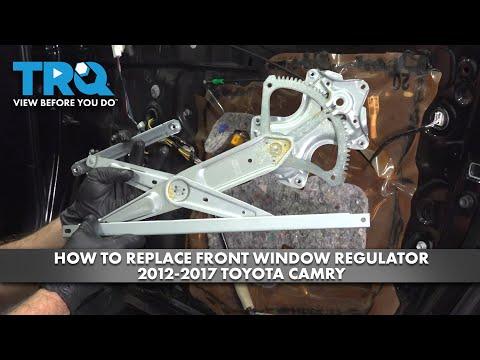
You’ll be removing the interior door panel, unbolting the glass, then swapping the window regulator (the scissor/track mechanism that moves the glass) and motor assembly, and reinstalling everything. This will fix issues like the glass not moving, moving crooked, or making grinding noises.
Difficulty Level: Intermediate (patient beginner can do it) | Estimated Time: 1.5–2.5 hours per door
Quick question: Driver side, passenger side, or both? Steps are the same per front door, so I’ll describe one side and you can repeat for the other.
⚠️ Safety & Precautions
- ⚠️ Always turn ignition OFF and disconnect the negative battery cable before working on power windows so the motor cannot move unexpectedly.
- ⚠️ Wear safety glasses and gloves; broken glass and sharp metal edges inside the door can cut you.
- ⚠️ Support the window glass with tape before unbolting it so it cannot drop and shatter.
- ⚠️ Do not slam the door while the glass is loose or while the regulator is removed.
- ⚠️ Keep the key out of the ignition until reassembly to avoid accidental switch operation.
🔧 Required Tools
You'll need the following tools for this repair:
- 10mm socket
- 1/4" drive ratchet
- 1/4" drive extension (3–6")
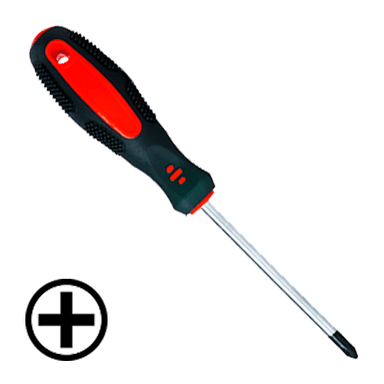
- Phillips #2 screwdriver
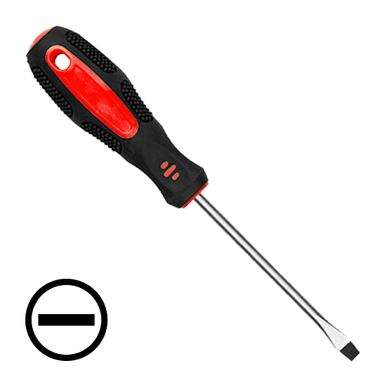
- Flathead screwdriver (small)
- Plastic trim removal tool set (specialty)
- Plastic clip removal tool (specialty)
- Needle-nose pliers
- Torque wrench (inch-pound, 30–100 in-lb range)
- Panel marker or masking tape roll
- Utility knife
- Work light or flashlight
- Mechanic gloves
- Safety glasses
🔩 Required Parts
HowToo sells all the parts you need for this repair:
- Front window regulator with motor assembly (left or right, power) - Qty: 1 per door
- Front door trim panel push clips - Qty: 6–10 (optional but recommended)
- Butyl sealant tape for moisture barrier - Qty: 1 roll
- Masking tape (wide, painter’s tape) - Qty: 1 roll
- Dielectric grease for electrical connectors - Qty: small tube (optional)
📋 Before You Begin
- Park the Camry on level ground, shift to Park, and set the parking brake.
- Lower the window you’re working on to about halfway if it will still move; this helps access the glass bolts later.
- Turn ignition OFF and remove the key.
- Disconnect the negative battery cable:
- Use a 10mm socket on the negative terminal clamp.
- Move the cable aside so it cannot touch the terminal.
- Have a clean area ready to place the door panel so you don’t scratch it.
🔨 Step-by-Step Instructions
Follow these steps in order:
Step 1: Remove door handle and switch trim pieces
- Use a plastic trim removal tool to gently pry up the window switch panel from the armrest; start at the rear edge and work forward.
- Lift the switch panel and unplug the electrical connector by pressing the tab with a flathead screwdriver if needed.
- Use the plastic trim removal tool to pop off the small trim cover behind the interior door handle (little rectangular piece).
- Work slowly to avoid cracking plastic.
Step 2: Remove screws holding the door panel
- Behind the interior handle, remove the exposed screw with a Phillips #2 screwdriver.
- In the armrest pocket (where your hand pulls the door closed), remove the screw using the Phillips #2 screwdriver.
- Check along the lower edge of the door panel for any additional Phillips screws and remove them with the Phillips #2 screwdriver (usually 0–1 extra).
- Keep screws sorted so you know where they go.
Step 3: Release the door panel clips and remove the panel
- Insert a plastic trim removal tool between the panel edge and the metal door near the bottom corner.
- Gently pry to pop the first clip loose; you’ll hear a “pop.”
- Work your way around the sides and bottom, popping all clips using the trim tool or a clip removal tool.
- Lift the door panel straight up to unhook it from the top edge by the window sill.
- Carefully reach behind and disconnect:
- The door latch cable(s): flip the plastic retainer open with a flathead screwdriver, then unhook the cable ends.
- Any remaining electrical connectors using your fingers or needle-nose pliers to press release tabs.
- Set the door panel aside on a soft surface.
Step 4: Remove or loosen the moisture barrier
- The clear or white plastic sheet stuck to the door is the moisture barrier; it keeps water off the electronics.
- Use a utility knife to carefully cut through the butyl adhesive where needed, then peel the barrier back from the front half of the door.
- Do not tear it; let it hang from the rear side or top. You will reseal it later with new butyl tape.
Step 5: Secure the window glass
- If the glass is up, turn the key ON briefly and lower the window until you can see the two glass clamp bolts through the large access holes, then turn key OFF and disconnect battery again.
- From the outside, close the door and run 2–3 long strips of masking tape from the outside of the glass over the top of the door frame and down the inside. This holds the glass once unbolted.
- Use wide tape so it grips the glass well.
Step 6: Unbolt the glass from the regulator
- Look through the large access holes in the door’s inner metal panel to find the two bolts that clamp the glass to the regulator.
- Use a 10mm socket and ratchet to loosen and remove these two glass bolts.
- Gently push the glass up by hand from the bottom edge and fully raise it into the door frame.
- Add more masking tape over the top to hold the glass securely against the frame.
Step 7: Disconnect the window motor and locate regulator bolts
- Find the electrical connector at the window motor (toward the front lower area of the door).
- Press the locking tab and unplug it by hand or with a flathead screwdriver to help lift the tab.
- Identify all regulator mounting bolts (usually 4–6) and the 3 motor bolts, all using 10mm heads, visible through the large and small holes in the inner door skin.
Step 8: Remove the regulator and motor assembly
- Using a 10mm socket, extension, and ratchet, remove the regulator mounting bolts around the tracks.
- Remove the 3 motor mounting bolts using the same 10mm socket setup.
- Carefully slide the regulator and motor assembly out through the largest access hole in the door. Maneuver it gently to avoid bending the metal.
- Take a photo before removal to match orientation.
Step 9: Transfer motor (if buying regulator only)
- If your new part is regulator only (no motor attached), you’ll need to move the old motor:
- Place the old assembly on a table.
- Remove the 3 motor mounting bolts with a 10mm socket.
- Install the motor on the new regulator in the same position.
- Tighten the 3 bolts to 7.5 Nm (66 in-lb) using your torque wrench.
- If you bought a complete regulator-with-motor assembly, skip this step.
Step 10: Install the new regulator and motor assembly
- Carefully feed the new assembly into the door through the large access opening, matching the orientation of the old one.
- Start all mounting bolts for the regulator and motor by hand using a 10mm socket so the parts can still move slightly for alignment.
- Once all bolts are threaded, snug them evenly with the ratchet, then torque:
- Regulator and motor mounting bolts: 7.5 Nm (66 in-lb).
- Reconnect the motor electrical connector; add a tiny amount of dielectric grease if you have it.
Step 11: Attach the glass to the new regulator
- Reconnect the negative battery cable with a 10mm socket just for this step.
- Turn ignition to ON (engine OFF).
- With one hand supporting the glass, carefully remove or loosen the masking tape holding the glass.
- Using the window switch, lower or raise the regulator until the glass clamp openings align with the holes in the door (make small movements).
- Lower the glass gently into the clamps so it sits straight.
- Install the two glass clamp bolts with a 10mm socket and snug them, then torque to 7.5 Nm (66 in-lb).
- Test the window briefly up and down to ensure smooth movement and that the glass stays square in the frame.
- Turn ignition OFF, disconnect the battery negative cable again with the 10mm socket before reassembly.
Step 12: Reinstall the moisture barrier
- Press the plastic sheet back into place on the inner door metal.
- Apply new butyl sealant tape along any sections where the old adhesive is weak or torn, pressing firmly with your fingers.
- Good sealing helps prevent water leaks and wind noise.
Step 13: Reinstall the door panel
- Reconnect all electrical connectors to the switches and any courtesy lights by hand.
- Reconnect the door latch cable(s): hook the ball ends into place, then clip the plastic retainers back into their brackets using your fingers or needle-nose pliers.
- Hang the top of the door panel onto the window sill lip, making sure it sits evenly along the top edge.
- Once aligned, slap around the edges with the heel of your hand to re-engage all the plastic clips. If any clips stayed in the door, pull them out with a clip removal tool and move them back to the panel before pushing the panel on.
- Reinstall the Phillips screws (interior handle area, armrest, and any bottom screws) using the Phillips #2 screwdriver and snug to about 3–4 Nm (26–35 in-lb) (just firmly hand-tight).
- Snap the small interior handle trim cover back in by hand.
- Reinstall the window switch panel: plug in the connector, then press the panel down until it clicks into place.
Step 14: Reconnect battery and initialize auto window function
- Reconnect the negative battery cable using a 10mm socket and tighten the nut to about 5 Nm (44 in-lb) (snug, not overtightened).
- Turn ignition to ON.
- Initialize the auto-up/down (Toyota procedure for your Camry):
- From fully closed, hold the window switch down to fully open the window.
- Keep holding the switch down for about 1 second after it reaches the bottom.
- Then pull the switch up to fully close the window.
- Keep holding the switch up for about 1 second after it reaches the top.
- Test the auto-up and auto-down functions; they should now work normally.
✅ After Repair
- Test the window several times: up, down, auto-up, auto-down. Listen for grinding or binding.
- Check from outside that the glass sits evenly in the frame with no gaps at the top or leading edge.
- Open and close the door a few times while the window is partially down to be sure it doesn’t rattle.
- Ensure all door functions work: door lock switch, mirror switch, speaker, and courtesy light if equipped.
- If you worked on both front doors, repeat initialization for each window.
💰 DIY vs Shop Cost
Shop Cost: $350–$550 per front door (parts + labor)
DIY Cost: $90–$170 per front door (parts only)
You Save: $260–$380 per door by doing it yourself!
Shop labor rates vary but typically run $100–$150/hour. This repair takes a shop approximately 1.5–2.0 hours per door.
🎯 Ready to get started?
HowToo makes it easy: same-day/2-day shipping on every part, plus all the tools and specialty tools you need! Check out the parts and tools sections above to add everything to your cart.
Guide for Window Regulator replace for these Toyota vehicles
| Year Make Model | Sub Model | Engine | Body Style |
|---|---|---|---|
| 2017 Toyota Camry | - | - | - |
| 2016 Toyota Camry | - | - | - |
| 2015 Toyota Camry | - | - | - |
| 2014 Toyota Camry | - | - | - |
| 2013 Toyota Camry | - | - | - |
| 2012 Toyota Camry | - | - | - |