















How to Replace Front Upper & Lower Ball Joints on a 2018 Cadillac Escalade
Step-by-step suspension repair with required tools, parts list, safety tips, torque specs, and alignment notes
How to Replace Front Upper & Lower Ball Joints on a 2018 Cadillac Escalade
Step-by-step suspension repair with required tools, parts list, safety tips, torque specs, and alignment notes


🔧 Escalade - Ball Joint Replacement
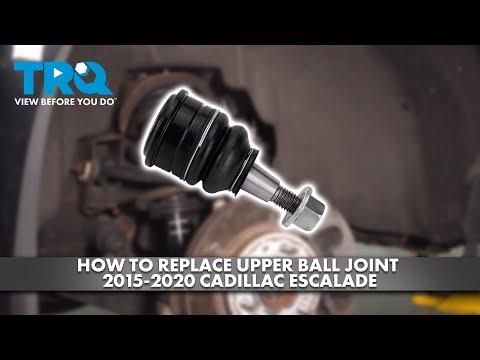
Replacing ball joints means separating the steering knuckle from the control arm and installing a new joint so your front suspension stays tight and safe. On your Escalade, ball joints are a critical steering/suspension wear item—once they get loose, you can get clunks, wandering, and uneven tire wear.
Difficulty Level: Advanced | Estimated Time: 3-6 hours
⚠️ Safety & Precautions
- ⚠️ Support the SUV with jack stands on the frame—never rely on a jack.
- ⚠️ Keep hands clear when separating the joint; the knuckle can “pop” free suddenly.
- ⚠️ Do not let the brake caliper hang by the hose—support it with a strap.
- ⚠️ Ball joint work can affect alignment; plan on a professional alignment after.
- ⚠️ If you see a torn CV axle boot or ABS wire damage, stop and address it before driving.
🔧 Required Tools
You'll need the following tools for this repair:
- Floor jack (rated 3-ton minimum)
- Jack stands (rated 3-ton minimum)
- Wheel chocks
- Safety glasses
- Mechanic gloves
- Breaker bar 1/2"
- Torque wrench 1/2" drive
- Socket set 10mm-24mm (1/2" drive)
- Wrench set 10mm-24mm
- Pry bar 24"
- Hammer 2 lb
- Ball joint separator (pickle fork) (specialty)
- Ball joint press kit (C-frame) (specialty)
- Needle-nose pliers
- Diagonal cutters
- Bungee cord
- Wire brush
- Penetrating oil
- Grease gun
🔩 Required Parts
HowToo sells all the parts you need for this repair:
- Front upper ball joint - Qty: 1
- Front lower ball joint - Qty: 1
- Ball joint cotter pin kit - Qty: 1
- Chassis grease - Qty: 1
📋 Before You Begin
- Park on level ground, set the parking brake, and chock the rear wheels.
- Loosen the front lug nuts slightly while the tire is still on the ground.
- Spray penetrating oil on the ball joint nut(s) and the knuckle pinch/taper area and let it soak 10-15 minutes.
- Plan an alignment after the repair.
🔨 Step-by-Step Instructions
Follow these steps in order:
Step 1: Lift and secure the front corner
- Use a floor jack (rated 3-ton minimum) to lift the front corner at the proper lift point.
- Set the SUV on jack stands (rated 3-ton minimum) under the frame and gently lower onto them.
- Remove the wheel using a socket set 10mm-24mm (1/2" drive).
Step 2: Remove and support the brake caliper and rotor
- Remove the caliper bolts using a socket set 10mm-24mm (1/2" drive).
- Hang the caliper with a bungee cord so the hose is not stretched.
- Remove the rotor (if it’s stuck, tap lightly with a hammer 2 lb around the hat).
- Tip: Take a photo before disassembly.
Step 3: Disconnect ABS/brake line brackets as needed
- If the ABS wire or brake hose bracket limits movement, remove its small fasteners using a socket set 10mm-24mm (1/2" drive).
- Move the harness safely out of the way.
Step 4: Separate the ball joint from the steering knuckle
- Remove the cotter pin using needle-nose pliers (a cotter pin is a small safety pin that locks the nut).
- Remove the ball joint nut using a wrench set 10mm-24mm or socket set 10mm-24mm (1/2" drive).
- Use a ball joint separator (pickle fork) (specialty) and hammer 2 lb to pop the tapered stud out of the knuckle.
- Tip: Keep the nut threaded a few turns at first.
Step 5: Press the old ball joint out
- Clean the area with a wire brush.
- Set up the ball joint press kit (C-frame) (specialty) with the correct cups/adapters.
- Turn the press using a breaker bar 1/2" to press the old ball joint out of the control arm.
- If your joint uses a retaining clip, remove it first with needle-nose pliers.
Step 6: Press the new ball joint in
- Align the new joint correctly (match any flats/relief notches to the control arm).
- Use the ball joint press kit (C-frame) (specialty) to press the new joint fully into place.
- If equipped, install the new retaining clip using needle-nose pliers.
Step 7: Reconnect the knuckle and torque fasteners
- Guide the stud into the knuckle by hand, then install the nut using a socket set 10mm-24mm (1/2" drive).
- Tighten with a torque wrench 1/2" drive: Torque to OEM specification for your exact joint/hardware.
- Install a new cotter pin using needle-nose pliers. If the hole doesn’t line up, tighten the nut slightly—do not loosen to align.
Step 8: Reinstall brakes and wheel
- Reinstall the rotor and caliper using a socket set 10mm-24mm (1/2" drive).
- Tighten caliper bolts with a torque wrench 1/2" drive: Torque to OEM specification.
- Reinstall the wheel and snug lug nuts using a socket set 10mm-24mm (1/2" drive).
Step 9: Lower and final torque
- Raise slightly with the floor jack (rated 3-ton minimum), remove jack stands (rated 3-ton minimum), and lower to the ground.
- Torque lug nuts with a torque wrench 1/2" drive: Torque to 190 Nm (140 ft-lbs).
✅ After Repair
- Pump the brake pedal several times before moving the SUV.
- Road test slowly and listen for clunks; recheck all visible fasteners afterward.
- If the new ball joint has a grease fitting, add grease using a grease gun until the boot just begins to swell.
- Get a professional wheel alignment as soon as possible.
💰 DIY vs Shop Cost
Shop Cost: $600-$1400 (parts + labor)
DIY Cost: $120-$350 (parts only)
You Save: $250-$1100 by doing it yourself!
Shop labor rates vary but typically run $100-$150/hour. This repair takes a shop approximately 3-6 hours.
🎯 Ready to get started?
Before I lock this down to exact OEM torque specs and the correct procedure, answer these two quick questions:
- Which location are you replacing: front upper or front lower ball joint?
- Which side: driver or passenger?
HowToo makes it easy: same-day/2-day shipping on every part, plus all the tools and specialty tools you need! Check out the parts and tools sections below to add everything to your cart.