















How to Replace Front Suspension Bushings on a 2012 Ford F-150
Step-by-step replacement guide with tools, parts, torque specs, and alignment tips for 2009, 2010, 2011, 2012, 2013, 2014
How to Replace Front Suspension Bushings on a 2012 Ford F-150
Step-by-step replacement guide with tools, parts, torque specs, and alignment tips for 2009, 2010, 2011, 2012, 2013, 2014


🔧 Suspension Bushings - Bushing Replacement
Assumption: This guide covers the most common suspension bushing service: front lower control arm bushings. Bushing location changes the exact procedure, but the core removal, press-out, and alignment steps are the same. Bushings are rubber isolators that reduce noise and movement; when they crack or loosen, you can get clunks, wandering, and uneven tire wear.
Difficulty Level: Advanced | Estimated Time: 4-8 hours
⚠️ Safety & Precautions
- Support the truck securely on jack stands before removing any suspension parts.
- Keep hands clear when using a press or ball joint tool. Stored force can release suddenly.
- Mark cam bolts and alignment positions before removal to help preserve settings.
- An alignment is required after suspension bushing replacement.
- Do not fully tighten suspension fasteners with the wheels hanging. Final torque must be applied at ride height.
🔧 Required Tools
You'll need the following tools for this repair:
- Floor jack (rated 3-ton minimum)
- Jack stands (rated 3-ton minimum)
- Wheel chocks
- Safety glasses
- Mechanic gloves
- Breaker bar
- Torque wrench
- Socket set 13mm-24mm
- Ratchet
- Combination wrench set 13mm-24mm
- Paint marker
- Ball joint separator tool
- Bushing press kit (specialty)
- Hydraulic press (specialty)
- Penetrating oil
- Rubber mallet
🔩 Required Parts
HowToo sells all the parts you need for this repair:
- Front lower control arm bushing set - Qty: 1 set
- Front lower control arm bolts and nuts - Qty: 1 set
- Alignment cam bolts - Qty: 2
- Alignment cam washers - Qty: 2
- Anti-seize compound - Qty: 1
📋 Before You Begin
- Park on level ground.
- Set the parking brake and chock the rear wheels.
- Loosen the front wheel lug nuts before lifting.
- Raise the front end and support the frame with jack stands.
- Remove the front wheels.
- Take photos before disassembly.
🔨 Step-by-Step Instructions
Follow these steps in order:
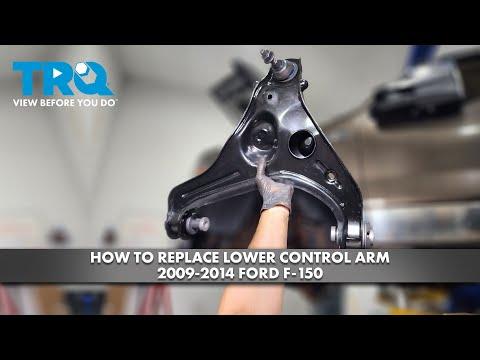
Step 1: Remove the control arm assembly
- Use a socket set and breaker bar to remove the control arm mounting bolts.
- Use a paint marker to mark cam bolt positions before removal.
- Use a ball joint separator tool if the control arm must be disconnected from the knuckle.
- Penetrating oil helps on rusty fasteners.
Step 2: Press out the old bushings
- Use a hydraulic press or bushing press kit to remove the worn bushings from the control arm.
- Keep the arm square in the press so the bore is not damaged.
- If the bushing is seized, stop and recheck press alignment.
Step 3: Install the new bushings
- Use the hydraulic press or bushing press kit to install the new bushings straight into the control arm.
- Match the original bushing orientation exactly.
- Apply a thin film of approved lubricant only if the bushing design requires it.
Step 4: Reinstall the control arm
- Reinstall the control arm with the original hardware or new bolts and nuts.
- Snug fasteners only; do not final-torque yet.
- If cam bolts were removed, reinstall them in the marked position.
Step 5: Set ride height and torque fasteners
- Lower the truck until the suspension is at normal ride height.
- Use a torque wrench to tighten all suspension fasteners to factory specification.
- Torque to factory specification for your exact bushing location and fastener type.
- Final torque at ride height prevents bushing preload and early failure.
Step 6: Reassemble and inspect
- Reinstall the wheel and hand-tighten the lug nuts.
- Lower the truck fully and torque the lug nuts in a star pattern.
- Inspect for binding, abnormal noises, or shifted alignment marks.
✅ After Repair
- Schedule a four-wheel alignment immediately.
- Test drive slowly and listen for clunks or squeaks.
- Recheck all fasteners after the first drive.
- If steering wheel is off-center, the alignment needs correction.
💰 DIY vs Shop Cost
Shop Cost: $500-$1,200 (parts + labor)
DIY Cost: $120-$350 (parts only)
You Save: $380-$850 by doing it yourself!
Shop labor rates vary but typically run $100-$150/hour. This repair takes a shop approximately 4-8 hours.
🎯 Ready to get started?
HowToo makes it easy: same-day/2-day shipping on every part, plus all the tools and specialty tools you need! Check out the parts and tools sections below to add everything to your cart.