














How to Replace Front Struts on a 2021 Toyota Tacoma (Step-by-Step)
Complete DIY front strut/coilover replacement guide for the 2021 Tacoma with tools, parts list, torque specs, safety tips, and cost savings for 2016, 2017, 2018, 2019, 2020, 2021, 2022, 2023
How to Replace Front Struts on a 2021 Toyota Tacoma (Step-by-Step)
Complete DIY front strut/coilover replacement guide for the 2021 Tacoma with tools, parts list, torque specs, safety tips, and cost savings for 2016, 2017, 2018, 2019, 2020, 2021, 2022, 2023


🔧 Tacoma - Strut (Front Shock/Coil Assembly) Replacement
On your Tacoma, people usually call the front shock and spring assembly a “strut,” even though it’s technically a coil-over shock, not a true MacPherson strut. You’ll be removing the front shock/spring assemblies and installing new ones so the truck rides and handles correctly again.
Difficulty Level: Intermediate | Estimated Time: 3–4 hours for both fronts
⚠️ Safety & Precautions
- ⚠️ Always support the truck with jack stands; never rely only on a floor jack.
- ⚠️ You will be working near the suspension under tension. Keep fingers clear of pinch points and never pry against parts that are still loaded.
- ⚠️ If you are swapping springs onto new shocks, use a spring compressor carefully; compressed springs store a lot of energy and can cause serious injury if they slip.
- ⚠️ Do not work under the truck while the engine is running; keep the parking brake set and wheels chocked.
- ⚠️ Battery disconnect is not required for this job.
🔧 Required Tools
You'll need the following tools for this repair:
- Floor jack (rated 3-ton minimum)
- Jack stands (rated 3-ton, pair)
- Wheel chocks
- Lug wrench (21mm)
- Socket set (10mm–22mm)
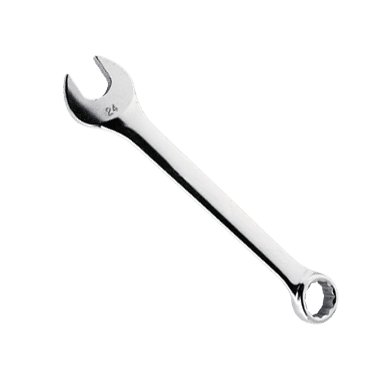
- Combination wrench set (10mm–22mm)
- Breaker bar 1/2"
- Torque wrench 3/8" drive (up to 80 ft-lbs)
- Torque wrench 1/2" drive (up to 150 ft-lbs)
- Allen key set (metric)
- Needle-nose pliers
- Flathead screwdriver (medium)
- Pry bar (medium)
- Hammer (small or dead-blow)
- Spring compressor (external, pair) (specialty)
- Ball joint separator fork or puller (specialty)
- Paint marker or permanent marker
- Penetrating oil spray
- Safety glasses
- Mechanic gloves
- Shop rags
🔩 Required Parts
HowToo sells all the parts you need for this repair:
- Front complete strut/coilover assemblies (left and right) - Qty: 2
- New front strut upper mount nuts - Qty: 6
- New lower strut mounting bolts and nuts - Qty: 2
- New sway bar link nuts (front) - Qty: 2
- Anti-seize compound - Qty: 1 tube
- Penetrating lubricant - Qty: 1 can
- Paint marker (if not already owned) - Qty: 1
📋 Before You Begin
- Park your Tacoma on level ground, set the parking brake, and place wheel chocks behind the rear wheels.
- Loosen the front wheel lug nuts slightly with the 21mm lug wrench while the truck is still on the ground.
- Gather all tools and parts so you don’t have to hunt for anything mid-job.
- Spray all front suspension nuts and bolts you will remove (sway bar links, lower strut bolts, upper mount nuts) with penetrating oil and let them soak for 10–15 minutes. This helps stuck bolts come loose.
- If you are reusing your original springs and top mounts, set up the spring compressor on a sturdy workbench area.
🔨 Step-by-Step Instructions
Follow these steps in order:
Step 1: Lift and support the front of the truck
- Use the floor jack (3-ton) under the front frame crossmember to lift the front of your Tacoma until both front wheels are off the ground.
- Place jack stands under the frame rails on both sides and lower the truck carefully onto the stands using the floor jack.
- Remove both front wheels using the 21mm lug wrench.
- Give the truck a shake to confirm it is stable.
Step 2: Disconnect the front sway bar links from the strut
- Locate the sway bar link where it bolts to the lower part of the shock/strut.
- Use a 17mm socket and 17mm wrench to remove the sway bar link nut from the strut side. If the stud spins, hold the stud with an Allen key while turning the nut with the wrench.
- Push the sway bar link out of the strut bracket. Use a flathead screwdriver or pry bar gently if needed.
Step 3: Disconnect ABS wire and brake hose brackets
- Find the small brackets that hold the ABS sensor wire and brake hose to the strut body.
- Use a 12mm socket to remove the bolts securing these brackets to the strut.
- Carefully pull the wire and hose away from the strut so they are free and cannot get stretched.
Step 4: Mark alignment of lower strut to knuckle
- Use a paint marker to mark across the joint between the lower strut mount and the steering knuckle (or lower control arm bracket, depending on design). This helps you put the new strut in a similar position.
- This can reduce alignment change slightly.
Step 5: Remove the lower strut mounting bolt
- Support the lower control arm slightly with the floor jack so there is no tension pulling down on the strut.
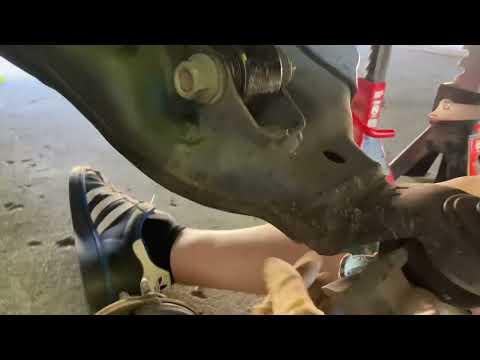
- Use a 19mm socket and 19mm wrench or breaker bar to remove the lower strut bolt and nut where the strut attaches to the lower control arm or knuckle.
- Tap the bolt out gently with a hammer if it is stuck.
Step 6: Loosen the upper control arm ball joint (if needed for clearance)
- On many Tacomas, it is easier to remove the front strut if you swing the steering knuckle outward slightly by freeing the upper control arm ball joint.
- Use a 19mm socket to remove the castle nut from the upper ball joint at the top of the steering knuckle.
- Use a ball joint separator (specialty tool) or pickle fork and hammer to separate the ball joint taper from the knuckle. Do not damage the rubber boot.
- Let the knuckle swing slightly outward for more room. Support it with the floor jack or a box so it doesn’t pull on the brake hose.
Step 7: Remove the upper strut mount nuts
- Open the hood. At the top of each front strut, you’ll see three small studs with nuts in the engine bay on each side.
- Use a 14mm socket and ratchet to remove the three upper strut mount nuts on one side. Leave one nut threaded a few turns so the strut doesn’t fall suddenly.
- Do not remove the big nut in the center of the top mount while strut is installed.
Step 8: Remove the strut assembly from the truck
- With the lower bolt out and upper control arm freed (if you did that), support the strut with one hand.
- Remove the last upper mount nut using the 14mm socket.
- Lower the strut assembly down and out between the lower control arm and fender. You may need to push the lower control arm down with a pry bar slightly for extra room.
- Repeat Steps 2–8 on the other side.
Step 9: If reusing springs, compress and swap components
- If you bought complete loaded struts (with spring and top mount already installed), skip to Step 10.
- Mount the old strut securely in a bench vise if you have one, or hold it safely on the floor.
- Install the spring compressor (pair) on opposite sides of the coil spring and tighten evenly using the socket set until the spring is loose from the top and bottom seats. Tighten each side gradually and evenly.
- Use a 17mm socket and Allen key (if needed to hold the shaft) to remove the top center nut from the old strut.
- Carefully lift off the top mount and rubber pieces, then remove the compressed spring.
- Place the spring onto the new shock/strut, making sure the bottom end of the coil sits correctly in the lower spring seat.
- Reinstall the top mount and rubber pieces in the same order as removed, then tighten the new top nut with the 17mm socket and Allen key to hold the shaft if needed. Torque to 55 Nm (41 ft-lbs).
- Slowly and evenly loosen the spring compressor until the spring seats firmly and is no longer compressed.
Step 10: Install the new strut assembly into the truck
- Position the new strut assembly into the wheel well, guiding the top studs through the holes in the strut tower.
- Thread the three top mount nuts on by hand using your fingers, then snug them slightly with a 14mm socket, but do not fully torque yet.
- Align the lower strut mount with the control arm or knuckle. You may need to lift the lower control arm slightly with the floor jack.
- Install the new lower strut bolt and nut by hand and then tighten with a 19mm socket and 19mm wrench until snug.
Step 11: Reconnect the upper control arm ball joint
- Guide the upper ball joint back into the top of the steering knuckle.
- Install the castle nut and tighten with a 19mm socket. Torque to 90 Nm (66 ft-lbs), then continue tightening slightly if needed to align the cotter pin hole.
- Install a new cotter pin using needle-nose pliers.
Step 12: Torque all main fasteners
- Torque the lower strut bolt to 180 Nm (133 ft-lbs) using the 1/2" torque wrench and 19mm socket.
- Torque the three upper strut mount nuts in the engine bay to 47 Nm (35 ft-lbs) using the 3/8" torque wrench and 14mm socket.
Step 13: Reattach sway bar links, ABS wire, and brake hose brackets
- Insert the sway bar link stud back into the strut bracket.
- Install the new sway bar link nut and tighten with a 17mm socket and 17mm wrench. Torque to 55 Nm (41 ft-lbs).
- Reattach the ABS wire and brake hose brackets to the new strut using a 12mm socket. Torque these small bolts to 10 Nm (7 ft-lbs) (snug plus a little).
Step 14: Repeat on the other side
- Repeat Steps 2–13 for the other front strut assembly.
- Always replace struts in pairs for even handling.
Step 15: Reinstall wheels and lower the truck
- Reinstall the front wheels by hand-threading the lug nuts.
- Use the floor jack to lift the truck off the jack stands, remove the stands, then lower the truck to the ground.
- Torque the lug nuts in a star pattern to 113 Nm (83 ft-lbs) using the 1/2" torque wrench and 21mm socket.
✅ After Repair
- Start the engine and bounce the front of the truck by hand a few times to help the suspension settle.
- Turn the steering wheel from lock to lock while parked to make sure nothing is rubbing or binding.
- Take a short, gentle test drive at low speed. Listen for clunks, rattles, or pulling.
- After 10–20 km of driving, recheck the lug nut torque and visually inspect the strut bolts and sway bar links.
- Schedule a professional 4-wheel alignment. Changing struts on a Tacoma will affect alignment and tire wear.
💰 DIY vs Shop Cost
Shop Cost: $600–$1,000 (parts + labor) for both front struts
DIY Cost: $250–$600 (parts only, depending on brand and whether they’re complete assemblies)
You Save: $350–$400+ by doing it yourself!
Shop labor rates vary but typically run $100–$150/hour. This repair takes a shop approximately 2–3 hours.
🎯 Ready to get started?
HowToo makes it easy: same-day/2-day shipping on every part, plus all the tools and specialty tools you need! Check out the parts and tools sections above to add everything to your cart.