









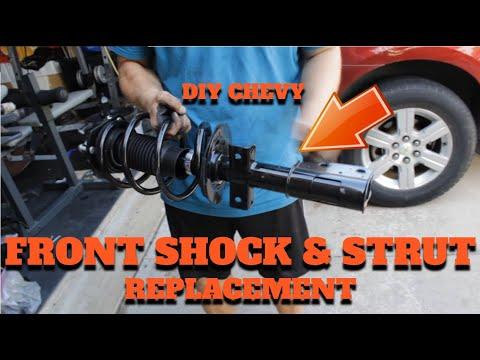







How to Replace Front Struts on a 2020 Chevrolet Traverse (MacPherson Quick-Strut Guide)
Step-by-step instructions with required tools/parts, safety tips, and alignment notes for a smooth ride
How to Replace Front Struts on a 2020 Chevrolet Traverse (MacPherson Quick-Strut Guide)
Step-by-step instructions with required tools/parts, safety tips, and alignment notes for a smooth ride


🔧 Traverse - Strut Replacement
On your Traverse, “struts” usually means the front MacPherson strut assemblies (the rear uses shocks, not struts). Replacing worn struts restores ride control, braking stability, and reduces tire wear.
Difficulty Level: Advanced | Estimated Time: 3-6 hours
⚠️ Safety & Precautions
- ⚠️ A strut contains a spring under high force—use a wall-mounted spring compressor (specialty) or replace the complete quick-strut to avoid compressing the spring.
- ⚠️ Support your Traverse with jack stands on solid ground; never rely on a floor jack alone.
- ⚠️ Don’t let the steering knuckle hang by the brake hose/wiring—support it with a hanger strap.
- ⚠️ If equipped with driver-assist/ride sensors on struts, handle wiring carefully and reattach all clips.
🔧 Required Tools
You'll need the following tools for this repair:
- Floor jack (rated 3-ton minimum)
- Jack stands (rated 3-ton minimum)
- Wheel chocks
- Safety glasses
- Mechanic gloves
- Breaker bar (1/2")
- Torque wrench (1/2", 20–200 ft-lbs range)
- Socket set (metric 10mm–24mm, 1/2")
- Wrench set (metric 10mm–24mm)
- Hex/Allen key set (metric)
- Pry bar (24")
- Hammer (2 lb)
- Punch set
- Trim clip removal tool
- Penetrating oil
- Paint marker
- Hanger strap
- Wall-mounted spring compressor (specialty)
🔩 Required Parts
HowToo sells all the parts you need for this repair:
- Front strut assemblies (quick-strut recommended) - Replace in pairs - Qty: 2
- Front strut mount/bearing set - If not included with struts - Qty: 2
- Front sway bar end links - Optional while apart - Qty: 2
- Strut-to-knuckle bolts/nuts - If specified as one-time-use - Qty: 2 sets
📋 Before You Begin
- Park on level ground, set the parking brake, and chock the rear wheels.
- Loosen the front wheel lug nuts 1/2 turn with a lug socket before lifting.
- Decide your approach: quick-strut (complete unit) is safest for beginners and avoids spring compression.
- Quick question (so I give the exact OEM torque specs and steps): Are you replacing the front struts or the rear shocks?
🔨 Step-by-Step Instructions
Follow these steps in order:
Step 1: Lift and secure the front end
- Use a floor jack to lift at the front jack point, then place jack stands under the proper support points.
- Remove the wheels using a lug socket and breaker bar.
Step 2: Disconnect the sway bar end link from the strut
- Spray fasteners with penetrating oil.
- Remove the end link nut using a socket and hold the stud with a hex/Allen key if it spins. Spinning stud is very common.
Step 3: Free brackets and wiring from the strut
- Remove brake hose/ABS wire brackets from the strut using the correct socket (often 10mm) and a trim clip removal tool for any push-clips.
- Support the knuckle with a hanger strap so nothing is stretched.
Step 4: Separate the strut from the steering knuckle
- Mark the relationship of the strut to knuckle with a paint marker (helps keep alignment close).
- Remove the strut-to-knuckle bolts/nuts using a socket set, breaker bar, and hammer plus punch if needed to drive bolts out.
- Use a pry bar carefully to spread/position the knuckle as needed.
Step 5: Remove the upper strut mount nuts and take the strut out
- Open the hood.
- Remove the upper strut mount nuts using a socket while holding the strut from below.
- Lower the strut out of the wheel well.
Step 6: Swap strut (quick-strut vs spring transfer)
- If using quick-struts: skip spring compression and go to Step 7.
- If transferring the spring: use a wall-mounted spring compressor (specialty). A “spring compressor” clamps the coil spring so it can’t expand while you remove the top nut.
- Remove the top nut with a socket while holding the shaft with the appropriate hex/Allen key if required.
Step 7: Install the new strut assembly
- Position the strut into the strut tower and start the upper mount nuts by hand.
- Align the lower strut to the knuckle, then install the bolts/nuts by hand first.
- Tighten fasteners with a torque wrench to the exact OEM torque spec for your configuration. (Tell me front vs rear and I’ll provide the correct numbers.)
Step 8: Reattach end link, brackets, and reinstall wheels
- Reattach the sway bar end link using a socket and hex/Allen key as needed.
- Reinstall all brake hose/ABS brackets using the correct socket.
- Install wheels and hand-tighten lug nuts using a lug socket.
- Lower the Traverse and torque lug nuts with a torque wrench to the exact OEM lug torque.
✅ After Repair
- Get a 4-wheel alignment as soon as possible (strut removal can change camber/toe).
- Test drive at low speed first. Listen for clunks, rubbing, or pulling.
- Recheck all visible fasteners and bracket routing after the test drive.
💰 DIY vs Shop Cost
Shop Cost: $900-$1,800 (parts + labor)
DIY Cost: $350-$900 (parts only)
You Save: $550-$900 by doing it yourself!
Shop labor rates vary but typically run $100-$150/hour. This repair takes a shop approximately 3-5 hours.
🎯 Ready to get started?
HowToo makes it easy: same-day/2-day shipping on every part, plus all the tools and specialty tools you need! Check out the parts and tools sections below to add everything to your cart.