









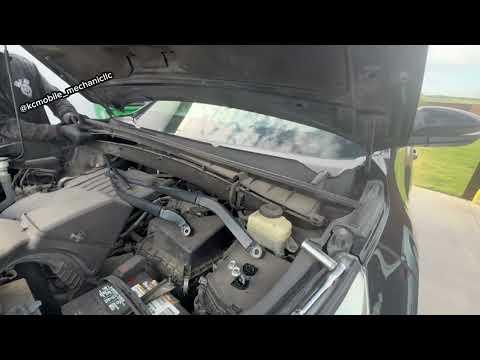







How to Replace Front Struts on a 2015 Toyota Highlander
Step-by-step loaded strut assembly guide with tools, parts, torque specs, and safety tips for 2014, 2015, 2016, 2017
How to Replace Front Struts on a 2015 Toyota Highlander
Step-by-step loaded strut assembly guide with tools, parts, torque specs, and safety tips for 2014, 2015, 2016, 2017


🔧 Highlander - Front Strut Assembly Replacement
This repair replaces the front strut assemblies on your Highlander. The strut is the spring-and-shock unit that supports the front suspension and helps control bouncing, braking stability, and tire contact.
Difficulty Level: Advanced | Estimated Time: 3-5 hours
⚠️ Safety & Precautions
- ⚠️ Use complete loaded strut assemblies if you are a beginner. A loaded strut includes the spring already installed, so you do not need to compress the coil spring.
- ⚠️ Do not remove the center nut from an old strut unless the spring is safely compressed with a proper spring compressor. The spring is under dangerous pressure.
- ⚠️ Support your Highlander with jack stands only. Never work under a vehicle held up by a floor jack alone.
- ⚠️ Replace front struts in pairs to keep braking and handling balanced.
- ⚠️ A wheel alignment is required after strut replacement.
- ⚠️ Keep the brake hose and ABS wheel speed sensor wire supported. Do not let the steering knuckle hang by the hose or wire.
🔧 Required Tools
You'll need the following tools for this repair:
- Floor jack rated 3-ton minimum
- Jack stands rated 3-ton minimum
- Wheel chocks
- 21mm lug nut socket
- Breaker bar 1/2-inch drive
- Torque wrench 1/2-inch drive 200 ft-lb minimum
- Ratchet 1/2-inch drive
- Ratchet 3/8-inch drive
- Socket extension 3-inch 3/8-inch drive
- Socket extension 6-inch 1/2-inch drive
- 10mm socket
- 12mm socket
- 14mm socket
- 17mm socket
- 19mm socket
- 22mm socket
- 17mm wrench
- 19mm wrench
- 22mm wrench
- Trim clip removal tool
- Flathead screwdriver
- Needle-nose pliers
- Paint marker
- Rubber mallet
- Pry bar 18-inch
- Penetrating oil
- Mechanic gloves
- Safety glasses
🔩 Required Parts
HowToo sells all the parts you need for this repair:
- Front loaded strut assembly - Left: 1, Right: 1
- Front strut-to-knuckle bolts and nuts - Qty: 4
- Front stabilizer link nuts - Qty: 2
- Brake hose bracket bolts - Qty: 2
- ABS wire bracket bolts - Qty: 2
📋 Before You Begin
- 🅿️ Park your Highlander on level ground, shift to Park, and set the parking brake.
- 🧱 Place wheel chocks behind the rear wheels.
- 🔩 Slightly loosen the front lug nuts with a 21mm lug nut socket and breaker bar 1/2-inch drive before lifting the vehicle.
- 🖊️ Use a paint marker to mark the position of the lower strut bolts before removal. This helps keep alignment close enough to drive to an alignment shop.
- 💧 Spray penetrating oil on the strut-to-knuckle nuts, stabilizer link nut, brake hose bracket bolt, and ABS wire bracket bolt.
- 📌 A loaded strut assembly is the safest DIY choice because the coil spring is already installed on the new strut.
🔨 Step-by-Step Instructions
Follow these steps in order:
Step 1: Lift and Secure the Front
- Use the floor jack rated 3-ton minimum to lift the front of your Highlander at the front center jacking point.
- Place jack stands rated 3-ton minimum under the front side support points.
- Lower the vehicle gently onto the jack stands.
- Lightly shake the vehicle by hand to confirm it is stable.
Step 2: Remove the Front Wheels
- Use the 21mm lug nut socket and ratchet 1/2-inch drive to remove the front lug nuts.
- Remove both front wheels and set them flat under the vehicle as an extra safety backup.
- Keep lug nuts together.
Step 3: Mark the Strut-to-Knuckle Position
- Use the paint marker to draw lines across the lower strut bracket and steering knuckle.
- The steering knuckle is the heavy metal part that holds the wheel hub and connects to the suspension.
- This mark helps you install the new strut close to the old position before the required alignment.
Step 4: Remove the Brake Hose and ABS Wire Brackets
- Use a 12mm socket, ratchet 3/8-inch drive, and socket extension 3-inch 3/8-inch drive to remove the brake hose bracket bolt from the strut.
- Use a 10mm socket and ratchet 3/8-inch drive to remove the ABS wire bracket bolt from the strut.
- Move the hose and wire aside gently.
- Do not pull, twist, or stretch the brake hose or ABS wire.
Step 5: Disconnect the Stabilizer Link from the Strut
- The stabilizer link is a small rod that connects the sway bar to the strut to reduce body roll in turns.
- Use a 17mm socket and ratchet 1/2-inch drive to remove the stabilizer link nut from the strut bracket.
- If the ball stud spins, hold it with a 17mm wrench while loosening the nut with the 17mm socket.
- Move the link away from the strut.
Step 6: Support the Steering Knuckle
- Place the floor jack rated 3-ton minimum lightly under the lower control arm or steering knuckle area.
- Raise it just enough to support the suspension weight.
- Do not lift the vehicle off the jack stands.
Step 7: Remove the Lower Strut-to-Knuckle Bolts
- Use a 22mm wrench to hold the bolt head.
- Use a 22mm socket, breaker bar 1/2-inch drive, and socket extension 6-inch 1/2-inch drive to loosen the lower strut nuts.
- Remove the nuts and push the bolts out by hand.
- If a bolt is stuck, tap it gently with the rubber mallet.
- Use the pry bar 18-inch only if needed to separate the strut bracket from the knuckle.
- Keep the steering knuckle supported so it does not pull on the brake hose.
Step 8: Access the Upper Strut Mount Nuts
- Open the hood.
- Use the trim clip removal tool and flathead screwdriver to remove any plastic cowl clips or covers blocking the upper strut mount nuts.
- Use needle-nose pliers if a clip center pin is hard to lift.
- Do not remove the center strut shaft nut.
Step 9: Remove the Upper Strut Mount Nuts
- Support the strut from below with one hand.
- Use a 14mm socket, ratchet 3/8-inch drive, and socket extension 3-inch 3/8-inch drive to remove the upper strut mount nuts.
- Remove the strut assembly through the wheel well.
- Do not drop the strut.
Step 10: Install the New Loaded Strut Assembly
- Guide the new loaded strut assembly up into the strut tower through the wheel well.
- Install the upper mount nuts by hand first to avoid cross-threading.
- Use the 14mm socket and torque wrench 1/2-inch drive 200 ft-lb minimum to tighten the upper strut mount nuts to Torque to 59 Nm (44 ft-lbs).
Step 11: Attach the Strut to the Steering Knuckle
- Align the lower strut bracket with the steering knuckle.
- Use the floor jack rated 3-ton minimum to raise or lower the knuckle slightly until the bolt holes line up.
- Install the strut-to-knuckle bolts from the same direction they were removed.
- Install new nuts by hand.
- Use the 22mm wrench to hold the bolt heads.
- Use the 22mm socket and torque wrench 1/2-inch drive 200 ft-lb minimum to tighten the nuts to Torque to 240 Nm (177 ft-lbs).
Step 12: Reconnect the Stabilizer Link
- Insert the stabilizer link stud into the strut bracket.
- Install a new stabilizer link nut by hand.
- Use the 17mm socket and torque wrench 1/2-inch drive 200 ft-lb minimum to tighten the nut to Torque to 74 Nm (55 ft-lbs).
- If the stud spins, hold it with the 17mm wrench while tightening.
Step 13: Reinstall the Brake Hose and ABS Wire Brackets
- Position the brake hose bracket on the strut.
- Use the 12mm socket and torque wrench 1/2-inch drive 200 ft-lb minimum to tighten the brake hose bracket bolt to Torque to 19 Nm (14 ft-lbs).
- Position the ABS wire bracket on the strut.
- Use the 10mm socket and torque wrench 1/2-inch drive 200 ft-lb minimum to tighten the ABS wire bracket bolt to Torque to 8 Nm (71 in-lbs).
- Check that the brake hose and ABS wire are not twisted.
Step 14: Repeat on the Other Side
- Repeat Steps 3 through 13 on the opposite front strut.
- Use the same sockets, wrenches, and torque specs.
- Compare both sides before tightening.
Step 15: Reinstall the Front Wheels
- Place each front wheel back onto the hub.
- Install the lug nuts by hand.
- Use the 21mm lug nut socket and ratchet 1/2-inch drive to snug the lug nuts in a star pattern.
Step 16: Lower and Torque the Wheels
- Use the floor jack rated 3-ton minimum to raise the front slightly and remove the jack stands.
- Lower your Highlander until the tires touch the ground.
- Use the 21mm lug nut socket and torque wrench 1/2-inch drive 200 ft-lb minimum to tighten the lug nuts in a star pattern to Torque to 103 Nm (76 ft-lbs).
✅ After Repair
- ✅ Bounce each front corner by hand. The vehicle should settle quickly without repeated bouncing.
- ✅ Turn the steering wheel fully left and right while parked. Listen for rubbing, clicking, or spring popping.
- ✅ Test drive slowly first. Check for clunks, pulling, vibration, or brake warning lights.
- ✅ Recheck all visible brackets, hoses, and wires after the test drive.
- ✅ Have a professional 4-wheel alignment performed as soon as possible.
- ✅ Recheck lug nut torque after 25-50 miles using the 21mm lug nut socket and torque wrench 1/2-inch drive 200 ft-lb minimum.
💰 DIY vs Shop Cost
Shop Cost: $850-$1,350 (parts + labor)
DIY Cost: $300-$650 (parts only)
You Save: $500-$700 by doing it yourself!
Shop labor rates vary but typically run $100-$150/hour. This repair takes a shop approximately 2.5-4 hours.
🎯 Ready to get started?
HowToo makes it easy: same-day/2-day shipping on every part, plus all the tools and specialty tools you need! Check out the parts and tools sections below to add everything to your cart.