









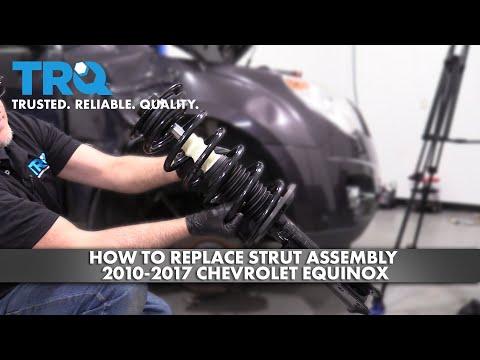






How to Replace Front Struts on a 2010-2017 Chevrolet Equinox (Engine: Inline 4 2.4L)
Step-by-step 2014 Equinox front strut replacement guide with tools, parts list, torque specs, and safety tips
How to Replace Front Struts on a 2010-2017 Chevrolet Equinox (Engine: Inline 4 2.4L)
Step-by-step 2014 Equinox front strut replacement guide with tools, parts list, torque specs, and safety tips for 2010, 2011, 2012, 2013, 2014, 2015, 2016, 2017


🔧 Equinox - Strut Replacement
Your Equinox uses struts in the front and shocks in the rear. The most common repair is the front struts when the ride gets bouncy, clunky, or you see leaking oil from the strut body.
Difficulty Level: Intermediate | Estimated Time: 3–4 hours (for both fronts)
⚠️ Safety & Precautions
- ⚠️ Always support the vehicle with jack stands, never rely only on a floor jack.
- ⚠️ You will work near the front suspension and brakes; keep hands clear while lowering or raising the vehicle.
- ⚠️ A spring compressor is needed if you reuse springs. It can be dangerous if misused. Consider complete “quick strut” assemblies if you are not comfortable.
- ⚠️ Wear safety glasses and mechanic gloves to protect eyes and hands.
- ⚠️ Do not loosen the center strut nut while the strut is on the vehicle unless the vehicle is on the ground and you only crack it loose slightly.
- ⚠️ After strut replacement, a professional wheel alignment is required to prevent tire wear and poor handling.
- ⚠️ Battery disconnect is not required for this repair.
🔧 Required Tools
You'll need the following tools for this repair:
- 🧰 Floor jack (rated 3-ton minimum)
- 🧰 Jack stands (rated 3-ton minimum, set of 2)
- 🧰 Wheel chocks
- 🧰 Lug wrench 19mm
- 🧰 Socket set metric (8mm–21mm)
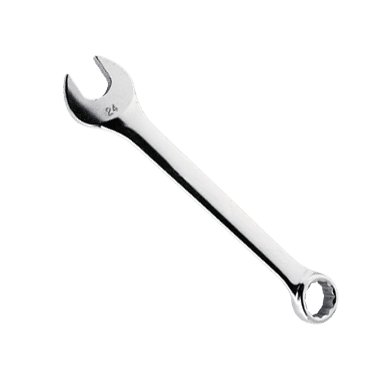
- 🧰 Combination wrench set metric (10mm–21mm)
- 🧰 Breaker bar 1/2"
- 🧰 Torque wrench 3/8" drive (up to 80 Nm / 60 ft-lbs)
- 🧰 Torque wrench 1/2" drive (up to 250 Nm / 185 ft-lbs)
- 🧰 Spring compressor (external type) (specialty)
- 🧰 Pry bar 12–18"
- 🧰 Flathead screwdriver medium
- 🧰 Needle-nose pliers
- 🧰 Hammer 16oz
- 🧰 Paint marker or white correction pen
- 🧰 Penetrating oil spray
- 🧰 Shop rags
- 🧰 Safety glasses
- 🧰 Mechanic gloves
🔩 Required Parts
HowToo sells all the parts you need for this repair:
- 🔩 Front complete strut assemblies (“quick struts”) - Qty: 2 Strongly recommended for beginners
- 🔩 OR: Front strut cartridges - Qty: 2
- 🔩 OR: Front coil springs - Qty: 2 (only if damaged or sagging)
- 🔩 Front strut mounts with bearings - Qty: 2
- 🔩 Front upper spring seats / insulators - Qty: 2
- 🔩 Front lower spring insulators - Qty: 2
- 🔩 Front stabilizer (sway bar) link nuts - Qty: 2 (optional but recommended)
- 🔩 Front strut-to-knuckle bolts and nuts - Qty: 4 (recommended if rusty)
- 🔩 Anti-seize compound - Qty: 1 tube
- 🔩 Penetrating oil - Qty: 1 can
📋 Before You Begin
- Park the Equinox on level ground, engage the parking brake, and place wheel chocks behind the rear wheels.
- Loosen the front wheel lug nuts 1/2 turn with the 19mm lug wrench before lifting the vehicle.
- If you are using separate struts and reusing springs, set up your workbench with plenty of space for safe spring compressor use.
- Take pictures of how the old strut is installed (brake hose routing, ABS wire clip, etc.) to match during reassembly.
🔨 Step-by-Step Instructions
Follow these steps in order:
Step 1: Lift and support the front of the vehicle
- Use the 19mm lug wrench to loosen (but not remove) the front wheel lug nuts about half a turn.
- Position the floor jack at the front center jacking point (just behind the front subframe crossmember). Pump the jack until the front tires are off the ground.
- Place jack stands under the left and right front pinch welds or frame rails. Slowly lower the vehicle onto the stands using the floor jack.
- Shake the Equinox slightly by hand to make sure it is stable.
- Remove the front wheels completely using the 19mm lug wrench.
Step 2: Identify the strut and attached components
- Locate the front strut: it is the large tube behind the wheel that goes up into the body.
- Note where the brake hose and ABS sensor wire are clipped to the strut body.
- Spray all visible nuts and bolts (strut-to-knuckle bolts, sway bar link nut, strut mount nuts) with penetrating oil to help loosen rust.
Step 3: Disconnect brake hose and ABS wire from strut
- Use a flathead screwdriver to gently pry out any plastic clips that hold the brake hose to the strut.
- If there is a metal bracket, use the correct socket from the metric set (usually 10mm) to remove the small bolt and free the brake hose.
- Use needle-nose pliers to carefully release the ABS sensor wire from its clips on the strut. Do not pull on the wire itself.
Step 4: Disconnect the sway bar (stabilizer) link from the strut
- The sway bar link connects to a tab on the side of the strut.
- Use the appropriate socket from the metric set (usually 18mm) and a wrench on the back side (if needed) to remove the nut holding the sway bar link to the strut.
- If the stud spins, use a Torx or hex bit if present in the center of the stud while turning the nut with a wrench.
- Push the sway bar link out of the strut tab and set it aside.
Step 5: Mark the strut-to-knuckle position
- Use a paint marker to draw alignment marks where the strut meets the steering knuckle. This helps keep alignment close to original.
- Mark across both the knuckle and strut so the new strut can be positioned similarly.
Step 6: Remove the strut-to-knuckle bolts
- Support the steering knuckle and brake assembly with a floor jack or a jack stand under the control arm to prevent strain on the brake hose.
- Use the correct socket from the metric set (typically 21mm) and a breaker bar to loosen the two large bolts that clamp the bottom of the strut to the knuckle.
- Hold the nut with a wrench while turning the bolt head with the breaker bar and socket.
- Once loose, remove the nuts and tap the bolts out with a hammer if necessary.
- Carefully separate the knuckle from the strut. You may need a pry bar to open the clamp slightly. Do not pull on the brake hose.
Step 7: Loosen the top strut mount nuts (under hood)
- Open the hood and locate the three strut mount nuts on the strut tower (each side).
- Use the correct socket from the metric set (usually 13mm or 15mm) and a ratchet to loosen and remove two of the three nuts, leaving one nut threaded on a few turns to hold the strut.
- Do not remove the center large nut yet; that holds the spring under tension.
Step 8: Remove the old strut assembly
- Have one hand supporting the strut from below in the wheel well.
- Use the socket and ratchet to remove the last top mount nut.
- Carefully lower the strut out of the wheel well. It may need to be tilted and rotated to clear components.
- Set the old strut assembly on your workbench.
Step 9A: If using complete “quick strut” assemblies (recommended)
- Compare the new strut assembly with the old one. Make sure the spring orientation, mount, and bracket positions match.
- Transfer any rubber covers or dust boots if needed.
- Apply a light coat of anti-seize compound to the new strut’s lower mounting area and strut-to-knuckle bolt shanks.
Step 9B: If reusing springs (spring compressor required)
- Attach the spring compressor to opposite sides of the coil spring, following the tool’s instructions. Tighten evenly with a ratchet until the spring is loose in the seats.
- Use the appropriate socket on the center nut of the strut rod while holding the rod with a hex key or special tool if needed. Remove the nut carefully.
- Lift off the upper mount and bearing, then remove the compressed spring and set it aside.
- Install the spring onto the new strut cartridge with the bottom end aligned correctly in the lower seat.
- Install new upper rubber insulator, bearing, and mount onto the spring and strut rod.
- Install the new center nut and tighten with a socket and ratchet while securing the rod. Then slowly release the spring compressor evenly until the spring sits fully in its seats.
Step 10: Install the new strut assembly into the body
- Guide the new strut up into the wheel well and align the top mount studs with the holes in the strut tower.
- Thread one top mount nut by hand to hold the strut in place.
- From under the hood, install the remaining two top mount nuts by hand.
- Do not fully torque these nuts yet; just snug them with a ratchet and socket.
Step 11: Attach the strut to the steering knuckle
- Position the steering knuckle into the lower part of the strut.
- Align the paint marks you made earlier, or match the original position as closely as possible.
- Insert the two lower strut bolts through the knuckle and strut. Install the nuts by hand.
- Use the correct socket (about 21mm) and wrench to tighten the nuts.
- Finally, torque the strut-to-knuckle bolts to 150 Nm (111 ft-lbs) using the 1/2" torque wrench and socket.
Step 12: Reconnect sway bar link, brake hose, and ABS wire
- Insert the sway bar link stud into the new strut bracket.
- Install the new or original sway bar link nut and tighten with the correct socket (usually 18mm) and wrench. Then torque to 90 Nm (66 ft-lbs).
- Reattach the brake hose bracket using the original bolt and the correct socket (about 10mm). Snug firmly with a ratchet.
- Clip the ABS sensor wire back into the new strut’s brackets using needle-nose pliers if needed. Make sure the wire is not twisted or stretched.
Step 13: Torque the top strut mount nuts
- From under the hood, use the correct socket (13–15mm) and a 3/8" torque wrench to tighten the three top mount nuts.
- Torque each top mount nut to 35 Nm (26 ft-lbs).
Step 14: Repeat on the other side
- Repeat Steps 2–13 on the other front strut.
- Always replace struts in pairs.
Step 15: Reinstall front wheels and lower vehicle
- Install the front wheels and thread the lug nuts by hand.
- Use the 19mm lug wrench to snug the lug nuts in a star pattern while the vehicle is still on jack stands.
- Raise the vehicle slightly with the floor jack, remove the jack stands, then lower the vehicle to the ground.
- Torque the lug nuts in a star pattern to 140 Nm (103 ft-lbs) using the 1/2" torque wrench and 19mm socket.
✅ After Repair
- Start the engine and turn the steering wheel fully left and right while stationary. Listen for any odd noises from the front suspension.
- Take a short, slow test drive on a smooth road. Check for clunks, rattles, or pulling to one side.
- Visually inspect around the strut mounts and lower bolts for any movement or gaps.
- Schedule a professional four-wheel alignment as soon as possible to protect your tires and ensure proper handling.
💰 DIY vs Shop Cost
Shop Cost: $700–$1,000 (parts + labor for both front struts)
DIY Cost: $250–$450 (parts only, using complete quick struts)
You Save: $250–$600 by doing it yourself!
Shop labor rates vary but typically run $100–$150/hour. This repair takes a shop approximately 2–3 hours.
🎯 Ready to get started?
HowToo makes it easy: same-day/2-day shipping on every part, plus all the tools and specialty tools you need! Check out the parts and tools sections above to add everything to your cart.
Guide for Suspension Strut and Coil Spring Assembly replace for these Chevrolet vehicles
| Year Make Model | Sub Model | Engine | Body Style |
|---|---|---|---|
| 2017 Chevrolet Equinox | - | Inline 4 2.4L | - |
| 2016 Chevrolet Equinox | - | Inline 4 2.4L | - |
| 2015 Chevrolet Equinox | - | Inline 4 2.4L | - |
| 2014 Chevrolet Equinox | - | Inline 4 2.4L | - |
| 2013 Chevrolet Equinox | - | Inline 4 2.4L | - |
| 2012 Chevrolet Equinox | - | Inline 4 2.4L | - |
| 2011 Chevrolet Equinox | - | Inline 4 2.4L | - |
| 2010 Chevrolet Equinox | - | Inline 4 2.4L | - |