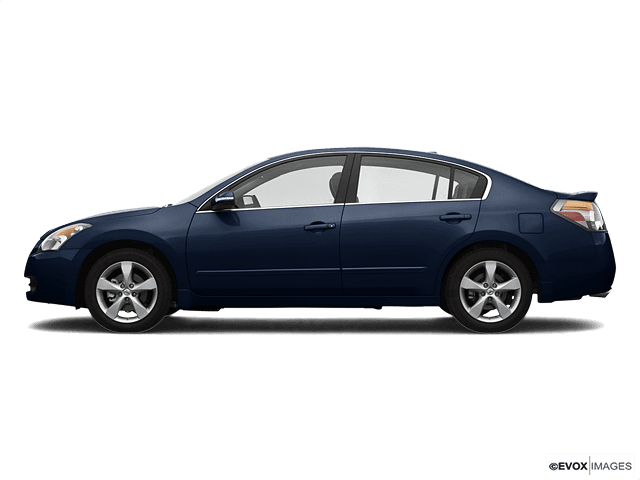









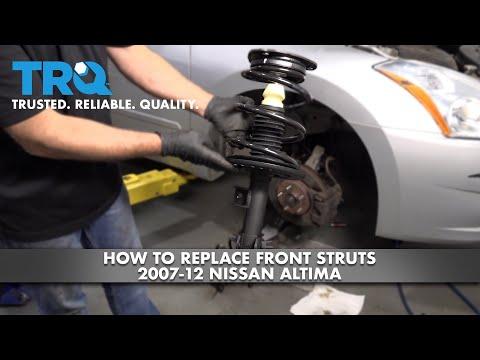







How to Replace Front Struts on a 2007-2012 Nissan Altima (MacPherson Strut Guide) (Trim: S | Engine: Inline 4 2.5L | Body: Sedan)
Step-by-step instructions with tools, parts list, safety tips, and factory torque specs + alignment notes
How to Replace Front Struts on a 2007-2012 Nissan Altima (MacPherson Strut Guide) (Trim: S | Engine: Inline 4 2.5L | Body: Sedan)
Step-by-step instructions with tools, parts list, safety tips, and factory torque specs + alignment notes for 2007, 2008, 2009, 2010, 2011, 2012


🔧 Altima - Front Strut Replacement
On your Altima, the front suspension uses MacPherson struts (strut + spring together). Replacing worn struts restores ride control, braking stability, and reduces clunking/bouncing.
Difficulty Level: Advanced | Estimated Time: 3-6 hours
⚠️ Safety & Precautions
- ⚠️ The coil spring is under high force—if you are not using complete “quick strut” assemblies, use a proper spring compressor and keep hands/face away from the spring path.
- ⚠️ Support the steering knuckle so it doesn’t pull on the axle/CV joint or brake hose when the strut is removed.
- ⚠️ Always use jack stands; never work under a car supported only by a floor jack.
- ⚠️ After strut replacement, you should get a front wheel alignment to prevent tire wear and pulling.
- Disconnecting the battery is not required for this job.
🔧 Required Tools
You'll need the following tools for this repair:
- Floor jack (rated 2-ton minimum)
- Jack stands (rated 2-ton minimum)
- Wheel chocks
- Safety glasses
- Mechanic gloves
- Breaker bar (18" or longer)
- Torque wrench (10–200 ft-lbs range)
- Ratchet
- Socket set: 12mm, 14mm, 17mm, 19mm, 21mm, 22mm
- Wrench set: 12mm, 14mm, 17mm, 19mm, 21mm, 22mm
- Pass-through strut nut socket set (specialty)
- Hex key set (for sway bar end link stud)
- Pry bar (18")
- Hammer (2 lb)
- Penetrating oil
- Paint marker
- Spring compressor (specialty)
🔩 Required Parts
HowToo sells all the parts you need for this repair:
- Front quick strut assemblies (recommended) - Replace in pairs - Qty: 2
- OR front struts (damper inserts) - Replace in pairs - Qty: 2
- Front strut mounts with bearings - Replace in pairs - Qty: 2
- Front bump stops and dust boots - Qty: 2
- Front strut-to-knuckle bolts and nuts (recommended) - Qty: 2-4
- Anti-seize compound - Qty: 1
📋 Before You Begin
- Park on level ground, set the parking brake, and place wheel chocks behind the rear tires.
- Spray penetrating oil on the strut-to-knuckle bolts/nuts and sway bar end link nut 10–15 minutes before removal.
- If you are not using quick struts: a “spring compressor” clamps the coil spring so you can safely remove the top nut—inspect the tool carefully before use.
🔨 Step-by-Step Instructions
Follow these steps in order:
Step 1: Loosen the wheel lug nuts and raise the front
- Use a 21mm socket and breaker bar to loosen (do not remove) the front lug nuts.
- Use a floor jack to lift the front jacking point, then set the car securely on jack stands.
- Remove the wheels with a 21mm socket.
- Reinstall later: Torque to 113 Nm (83 ft-lbs).
Step 2: Unbolt brackets from the strut body
- Use a 12mm socket to remove the brake hose/ABS wire brackets from the strut (if equipped).
- Don’t let hoses hang by tension.
Step 3: Disconnect the sway bar end link from the strut
- Use a 14mm wrench on the nut while holding the stud with the correct hex key (if the stud spins).
- Move the end link aside.
- Reinstall later: Torque to 65 Nm (48 ft-lbs).
Step 4: Mark camber position (if applicable) and support the knuckle
- Use a paint marker to mark the strut-to-knuckle bolt positions so you can reassemble close to the original alignment.
- Use a floor jack to lightly support the steering knuckle/lower control arm area.
Step 5: Remove the strut-to-knuckle bolts
- Use 19mm/21mm sockets (and matching wrenches) with a breaker bar to remove the two large bolts/nuts holding the strut to the steering knuckle.
- If the bolts are stuck, use penetrating oil and tap them out with a hammer.
- Reinstall later: Torque to 125 Nm (92 ft-lbs).
Step 6: Remove the strut mount nuts at the top
- Open the hood.
- At the strut tower, use a 14mm socket to remove the strut mount nuts (typically 3 nuts).
- Hold the strut so it doesn’t drop, then remove the strut assembly from the wheel well.
Step 7A: If installing quick strut assemblies (recommended path)
- Compare old vs new: spring orientation, mount stud pattern, and overall length.
- Place the new quick strut into the tower and hand-start the top nuts using a 14mm socket.
- Slide the knuckle onto the strut and install the two lower bolts/nuts using 19mm/21mm sockets and wrenches.
- Reconnect the sway bar end link using a 14mm wrench and hex key if needed.
Step 7B: If reusing the spring (spring compressor path)
- Install the spring compressor (specialty) onto opposite sides of the spring and tighten evenly until the spring is loose in the seats.
- Remove the center top nut using a pass-through strut nut socket set (specialty).
- Transfer the spring, isolators, dust boot, bump stop, and mount/bearing as needed onto the new strut.
- Install the top nut with the pass-through strut nut socket set (specialty): Torque to 59 Nm (44 ft-lbs).
- Slowly and evenly release the compressor, ensuring the spring ends sit correctly in the upper/lower seats.
Step 8: Final tighten all fasteners
- Top mount nuts at the tower using a 14mm socket: Torque to 44 Nm (33 ft-lbs).
- Strut-to-knuckle bolts using 19mm/21mm sockets and a torque wrench: Torque to 125 Nm (92 ft-lbs).
- Sway bar end link nut using a 14mm wrench: Torque to 65 Nm (48 ft-lbs).
- Brake hose/ABS brackets using a 12mm socket: Torque to 10 Nm (89 in-lbs).
Step 9: Reinstall wheels and lower the car
- Install the wheels and hand-tighten lug nuts using a 21mm socket.
- Lower the car with the floor jack.
- Tighten lug nuts in a star pattern using a torque wrench: Torque to 113 Nm (83 ft-lbs).
✅ After Repair
- Road test at low speed first. Listen for clunks and verify straight braking.
- Recheck all visible fasteners and bracket routing after the test drive.
- Get a front wheel alignment as soon as possible (recommended same day/within 50 km).
- New struts can feel firmer at first.
💰 DIY vs Shop Cost
Shop Cost: ₹12,000–₹25,000 (parts + labor, front pair)
DIY Cost: ₹6,000–₹18,000 (parts only, front pair)
You Save: ₹6,000–₹10,000 by doing it yourself!
Shop labor rates vary; this repair takes a shop approximately 2.5–4.0 hours.
🎯 Ready to get started?
HowToo makes it easy: same-day/2-day shipping on every part, plus all the tools and specialty tools you need! Check out the parts and tools sections below to add everything to your cart.
Guide for Suspension Strut and Coil Spring Assembly replace for these Nissan vehicles
| Year Make Model | Sub Model | Engine | Body Style |
|---|---|---|---|
| 2012 Nissan Altima | Base | Inline 4 2.5L | Sedan |
| 2012 Nissan Altima | S | Inline 4 2.5L | Sedan |
| 2012 Nissan Altima | SL | Inline 4 2.5L | Sedan |
| 2011 Nissan Altima | Base | Inline 4 2.5L | Sedan |
| 2011 Nissan Altima | S | Inline 4 2.5L | Sedan |
| 2011 Nissan Altima | SL | Inline 4 2.5L | Sedan |
| 2010 Nissan Altima | Base | Inline 4 2.5L | Sedan |
| 2010 Nissan Altima | S | Inline 4 2.5L | Sedan |
| 2010 Nissan Altima | SL | Inline 4 2.5L | Sedan |
| 2009 Nissan Altima | Base | Inline 4 2.5L | Sedan |
| 2009 Nissan Altima | S | Inline 4 2.5L | Sedan |
| 2008 Nissan Altima | Base | Inline 4 2.5L | Sedan |
| 2008 Nissan Altima | S | Inline 4 2.5L | Sedan |
| 2007 Nissan Altima | Base | Inline 4 2.5L | Sedan |
| 2007 Nissan Altima | S | Inline 4 2.5L | Sedan |