









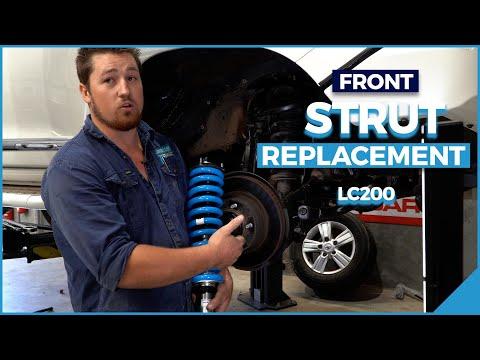







How to Replace Front Struts and Rear Shock Absorbers on a 2018 Toyota Land Cruiser
Step-by-step DIY instructions with tools, parts list, safety tips (KDSS), and torque specs for 2008, 2009, 2010, 2011, 2013, 2014, 2015, 2016, 2017, 2018, 2019, 2020, 2021
How to Replace Front Struts and Rear Shock Absorbers on a 2018 Toyota Land Cruiser
Step-by-step DIY instructions with tools, parts list, safety tips (KDSS), and torque specs for 2008, 2009, 2010, 2011, 2013, 2014, 2015, 2016, 2017, 2018, 2019, 2020, 2021


🔧 Land Cruiser - Shock Absorber Replacement
On your Land Cruiser, the rear shocks are standalone, but the front “shock” is part of a coilover strut assembly (shock + spring together). Replacing worn shocks restores ride control, braking stability, and reduces bouncing and tire cupping.
Difficulty Level: Advanced | Estimated Time: 4-8 hours (all four)
Quick check before I tailor this: Are you replacing front, rear, or all four? And are you installing complete front strut assemblies or front shock cartridges only (requires spring compressor)?
⚠️ Safety & Precautions
- ⚠️ Support the truck with jack stands on the frame; never rely on a jack.
- ⚠️ The front coil spring is under high tension; if you’re transferring parts, use a coil spring compressor and keep hands/face out of the spring’s path.
- ⚠️ If equipped with KDSS (hydraulic sway system), keep the truck level and avoid forcing the sway bar; do not loosen any KDSS hydraulic lines.
- ⚠️ Do not fully tighten suspension bolts until the suspension is at normal ride height (prevents bushing twist).
- Battery disconnect is not required for this job.
🔧 Required Tools
You'll need the following tools for this repair:
- Floor jack (rated 3-ton minimum)
- Jack stands (rated 3-ton minimum)
- Wheel chocks
- Safety glasses
- Mechanic gloves
- Breaker bar 1/2"
- Torque wrench 20-250 ft-lbs
- Socket set 10mm-24mm (1/2")
- Wrench set 10mm-24mm
- Ratchet 1/2"
- Extensions 3" and 6"
- Pry bar 24"
- Dead-blow hammer
- Needle-nose pliers
- Penetrating oil
- Paint marker
- Coil spring compressor (specialty)
- Strut nut pass-through socket set (specialty)
🔩 Required Parts
HowToo sells all the parts you need for this repair:
- Front shock/strut assemblies - Replace in pairs - Qty: 2
- Rear shock absorbers - Replace in pairs - Qty: 2
- Front upper strut mount nuts - Replace if corroded - Qty: 6
- Rear upper shock mount nuts - Replace if corroded - Qty: 4
- Rear lower shock bolt/nut hardware - Replace if corroded - Qty: 2
- Front lower strut bolt/nut hardware - Replace if corroded - Qty: 2
📋 Before You Begin
- Park on level ground, shift to P, and set the parking brake.
- Chock the rear wheels if starting on the front, or chock the front wheels if starting on the rear.
- Spray penetrating oil on the lower shock/strut bolts and sway bar link nuts 10–15 minutes before removal.
- If you’re reusing the front coil spring/top mount: set up a clear work area for the coil spring compressor (it clamps the spring so it can’t expand).
🔨 Step-by-Step Instructions
Follow these steps in order:
Step 1: Lift and remove the wheels
- Use a 21mm socket and breaker bar to loosen lug nuts 1/2 turn.
- Use a floor jack to lift the front (or rear) at the recommended jacking point, then set the frame on jack stands.
- Remove the lug nuts with a 21mm socket and remove the wheels.
- When reinstalling wheels later: Torque to 131 Nm (97 ft-lbs) using a torque wrench.
Step 2: Front strut removal (one side at a time)
- Support the lower control arm with a floor jack so the suspension doesn’t drop suddenly.
- If needed for clearance, remove the sway bar end link from the lower control arm using a 17mm wrench and 17mm socket.
- Under the hood, mark the strut top mount orientation with a paint marker.
- Remove the strut top nuts using a 14mm socket (leave one nut threaded a few turns until the bottom bolt is out).
- At the bottom of the strut, remove the lower mounting bolt/nut using a 22mm socket and breaker bar.
- Remove the last top nut with a 14mm socket and guide the strut assembly out.
Step 3: Front strut installation
- Position the strut assembly into the tower and hand-thread the top nuts using a 14mm socket.
- Align the lower mount and install the lower bolt/nut using a 22mm socket.
- Tighten the top mount nuts using a 14mm socket: Torque to 47 Nm (35 ft-lbs).
- Tighten the lower strut bolt/nut using a 22mm socket and torque wrench: Torque to 166 Nm (122 ft-lbs).
- If removed, reinstall the sway bar end link using a 17mm socket and 17mm wrench: Torque to 74 Nm (55 ft-lbs).
- Tip: Start all fasteners by hand first.
Step 4: Rear shock removal (one side at a time)
- Support the rear axle with a floor jack so it doesn’t drop.
- Remove the lower shock bolt/nut using a 19mm socket and breaker bar.
- Access the upper rear shock mount nuts and remove them using a 14mm socket.
- Remove the rear shock.
Step 5: Rear shock installation
- Install the new shock and start the upper nuts by hand using a 14mm socket.
- Install the lower bolt/nut using a 19mm socket.
- Tighten the upper nuts using a 14mm socket: Torque to 44 Nm (32 ft-lbs).
- Tighten the lower bolt/nut using a 19mm socket and torque wrench: Torque to 166 Nm (122 ft-lbs).
Step 6: Final tighten at ride height
- Reinstall wheels and snug lug nuts with a 21mm socket.
- Lower the truck so the suspension is carrying weight (normal ride height).
- Re-check the lower shock/strut bolts with a torque wrench at ride height.
- Final tighten lug nuts in a star pattern with a torque wrench: Torque to 131 Nm (97 ft-lbs).
✅ After Repair
- Test drive slowly at first; listen for clunks over bumps and re-check visible fasteners.
- Recheck lug nut torque with a torque wrench after 25–50 miles.
- Get a professional alignment after front strut work to prevent uneven tire wear.
- If the steering wheel is off-center after, do not ignore it—schedule alignment.
💰 DIY vs Shop Cost
Shop Cost: $900-$2,200 (parts + labor)
DIY Cost: $350-$1,400 (parts only)
You Save: $550-$800+ by doing it yourself!
Shop labor rates vary but typically run $100-$150/hour. This repair takes a shop approximately 4-6 hours.
🎯 Ready to get started?
HowToo makes it easy: same-day/2-day shipping on every part, plus all the tools and specialty tools you need! Check out the parts and tools sections below to add everything to your cart.