









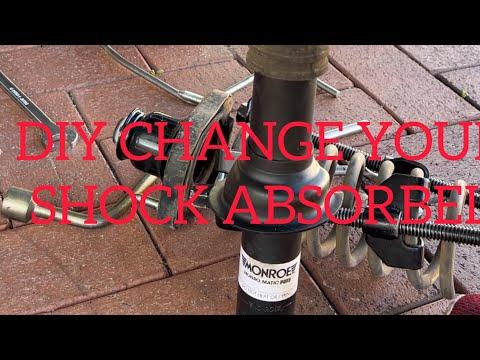







How to Replace Front Struts and Rear Shock Absorbers on a 2016 Mitsubishi Outlander Sport
Step-by-step DIY suspension replacement with required tools, parts list, safety tips, and torque specs for 2011, 2012, 2013, 2014, 2015, 2016, 2017, 2018, 2019, 2020
How to Replace Front Struts and Rear Shock Absorbers on a 2016 Mitsubishi Outlander Sport
Step-by-step DIY suspension replacement with required tools, parts list, safety tips, and torque specs for 2011, 2012, 2013, 2014, 2015, 2016, 2017, 2018, 2019, 2020


🔧 Outlander Sport - Shock Absorber/Strut Replacement
On your Outlander Sport, the front “shocks” are part of the front strut assemblies, and the rear typically uses separate shock absorbers. Replacing worn shocks/struts restores ride comfort, braking stability, and reduces bouncing and tire cupping.
Difficulty Level: Intermediate | Estimated Time: 3-6 hours
Assumption: Stock suspension; front = struts, rear = separate shocks.
⚠️ Safety & Precautions
- ⚠️ Support the vehicle with jack stands; never rely on a floor jack.
- ⚠️ If reusing front springs, a coil spring compressor is required; springs store dangerous energy.
- ⚠️ Do not let the steering knuckle hang by the brake hose/ABS wire; support it to avoid damage.
- ⚠️ After front strut replacement, get a 4-wheel alignment ASAP to prevent tire wear.
- ⚠️ Keep hands clear when lowering/raising suspension arms.
🔧 Required Tools
You'll need the following tools for this repair:
- Floor jack (rated 3-ton minimum)
- Jack stands (rated 3-ton minimum)
- Wheel chocks
- Safety glasses
- Mechanic gloves
- Breaker bar (1/2")
- Torque wrench (20–200 Nm range)
- Ratchet (3/8")
- Ratchet (1/2")
- Socket set: 10mm, 12mm, 14mm, 17mm, 19mm, 21mm
- Wrench set: 14mm, 17mm, 19mm
- Allen key set: 6mm
- Trim clip removal tool
- Flathead screwdriver
- Pry bar (18")
- Rubber mallet
- Penetrating oil
- Paint marker
- Coil spring compressor (specialty)
- Pass-through strut nut socket set (specialty)
🔩 Required Parts
HowToo sells all the parts you need for this repair:
- Front complete strut assemblies - Replace in pairs - Qty: 2
- Rear shock absorbers - Replace in pairs - Qty: 2
- Front strut mount hardware kit - Qty: 1
- Rear shock mounting hardware kit - Qty: 1
- Medium-strength threadlocker - Qty: 1
- Anti-seize compound - Qty: 1
📋 Before You Begin
- Park on level ground, turn the steering wheel straight, and set the parking brake.
- Place wheel chocks behind the rear wheels (front struts) or front wheels (rear shocks).
- Loosen lug nuts 1/2 turn with a 21mm socket and breaker bar before lifting.
- Spray penetrating oil on strut/shock bolts and sway bar link nuts; let it soak 5–10 minutes.
- Tip: Do one side at a time.
🔨 Step-by-Step Instructions
Follow these steps in order:
Step 1: Lift and remove the wheel
- Use a floor jack to lift at the factory jack point and set the vehicle on jack stands.
- Remove lug nuts with a 21mm socket and remove the wheel.
Step 2: Remove brackets from the front strut (front struts)
- Use a 10mm socket or 12mm socket to remove the brake hose/ABS wire brackets from the strut body.
- Move the hose/wire aside so nothing gets stretched.
Step 3: Disconnect the front sway bar end link (front struts)
- Use a 17mm wrench to loosen the end link nut at the strut.
- If the stud spins, hold it with a 6mm Allen key while turning the nut.
Step 4: Mark camber position (front struts)
- Use a paint marker to mark the strut-to-knuckle bolt positions.
- This helps keep alignment close until you get a professional alignment.
Step 5: Remove the strut-to-knuckle bolts (front struts)
- Support the steering knuckle with the floor jack under the lower control arm area (light pressure only).
- Remove the two large bolts/nuts using a 19mm socket and 21mm socket with a breaker bar.
- Tap bolts out with a rubber mallet if needed.
- Torque (install): 125 Nm (92 ft-lbs)
Step 6: Remove the upper strut mount nuts (front struts)
- Open the hood and locate the strut tower.
- Remove the upper mount nuts with a 14mm socket.
- Hold the strut so it doesn’t drop, then remove the strut assembly from the wheel well.
- Torque (install): 44 Nm (32 ft-lbs)
Step 7: If you are NOT using complete strut assemblies (front struts)
- Install a coil spring compressor (specialty) onto the spring and compress evenly until the top mount is loose.
- A coil spring compressor is a clamp tool that safely squeezes the spring shorter.
- Remove the center nut using a pass-through strut nut socket set (specialty) and a 6mm Allen key as needed.
- Swap the strut cartridge, then reassemble in the same order and slowly release the compressor.
- Tip: Point the top mount the same direction.
Step 8: Install the front strut (front struts)
- Position the strut into the tower and hand-start the upper nuts with a 14mm socket.
- Slide the knuckle onto the strut and install the two lower bolts using 19mm/21mm tools.
- Reattach the sway bar end link using a 17mm wrench and 6mm Allen key if needed.
- Torque sway bar end link nut: 55 Nm (41 ft-lbs)
- Reinstall brake hose/ABS brackets with a 10mm/12mm socket.
Step 9: Rear shock removal
- Remove the rear wheel using a 21mm socket.
- Support the rear suspension arm lightly with the floor jack so it doesn’t drop when the shock is removed.
- Remove the lower shock bolt using a 17mm socket and 17mm wrench.
- Remove the upper shock fastener(s):
-
- If accessible in the wheel well, remove with a 14mm socket.
- If behind cargo-side trim, pop clips with a trim clip removal tool and remove with a 14mm socket.
- Remove the rear shock.
Step 10: Rear shock installation
- Install the new shock starting at the upper mount, hand-tighten with a 14mm socket.
- Align the lower mount and install the lower bolt using a 17mm socket and 17mm wrench.
- Torque upper shock fastener: 44 Nm (32 ft-lbs)
- Torque lower shock bolt: 98 Nm (72 ft-lbs)
- Tip: Raise the arm to align bolt holes.
Step 11: Reinstall wheels and torque lug nuts
- Install wheels and hand-tighten lug nuts using a 21mm socket.
- Lower the vehicle and torque lug nuts in a star pattern using a torque wrench.
- Torque lug nuts: 108 Nm (80 ft-lbs)
✅ After Repair
- Test drive at low speed first; listen for clunks and recheck your work.
- Recheck lug nut torque after 25–50 miles using a torque wrench.
- Get a professional alignment after front struts to prevent uneven tire wear.
- Watch for brake hose/ABS wire rubbing and correct routing if needed.
💰 DIY vs Shop Cost
Shop Cost: $900-$1,800 (parts + labor)
DIY Cost: $350-$900 (parts only)
You Save: $550-$900 by doing it yourself!
Shop labor rates vary but typically run $100-$150/hour. This repair takes a shop approximately 3-5 hours.
🎯 Ready to get started?
HowToo makes it easy: same-day/2-day shipping on every part, plus all the tools and specialty tools you need! Check out the parts and tools sections below to add everything to your cart.