









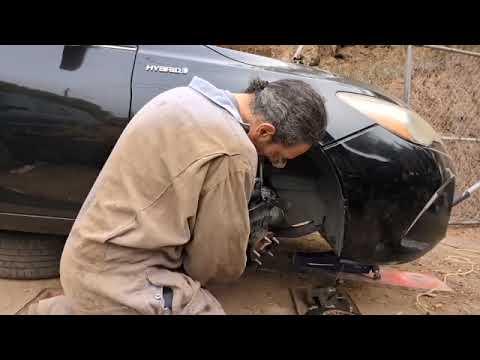







How to Replace Front & Rear Wheel Bearings on a 2015 Toyota Camry (DIY Guide)
Step-by-step press-in front bearing and bolt-on rear hub instructions with tools, parts, and torque specs
How to Replace Front & Rear Wheel Bearings on a 2015 Toyota Camry (DIY Guide)
Step-by-step press-in front bearing and bolt-on rear hub instructions with tools, parts, and torque specs


🔧 Camry - Wheel Bearing Replacement
Wheel bearings let the wheel hub spin smoothly. When they wear out, you may hear a growl/hum that changes with speed or feel looseness in the wheel. On your Camry, the front bearing is typically a press-in bearing inside the steering knuckle, while the rear is typically a bolt-on hub/bearing assembly.
Difficulty Level: Advanced | Estimated Time: 2.5-6.0 hours
Assumption: Torque specs shown are common for this Camry; verify if you have a repair manual.
⚠️ Safety & Precautions
- ⚠️ Support the car on jack stands only; never rely on a jack.
- ⚠️ Hybrid safety: Power OFF, keep the key fob at least 15 ft away, and wait 5 minutes before working near wiring.
- ⚠️ Don’t let the brake caliper hang by the hose; support it with a hook/strap.
- ⚠️ Wear eye protection when removing a snap ring (a spring steel retaining ring).
- ⚠️ If you don’t have a hydraulic press (a shop press that pushes parts in/out with force), plan to remove the knuckle and take it to a machine shop.
🔧 Required Tools
You'll need the following tools for this repair:
- Floor jack (rated 3-ton minimum)
- Jack stands (rated 3-ton minimum)
- Wheel chocks
- Safety glasses
- Mechanic gloves
- Torque wrench (10–200 ft-lbs range)
- Breaker bar (1/2")
- Socket set (8mm–22mm, 1/2")
- Wrench set (10mm–22mm)
- 30mm axle nut socket (1/2")
- Ratchet (3/8")
- Phillips screwdriver
- Flat trim tool
- Pry bar (12–18")
- Hammer (16–24 oz)
- Punch set
- Needle-nose pliers
- Snap ring pliers
- Bungee cord or caliper hook
- Ball joint separator (specialty)
- Tie-rod end puller (specialty)
- Hydraulic shop press (12-ton minimum) (specialty)
- Bearing separator kit (specialty)
- Bearing press adapter/driver kit (specialty)
- Wire brush
- Penetrating oil
🔩 Required Parts
HowToo sells all the parts you need for this repair:
- Front wheel bearing - Qty: 1
- Front wheel hub - Qty: 1
- Front axle nut - Qty: 1
- Front steering knuckle snap ring - Qty: 1
- Rear wheel hub/bearing assembly - Qty: 1
- Rear hub mounting bolts - Qty: 4
- Brake cleaner - Qty: 1
- Medium-strength threadlocker - Qty: 1
- Anti-seize compound - Qty: 1
📋 Before You Begin
- Park on level ground. Set the parking brake. Chock the rear wheels if doing the front (and chock the front wheels if doing the rear).
- Crack the wheel lug nuts loose with a 21mm socket and breaker bar before lifting.
- If doing a front bearing: loosen the axle nut with a 30mm axle nut socket and breaker bar while the wheel is on the ground.
- Spray penetrating oil on rust-prone fasteners (caliper bracket bolts, tie-rod, hub area).
🔨 Step-by-Step Instructions
Follow these steps in order:
Step 1: Lift and secure the car
- Use a floor jack (rated 3-ton minimum) to lift at the correct jacking point.
- Set the car onto jack stands (rated 3-ton minimum).
- Remove the wheel using a 21mm socket.
Step 2: Remove the brake caliper and rotor
- Remove the caliper bolts using a 14mm socket. Torque to 34 Nm (25 ft-lbs) on reassembly.
- Lift the caliper off and hang it using a bungee cord or caliper hook.
- Remove the caliper bracket using a 17mm socket. Torque to 107 Nm (79 ft-lbs) on reassembly.
- Remove the rotor. If it’s stuck, tap the rotor hat with a hammer (16–24 oz). Light hits work best.
Step 3A: Front bearing (press-in) - Remove axle nut and free the axle
- Remove the axle nut using a 30mm axle nut socket (1/2") and breaker bar.
- Push the axle inward through the hub. Use a punch set and hammer (16–24 oz) on the axle end if needed (don’t mushroom the threads).
- Unclip the ABS sensor wire and brake hose brackets from the knuckle using a 10mm socket and flat trim tool.
Step 4A: Front bearing (press-in) - Disconnect steering/suspension from the knuckle
- Remove the outer tie-rod end nut using a 17mm socket, then separate it using a tie-rod end puller (specialty). Torque to 49 Nm (36 ft-lbs) on reassembly.
- Separate the lower ball joint from the knuckle using a ball joint separator (specialty) and appropriate socket set (8mm–22mm) for the fasteners. Torque to 94 Nm (69 ft-lbs) on reassembly.
- Remove the strut-to-knuckle bolts using a 19mm socket and breaker bar. Torque to 156 Nm (115 ft-lbs) on reassembly.
- Remove the knuckle from the car, guiding the axle out carefully.
Step 5A: Front bearing (press-in) - Press out hub and bearing
- Clean the knuckle area with a wire brush and brake cleaner.
- Use a hydraulic shop press (12-ton minimum) (specialty) with a bearing press adapter/driver kit (specialty) to press the hub out of the bearing.
- If the inner bearing race sticks to the hub, remove it using a bearing separator kit (specialty) and the hydraulic shop press (12-ton minimum) (specialty). (A “race” is the hardened ring the balls/rollers ride on.)
- Remove the bearing snap ring using snap ring pliers.
- Press the bearing out of the knuckle using the hydraulic shop press (12-ton minimum) (specialty) and bearing press adapter/driver kit (specialty).
Step 6A: Front bearing (press-in) - Press in new bearing and hub
- Press the new bearing into the knuckle using the hydraulic shop press (12-ton minimum) (specialty) and bearing press adapter/driver kit (specialty).
- Install the new snap ring using snap ring pliers. Make sure it seats fully in the groove.
- Press the hub into the new bearing using the hydraulic shop press (12-ton minimum) (specialty) and correct adapters. Support the inner race to avoid damage.
Step 7A: Front bearing (press-in) - Reinstall knuckle and axle
- Reinstall the knuckle to the strut using a 19mm socket. Torque to 156 Nm (115 ft-lbs).
- Reconnect the lower ball joint using the appropriate socket set (8mm–22mm). Torque to 94 Nm (69 ft-lbs).
- Reconnect the tie-rod end using a 17mm socket. Torque to 49 Nm (36 ft-lbs).
- Install a new axle nut using a 30mm axle nut socket (1/2"). Torque to 216 Nm (159 ft-lbs).
- Reattach ABS/brake line brackets using a 10mm socket.
Step 3B: Rear hub/bearing (bolt-on) - Remove rear brake and hub
- Remove the rear caliper bolts using a 14mm socket. Torque to 34 Nm (25 ft-lbs) on reassembly.
- Hang the caliper using a bungee cord or caliper hook.
- Remove the caliper bracket using a 17mm socket. Torque to 79 Nm (58 ft-lbs) on reassembly.
- Remove the rotor; tap with a hammer (16–24 oz) if stuck.
- Disconnect the ABS sensor connector/brackets using a 10mm socket and flat trim tool.
- Remove the hub mounting bolts from behind the knuckle using a 14mm socket and breaker bar. Torque to 70 Nm (52 ft-lbs) on reassembly.
- Pull the hub off. If it’s rusted on, use a hammer (16–24 oz) around the flange and apply penetrating oil.
Step 4B: Rear hub/bearing (bolt-on) - Install new hub
- Clean the mounting surface with a wire brush and brake cleaner.
- Apply a very thin coat of anti-seize compound to the hub-to-knuckle mating surface.
- Install the new hub and start bolts by hand.
- Apply medium-strength threadlocker to the bolts if specified by the parts kit.
- Tighten with a 14mm socket and torque wrench. Torque to 70 Nm (52 ft-lbs).
- Reconnect ABS wiring/brackets using a 10mm socket.
Step 5: Reinstall rotor, caliper bracket, and caliper
- Install the rotor.
- Install the caliper bracket using a 17mm socket and torque wrench. Torque to 107 Nm (79 ft-lbs) front / 79 Nm (58 ft-lbs) rear.
- Install the caliper using a 14mm socket and torque wrench. Torque to 34 Nm (25 ft-lbs).
Step 6: Reinstall wheel and torque lug nuts
- Install the wheel and hand-tighten lug nuts using a 21mm socket.
- Lower the car, then tighten lug nuts in a star pattern with a torque wrench. Torque to 103 Nm (76 ft-lbs).
✅ After Repair
- Pump the brake pedal until it feels firm before driving.
- Test drive at low speed first. Listen for grinding/clicking and confirm the steering feels normal.
- Recheck for any warning lights (ABS/traction). If a light is on, inspect ABS connectors and wiring clips.
- After 25–50 miles, recheck lug nut torque using a torque wrench. Quick recheck prevents headaches.
- If the front knuckle was removed, an alignment check is recommended.
💰 DIY vs Shop Cost
Shop Cost: $450-$1,100 (parts + labor)
DIY Cost: $120-$420 (parts only)
You Save: $330-$680 by doing it yourself!
Shop labor rates vary but typically run $100-$150/hour. This repair takes a shop approximately 2.5-4.0 hours (rear) or 3.5-6.0 hours (front with press work).
🎯 Ready to get started?
HowToo makes it easy: same-day/2-day shipping on every part, plus all the tools and specialty tools you need! Check out the parts and tools sections below to add everything to your cart.