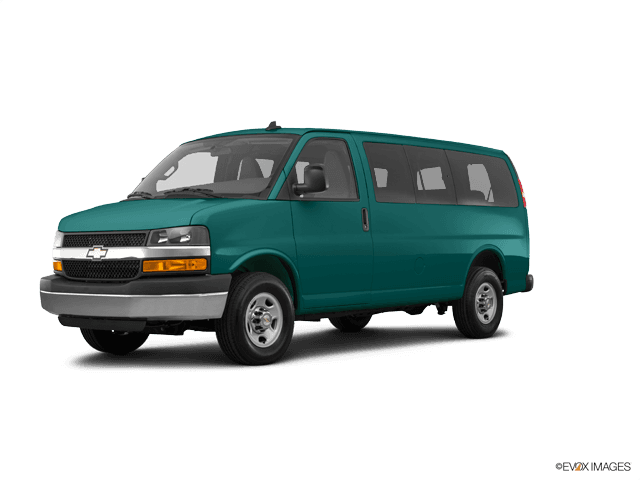









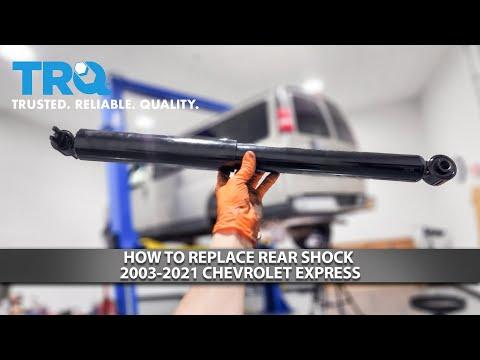







How to Replace Front & Rear Shock Absorbers on a 2016 Chevrolet Express 3500
Step-by-step DIY guide with required tools, parts list, safety tips, and torque specs for 2003, 2004, 2005, 2012, 2013, 2014, 2015, 2016, 2017
How to Replace Front & Rear Shock Absorbers on a 2016 Chevrolet Express 3500
Step-by-step DIY guide with required tools, parts list, safety tips, and torque specs for 2003, 2004, 2005, 2012, 2013, 2014, 2015, 2016, 2017


🔧 Express 3500 - Shock Absorber Replacement
Replacing worn shocks restores ride control, reduces bouncing, and improves braking stability. On your Express 3500, you can replace the front and rear shocks one axle at a time without removing springs.
Difficulty Level: Intermediate | Estimated Time: 2-4 hours
⚠️ Safety & Precautions
- 🛑 Never work under a vehicle supported only by a jack; always use jack stands.
- 🛑 Chock the wheels that stay on the ground to prevent rolling.
- 🛑 Support the axle/control arm before removing a shock so nothing drops suddenly.
- 🛑 Wear eye protection; rust and dirt fall when bolts break loose.
- 🔋 Battery disconnect is not required for shock replacement.
🔧 Required Tools
You'll need the following tools for this repair:
- Floor jack (rated 3-ton minimum)
- Jack stands (rated 3-ton minimum)
- Wheel chocks
- 21mm socket
- 1/2" drive breaker bar
- 1/2" drive torque wrench (30-250 ft-lbs range)
- Ratchet (1/2" drive)
- Socket set: 15mm, 18mm, 21mm
- Combination wrench set: 15mm, 18mm, 21mm
- Deep socket set: 15mm, 18mm
- Pass-through socket set (specialty)
- Locking pliers
- Penetrating oil
- Wire brush
- Trim clip tool
- Flathead screwdriver
- Safety glasses
- Mechanic gloves
🔩 Required Parts
HowToo sells all the parts you need for this repair:
- Front shock absorbers - Replace in pairs - Qty: 2
- Rear shock absorbers - Replace in pairs - Qty: 2
- Shock mounting hardware kit - Optional but recommended - Qty: 1
📋 Before You Begin
- Park on level ground, shift to Park, and set the parking brake.
- Chock the wheels (if doing rear shocks first, chock the front wheels).
- Spray penetrating oil on all shock fasteners 10-15 minutes before removal.
- Do one axle at a time.
🔨 Step-by-Step Instructions
Follow these steps in order:
Step 1: Loosen lug nuts and safely lift the van
- Use a 21mm socket and breaker bar to loosen (do not remove) the lug nuts on the axle you’re working on.
- Lift at the appropriate jacking point using a floor jack (rated 3-ton minimum).
- Set the frame onto jack stands (rated 3-ton minimum).
- Remove the wheels using the 21mm socket.
Step 2: Replace the rear shocks (leaf-spring axle)
- Place the floor jack (rated 3-ton minimum) under the rear axle tube to lightly support it.
- Clean exposed threads with a wire brush, then re-apply penetrating oil.
- Remove the lower shock bolt using an 18mm socket and 18mm wrench.
- Remove the upper shock fastener(s) using an 18mm socket and 18mm wrench.
- Remove the shock. If stuck, wiggle it while slightly raising/lowering the axle with the floor jack.
- Install the new shock in the same orientation.
- Hand-start all fasteners first to avoid cross-threading.
- Tighten the upper and lower fasteners with a torque wrench: Torque to 95 Nm (70 ft-lbs) (upper) and Torque to 140 Nm (103 ft-lbs) (lower).
- Repeat on the other rear side.
Step 3: Replace the front shocks (front suspension)
- Support the lower control arm with the floor jack (rated 3-ton minimum) so it can’t drop.
- Locate the top shock stem/nut area. You may need to move a small splash shield or liner section.
- If a liner/splash shield blocks access, remove clips using a trim clip tool and flathead screwdriver.
- Remove the lower shock bolt using an 21mm socket and 21mm wrench.
- Remove the upper shock nut using a deep socket (often 15mm) and a pass-through socket set (specialty).
- A pass-through socket lets you turn the nut while a tool passes through the middle to hold the shock stem from spinning.
- If needed, carefully hold the stem with locking pliers on the flat spot only.
- Remove the shock downward through the wheel well.
- Install the new shock. Start the upper nut by hand first, then align and install the lower bolt.
- Tighten fasteners with a torque wrench: Torque to 30 Nm (22 ft-lbs) (upper stem nut) and Torque to 150 Nm (111 ft-lbs) (lower bolt).
- Reinstall any splash shield/liner clips using the trim clip tool.
- Repeat on the other front side.
Step 4: Reinstall wheels and lower the van
- Reinstall wheels and hand-start lug nuts.
- Lower the van off the jack stands using the floor jack.
- Torque lug nuts in a star pattern using a torque wrench: Torque to 190 Nm (140 ft-lbs).
Assumption: Torque specs shown match common Express 3500 hardware; verify with GM service information if fasteners differ.
✅ After Repair
- Do a quick visual check that all shock bolts/nuts are fully seated and bushings look straight (not twisted).
- Road test at low speed first; listen for clunks over bumps.
- Re-check lug nut torque with a torque wrench after 25-50 miles.
- No alignment is typically required for shocks alone, but get an alignment if you had abnormal tire wear or steering pull.
💰 DIY vs Shop Cost
Shop Cost: $600-$1,200 (parts + labor)
DIY Cost: $200-$600 (parts only)
You Save: $400-$600 by doing it yourself!
Shop labor rates vary but typically run $100-$150/hour. This repair takes a shop approximately 2-4 hours.
🎯 Ready to get started?
HowToo makes it easy: same-day/2-day shipping on every part, plus all the tools and specialty tools you need! Check out the parts and tools sections below to add everything to your cart.