









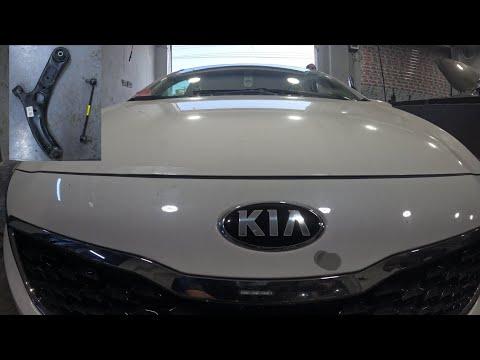






How to Replace Front Lower Control Arms on a 2015 Kia Forte (DIY Guide)
Step-by-step instructions with required tools/parts, torque specs, safety tips, and alignment notes
How to Replace Front Lower Control Arms on a 2015 Kia Forte (DIY Guide)
Step-by-step instructions with required tools/parts, torque specs, safety tips, and alignment notes


🔧 Forte - Front Lower Control Arm Replacement
The front lower control arm holds the front wheel in position and contains bushings and a ball joint that wear out and cause clunks, steering wander, or uneven tire wear. Replacing the arm restores tight steering and proper suspension geometry, but you’ll need an alignment afterward.
Difficulty Level: Intermediate | Estimated Time: 2-4 hours (both sides)
⚠️ Safety & Precautions
- 🛑 Support the car on jack stands; never rely on a floor jack.
- 🧤 Wear safety glasses and mechanic gloves; rust and debris fall straight down.
- 🔥 Work on a cool suspension/brake area to avoid burns.
- ⚠️ Do not hit the ball joint stud/threads with a hammer; you can ruin it.
- ✅ Final tightening of the control arm bushing bolts must be done at normal ride height (car’s weight on the suspension) to prevent bushing damage.
🔧 Required Tools
You'll need the following tools for this repair:
- Floor jack (rated 3-ton minimum)
- Jack stands (pair, rated 3-ton minimum)
- Wheel chocks
- Lug wrench or 21mm socket
- Metric socket set (10mm-24mm)
- Metric wrench set (10mm-24mm)
- Breaker bar 1/2"
- Torque wrench 1/2" (20-200 ft-lbs range)
- Ball joint separator (specialty)
- Pry bar (18"-24")
- Hammer (2-3 lb)
- Punch set
- Needle-nose pliers
- Trim clip tool
- Penetrating oil
- Paint marker
- Safety glasses
- Mechanic gloves
🔩 Required Parts
HowToo sells all the parts you need for this repair:
- Front lower control arm - Replace in pairs (recommended) - Qty: 2
- Front lower ball joint pinch bolt/nut or castle nut hardware - Replace if damaged or rusted - Qty: 2
- Front sway bar end link - Optional if worn or seized - Qty: 2
- Cotter pin (ball joint) - If your setup uses a castle nut - Qty: 2
📋 Before You Begin
- Park on level ground, shift to P, and set the parking brake.
- Place wheel chocks behind the rear wheels.
- Loosen the front lug nuts 1/2 turn using a lug wrench or 21mm socket before lifting.
- Spray penetrating oil on control arm bolts, the sway link nut, and the ball joint connection. Let it soak 5-10 minutes.
- Tip: Do one side at a time.
🔨 Step-by-Step Instructions
Follow these steps in order:
Step 1: Lift and secure the front of the car
- Lift the front using a floor jack (rated 3-ton minimum) at the front center jacking point.
- Set the car down onto jack stands (pair, rated 3-ton minimum) at the reinforced pinch welds or subframe points.
- Remove the wheel using a lug wrench or 21mm socket.
Step 2: Remove any splash shield blocking access (if equipped)
- Remove clips/screws using a trim clip tool and metric socket set (10mm-24mm).
- Set the shield and fasteners aside so you don’t lose them.
Step 3: Disconnect the sway bar end link from the control arm
- Remove the nut at the control arm using a metric wrench set (10mm-24mm) and metric socket set (10mm-24mm).
- If the stud spins, hold it with a wrench while turning the nut with a socket/wrench.
- Tip: Penetrating oil helps a lot here.
Step 4: Separate the ball joint from the steering knuckle
- There are two common setups; use the one that matches what you see.
- Castle nut style:
-
- Remove the cotter pin using needle-nose pliers.
- Remove the ball joint nut using a breaker bar 1/2" and metric socket set (10mm-24mm).
- Use a ball joint separator (specialty) to pop the taper loose from the knuckle.
- Pinch bolt style:
-
- Remove the pinch bolt/nut using a breaker bar 1/2" and metric socket set (10mm-24mm).
- Use a ball joint separator (specialty) to push the joint out of the knuckle.
- Ball joint separator = tool that forces the joint apart safely.
Step 5: Unbolt the control arm from the subframe
- Support the control arm lightly with the floor jack (rated 3-ton minimum) so it doesn’t drop.
- Mark the position of the bolts/washers (if present) using a paint marker.
- Remove the front and rear control arm mounting bolts using a breaker bar 1/2" and metric socket set (10mm-24mm).
- Use a pry bar (18"-24") to guide the control arm out.
Step 6: Install the new control arm (hand-tighten first)
- Position the new arm into the subframe using a pry bar (18"-24") as needed.
- Start the subframe bolts by hand to avoid cross-threading, then snug them using a metric socket set (10mm-24mm).
- Reconnect the ball joint to the knuckle and start the nut/bolt by hand using a metric wrench set (10mm-24mm).
- Reconnect the sway bar end link and snug the nut using a metric socket set (10mm-24mm).
Step 7: Torque fasteners (two-stage: off-ground, then at ride height)
- Assumption: Bolt sizes and torque specs can vary by production date; if your hardware differs, torque to Kia factory specs for your exact fasteners.
- With the suspension still hanging, torque the ball joint and sway link fasteners using a torque wrench 1/2" (20-200 ft-lbs range):
-
- Ball joint nut/bolt: Torque to 59 Nm (44 ft-lbs)
- Sway bar end link nut (at control arm): Torque to 98 Nm (72 ft-lbs)
- Reinstall the wheel and snug lug nuts using a lug wrench or 21mm socket.
- Lower the car so the suspension is at normal ride height (car on the ground). Then torque the control arm bushing-to-subframe bolts using a torque wrench 1/2" (20-200 ft-lbs range):
-
- Control arm front bushing bolt: Torque to 127 Nm (94 ft-lbs)
- Control arm rear bushing bolt: Torque to 156 Nm (115 ft-lbs)
- Wheel lug nuts: Torque to 88-108 Nm (65-80 ft-lbs)
- Tip: Ride-height torquing protects the bushings.
Step 8: Repeat on the other side
- Repeat Steps 1-7 for the other front control arm using the same floor jack (rated 3-ton minimum) and jack stands (pair, rated 3-ton minimum).
✅ After Repair
- ✅ Take a short, slow test drive and listen for clunks over small bumps.
- ✅ Make sure the steering wheel returns smoothly and the car tracks straight.
- ✅ Get a 4-wheel alignment as soon as possible (control arms change alignment).
- ✅ Re-check lug nut torque after 25-50 miles using a torque wrench 1/2" (20-200 ft-lbs range).
💰 DIY vs Shop Cost
Shop Cost: $600-$1,200 (parts + labor + alignment)
DIY Cost: $160-$450 (parts only, both sides)
You Save: $440-$750 by doing it yourself!
Shop labor rates vary but typically run $100-$150/hour. This repair takes a shop approximately 2-4 hours.
🎯 Ready to get started?
HowToo makes it easy: same-day/2-day shipping on every part, plus all the tools and specialty tools you need! Check out the parts and tools sections below to add everything to your cart.