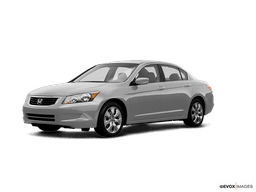









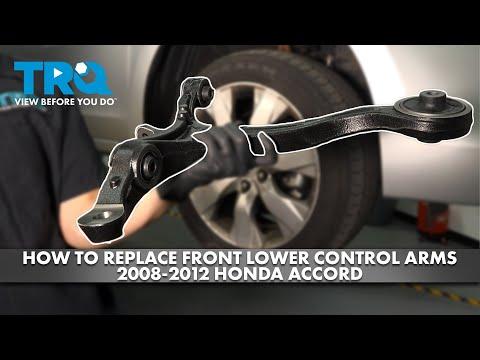







How to Replace Front Lower Control Arms on a 2008 Honda Accord (DIY Guide)
Step-by-step instructions with tools, parts list, safety tips, and alignment notes for a smooth repair
How to Replace Front Lower Control Arms on a 2008 Honda Accord (DIY Guide)
Step-by-step instructions with tools, parts list, safety tips, and alignment notes for a smooth repair


🔧 Accord - Control Arm Replacement
On your Accord, “control arms” can mean the front lower control arm (most common) or one of the rear multi-link arms. The steps, parts, and torque specs are different depending on which arm(s) you’re replacing.
Quick questions (so I give the correct procedure): 1) Are you replacing front control arms or rear control arms? 2) Are you replacing the whole arm assembly (with bushing/ball joint) or just bushings?
Difficulty Level: Intermediate | Estimated Time: 1.5-3.0 hours per side (front lower arm)
⚠️ Safety & Precautions
- 🛑 Support the car with jack stands on solid points; never rely on a floor jack alone.
- 🧤 Wear safety glasses; separating a ball joint can release suddenly.
- 🔥 Work on a cool suspension; avoid touching hot exhaust components near the front subframe.
- 📏 Plan for an alignment after control arm work; tire wear and pulling can happen if skipped.
- 🔋 Battery disconnect is not required for front lower control arm replacement.
🔧 Required Tools
You'll need the following tools for this repair:
- Floor jack (rated 3-ton minimum)
- Jack stands (rated 3-ton minimum)
- Wheel chocks
- Safety glasses
- Mechanic gloves
- Breaker bar (1/2")
- Torque wrench (10–250 Nm range)
- Socket set (10mm–22mm, 1/2")
- Wrench set (10mm–22mm)
- Pry bar (24")
- Hammer (2 lb)
- Needle-nose pliers
- Ball joint separator (specialty)
- Penetrating oil
- Paint marker
🔩 Required Parts
HowToo sells all the parts you need for this repair:
- Front lower control arm (left) - Qty: 1
- Front lower control arm (right) - Qty: 1
- Lower ball joint cotter pin - Qty: 2
- Lower ball joint castle nut - Qty: 2
- Lower control arm mounting bolts and nuts - Qty: 1 kit
📋 Before You Begin
- 🅿️ Park on level ground, set the parking brake, and place wheel chocks behind the rear tires.
- 🔓 Slightly loosen the front wheel lug nuts using a 19mm socket and breaker bar before lifting.
- 🧴 Spray penetrating oil on the control arm bolts and the ball joint nut using penetrating oil; wait 5–10 minutes.
- 🖊️ Use a paint marker to mark bolt positions/washers so you can reassemble the same way.
🔨 Step-by-Step Instructions
Follow these steps in order:
Step 1: Lift and secure the front end
- Use a floor jack (rated 3-ton minimum) to lift the front of the car at the approved front jacking point.
- Set the car down onto jack stands (rated 3-ton minimum) placed at strong frame/subframe points.
- Remove the wheel using a 19mm socket.
Step 2: Locate the front lower control arm and ball joint
- The front lower control arm is the large arm under the front suspension that connects the knuckle to the subframe.
- The ball joint is the pivot at the outer end (near the wheel). A ball joint separator is a tool that pops the joint apart without damaging parts.
Step 3: Remove the ball joint cotter pin and nut
- Straighten and remove the cotter pin using needle-nose pliers.
- Remove the ball joint castle nut using the correct size socket set (10mm–22mm, 1/2") and breaker bar (1/2").
- Don’t reuse cotter pins.
Step 4: Separate the ball joint from the steering knuckle
- Install and operate the ball joint separator (specialty) until the joint “pops” free.
- If needed, tap the knuckle boss with a hammer (2 lb) while keeping the separator tensioned.
- Use a pry bar (24") to gently guide the control arm down once separated.
Step 5: Remove the control arm mounting bolts
- Support the control arm with your hand or a floor jack (rated 3-ton minimum) so it doesn’t drop suddenly.
- Remove the inner control arm bolts/nuts using a socket set (10mm–22mm, 1/2") and wrench set (10mm–22mm).
- Remove the control arm from the subframe.
Step 6: Install the new control arm (do not final-tighten bushings yet)
- Position the new arm in place and start all mounting bolts by hand.
- Tighten the mounting bolts snug using a ratchet from your socket set (10mm–22mm, 1/2"), but do not fully torque yet.
- Hand-start bolts to avoid cross-threading.
Step 7: Reconnect the ball joint to the knuckle
- Guide the ball joint stud into the knuckle using a pry bar (24") as needed.
- Install the new castle nut using the correct size socket.
- Torque to OEM specification using a torque wrench, then continue tightening slightly until the cotter pin hole aligns.
- Install a new cotter pin using needle-nose pliers and bend the ends over.
Step 8: Final-torque the control arm bushing bolts at ride height
- Put the wheel back on using a 19mm socket and snug the lug nuts.
- Lower the car so the suspension is at normal ride height (vehicle on the ground).
- Torque the control arm mounting bolts to OEM specification using a torque wrench.
- This prevents bushing “preload,” which can tear the bushing early.
Step 9: Torque the wheel lug nuts
- Use a torque wrench (10–250 Nm range) and 19mm socket to tighten the lug nuts in a star pattern.
- Torque to OEM specification.
✅ After Repair
- 🧪 Road test at low speed first; listen for clunks over small bumps.
- 🔍 Recheck that the cotter pin is installed and bent correctly.
- 📏 Get a 4-wheel alignment as soon as possible.
- 🛞 Watch the steering wheel position; off-center indicates alignment is needed.
💰 DIY vs Shop Cost
Shop Cost: ₹18,000–₹45,000 (parts + labor, per pair front)
DIY Cost: ₹8,000–₹25,000 (parts only, per pair front)
You Save: ₹10,000–₹20,000 by doing it yourself!
Shop labor rates vary but typically run ₹1,200–₹2,500/hour. This repair takes a shop approximately 1.5–3.0 hours.
🎯 Ready to get started?
HowToo makes it easy: same-day/2-day shipping on every part, plus all the tools and specialty tools you need! Check out the parts and tools sections below to add everything to your cart.