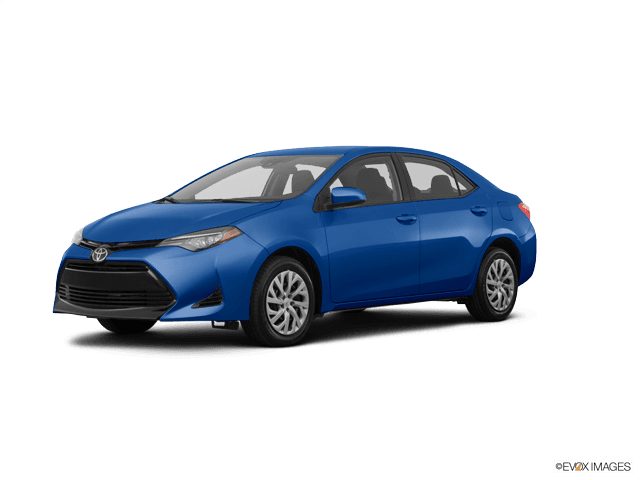









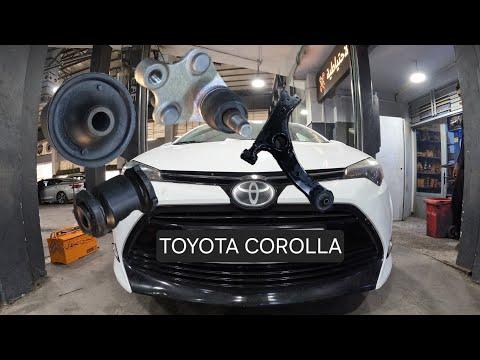






How to Replace Front Lower Control Arm Bushings on a 2017 Toyota Corolla
Step-by-step DIY guide with tools, parts list, safety tips, and torque specs for front suspension control arm replacement
How to Replace Front Lower Control Arm Bushings on a 2017 Toyota Corolla
Step-by-step DIY guide with tools, parts list, safety tips, and torque specs for front suspension control arm replacement


🔧 Corolla - Suspension Bushing Replacement (Front Lower Control Arms)
You’ll get the best result (and avoid a shop press) by replacing the complete front lower control arms, which include the bushings already installed. This tightens up steering feel, reduces clunks, and restores proper alignment.
Difficulty Level: Advanced (for a beginner) | Estimated Time: 3–5 hours at home
⚠️ Safety & Precautions
- 🛑 Always support the car on strong jack stands under the pinch welds or subframe; never rely on a floor jack alone.
- 🛑 Work on solid, level ground; chock the rear wheels so the car cannot roll.
- 🛑 Suspension parts are heavy and under tension; keep fingers clear of pinch points when removing the control arm and ball joint.
- 🛑 Loosen tight bolts with your body positioned so if a tool slips, you don’t lose balance.
- 🛑 After replacing suspension parts, you must get a professional wheel alignment to avoid tire wear and poor handling.
🔧 Required Tools
You'll need the following tools for this repair:
- 🧰 Floor jack (rated 3-ton minimum)
- 🧰 Jack stands (rated 3-ton minimum)
- 🧰 Wheel chocks
- 🧰 Lug wrench 21mm
- 🧰 Socket set metric 10–22mm
- 🧰 Ratchet 3/8" drive
- 🧰 Breaker bar 1/2" drive
- 🧰 Torque wrench 1/2" drive
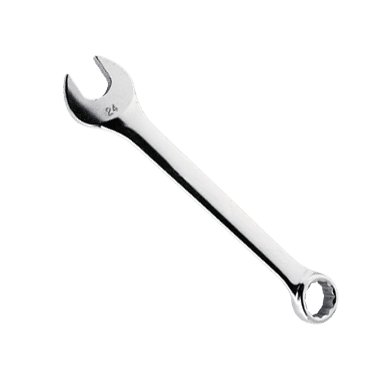
- 🧰 Combination wrench set metric 10–22mm
- 🧰 Ball joint separator (specialty)
- 🧰 Pry bar 18–24"
- 🧰 Hammer 16–24 oz
- 🧰 Needle-nose pliers
- 🧰 Flathead screwdriver medium
- 🧰 Paint marker white or yellow
- 🧰 Penetrating oil spray
- 🧰 Wire brush small
- 🧰 Safety glasses
- 🧰 Mechanic gloves
🔩 Required Parts
HowToo sells all the parts you need for this repair:
- 🔩 Front lower control arm assembly (left, with bushings and ball joint) - Qty: 1
- 🔩 Front lower control arm assembly (right, with bushings and ball joint) - Qty: 1
- 🔩 Front lower control arm bolts and nuts kit - Qty: 1
- 🔩 Front stabilizer bar link nuts (if damaged or corroded) - Qty: 2
- 🔩 Anti-seize compound - Qty: 1
- 🔩 Penetrating oil - Qty: 1
📋 Before You Begin
- 📌 Park the Corolla on level ground, set the parking brake, place the transmission in Park, and chock the rear wheels.
- 📌 Slightly loosen (crack loose) the front wheel lug nuts with the 21mm lug wrench while the car is still on the ground.
- 📌 Raise the front of the car with the floor jack at the front center jacking point and place jack stands under the pinch welds or subframe on both sides.
- 📌 Lower the car gently onto the jack stands and give the car a firm push to confirm it is stable.
- 📌 You do not need to disconnect the battery for this job.
🔨 Step-by-Step Instructions
Follow these steps in order:
Step 1: Remove the front wheels
- Use the 21mm lug wrench to fully remove the lug nuts.
- Remove both front wheels and set them aside safely.
- Keep lug nuts together so none go missing.
Step 2: Identify the lower control arm and fasteners
- The lower control arm is the triangular arm that runs from the subframe to the wheel hub.
- Use a paint marker to mark the outline of the control arm brackets where they meet the subframe; this helps you reinstall close to the original position.
- Locate:
- 🔹 The ball joint stud where the arm connects to the steering knuckle.
- 🔹 The front control arm bushing bolt to the subframe.
- 🔹 The rear control arm bushing bolt to the subframe.
Step 3: Soak bolts with penetrating oil
- Spray penetrating oil on the ball joint nut, and on the front and rear control arm bolts and nuts.
- Let it soak for 5–10 minutes while you prepare tools.
- Penetrating oil helps prevent bolt breakage.
Step 4: Disconnect sway bar link if it blocks movement (if needed)
- If the stabilizer (sway) bar link attaches to the control arm and restricts movement, use the appropriate socket 14–17mm and wrench to remove the sway bar link nut from the arm.
- Support the link so it doesn’t hang by the joint.
- Only do this if it clearly blocks arm removal.
Step 5: Separate the ball joint from the steering knuckle
- Use the correct socket (commonly 17–19mm) and ratchet to remove the ball joint nut from the stud at the steering knuckle.
- Position the ball joint separator (specialty) on the joint and tighten it with the socket or wrench until the joint pops free from the knuckle.
- If needed, gently tap the knuckle with a hammer on the side (never on the stud) to help release it.
- Keep your face away when the joint pops free.
Step 6: Remove the rear control arm bolt
- Use an appropriate socket (typically 17–19mm) and breaker bar on the rear bushing bolt where it passes through the subframe.
- Hold the nut with a combination wrench on the other side if needed.
- Break the bolt loose, then use a ratchet to fully remove the bolt and nut. Note the bolt direction for reassembly.
Step 7: Remove the front control arm bolt
- Use the correct socket (typically 17–19mm) and breaker bar on the front bushing bolt.
- Hold the nut with a combination wrench if necessary, then loosen and remove the bolt and nut.
- Support the arm with your hand so it doesn’t drop suddenly.
Step 8: Remove the control arm from the vehicle
- Wiggle and pull the control arm out from the subframe and steering knuckle area.
- If it is stuck, use a pry bar carefully between the arm and subframe to ease it out.
- Compare the old arm to the new one to verify shape and mounting points match.
Step 9: Install the new control arm into position
- Slide the new control arm into the subframe mounts, starting with the rear bushing, then the front bushing.
- Insert the rear bushing bolt by hand in the original orientation, but do not fully tighten yet.
- Insert the front bushing bolt by hand, also leaving it slightly loose.
- Always start bolts by hand to avoid cross-threading.
Step 10: Reconnect the ball joint to the steering knuckle
- Guide the ball joint stud into the steering knuckle hole.
- Install the ball joint nut by hand, then tighten with the correct socket and ratchet.
- Final tightening: Torque to OEM specification (see service manual) with the torque wrench.
Step 11: Pre-tighten subframe (bushing) bolts at normal ride height
- The rubber bushings must be tightened with the suspension at its normal ride height to avoid twisting the rubber.
- Place the floor jack under the control arm ball joint area and gently lift the hub until it approximates normal ride height (where it would sit with the car on the ground).
- Use the socket, wrench, and torque wrench to tighten the:
- 🔹 Rear bushing bolt and nut – Torque to OEM specification (see service manual).
- 🔹 Front bushing bolt and nut – Torque to OEM specification (see service manual).
- Lower the jack after both bolts are fully torqued.
- This step greatly extends bushing life.
Step 12: Reattach sway bar link (if removed)
- Position the sway bar link stud back through the control arm bracket.
- Install the nut by hand, then tighten with the correct socket and wrench.
- Final tightening: Torque to OEM specification (see service manual) with the torque wrench.
Step 13: Repeat on the other side
- Perform the same steps 2–12 on the opposite front control arm.
- Try to keep both sides visually similar in alignment relative to your paint marks.
Step 14: Reinstall front wheels
- Put each wheel back on the hub and start the lug nuts by hand.
- Snug them with the 21mm lug wrench in a crisscross pattern while the car is still on stands.
Step 15: Lower the vehicle and final-tighten lug nuts
- Raise the car slightly with the floor jack, remove the jack stands, and lower the car fully to the ground.
- With the tires on the ground, use the torque wrench and 21mm socket to tighten the lug nuts in a star pattern to OEM specification (see service manual).
- Apply a small amount of anti-seize compound to the wheel hubs in the future to ease wheel removal, avoiding the studs and brake surfaces.
✅ After Repair
- 🔎 Test drive slowly on a quiet road; listen for clunks, pops, or rubbing noises when turning and going over small bumps.
- 🔎 The steering should feel tighter and more direct, not loose or wandering.
- 🔎 Schedule a professional wheel alignment as soon as possible; after any control arm or bushing work, alignment is required to prevent tire wear.
- 🔎 After the first short drive, recheck visible bolts and lug nuts for tightness.
💰 DIY vs Shop Cost
Shop Cost: $450–$750 (parts + labor for both front control arms)
DIY Cost: $180–$350 (parts only, depending on brand)
You Save: $270–$400 by doing it yourself!
Shop labor rates vary but typically run $100–$150/hour. This repair takes a shop approximately 2–3 hours.
🎯 Ready to get started?
HowToo makes it easy: same-day/2-day shipping on every part, plus all the tools and specialty tools you need! Check out the parts and tools sections above to add everything to your cart.