
















How to Replace Front Lower Ball Joint on a 2019 Toyota Highlander
Step-by-step lower control arm replacement guide with tools, parts, torque specs, and safety tips for 2008, 2010, 2011, 2012, 2013, 2014, 2015, 2016, 2017, 2018, 2019
How to Replace Front Lower Ball Joint on a 2019 Toyota Highlander
Step-by-step lower control arm replacement guide with tools, parts, torque specs, and safety tips for 2008, 2010, 2011, 2012, 2013, 2014, 2015, 2016, 2017, 2018, 2019


🔧 Highlander - Front Lower Ball Joint Replacement
This repair replaces the front lower ball joint on your Highlander. The lower ball joint connects the steering knuckle to the lower control arm and allows the wheel to steer and move with the suspension.
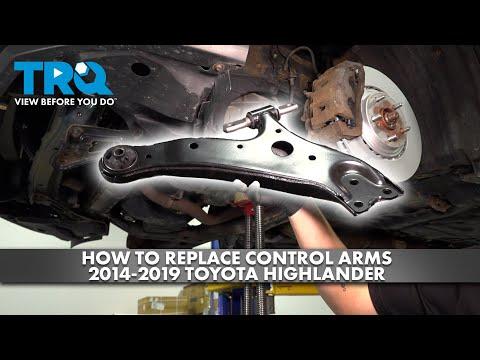
On your Highlander, the front lower ball joint is serviced as part of the lower control arm assembly, so the correct repair is replacing the front lower control arm rather than pressing out only the joint.
Difficulty Level: Advanced | Estimated Time: 2.5-4 hours per side
⚠️ Safety & Precautions
- ⚠️ Support your Highlander with jack stands only; never work under a vehicle held by a jack.
- ⚠️ The front suspension carries heavy spring force. Do not loosen the strut spring or strut center nut.
- ⚠️ AWD models have front axle shafts nearby. Do not pull outward hard on the steering knuckle or you can damage the axle joint.
- ⚠️ Always replace any cotter pins removed. A cotter pin is a small locking pin that prevents a nut from backing off.
- ⚠️ Final suspension bushing tightening must be done at normal ride height to prevent premature bushing failure.
- ⚠️ A wheel alignment is required after this repair.
🔧 Required Tools
You'll need the following tools for this repair:
- Floor jack rated 3-ton minimum
- Jack stands rated 3-ton minimum
- Wheel chocks
- Safety glasses
- Mechanic gloves
- 1/2-inch drive breaker bar
- 1/2-inch drive torque wrench rated to 200 ft-lbs
- 3/8-inch drive ratchet
- 21mm socket
- 19mm socket
- 17mm socket
- 14mm socket
- 10mm socket
- 21mm wrench
- 19mm wrench
- 17mm wrench
- 14mm wrench
- Needle-nose pliers
- Ball joint separator tool (specialty)
- Pry bar 18-inch
- Rubber mallet
- Paint marker
- Trim clip removal tool
- Hydraulic jack with rubber saddle pad
🔩 Required Parts
HowToo sells all the parts you need for this repair:
- Front lower control arm assembly with ball joint - Qty: 1 per side
- Lower ball joint castle nut - Qty: 1 per side
- Lower ball joint cotter pin - Qty: 1 per side
- Front lower control arm mounting bolts and nuts - Qty: 1 hardware set per side
- Sway bar link nut - Qty: 1 per side if removed
📋 Before You Begin
- 🅿️ Park your Highlander on flat, solid ground.
- 🧱 Place wheel chocks behind the rear wheels.
- 🔧 Loosen the front wheel lug nuts slightly before lifting the vehicle.
- 📍 Use a paint marker to mark the position of the old control arm bolts before removal. This helps keep alignment close enough to drive to an alignment shop.
- 🔎 Plan to replace one side at a time so the other side can be used as a visual reference.
🔨 Step-by-Step Instructions
Follow these steps in order:
Step 1: Loosen the Front Wheel
- Use a 21mm socket and 1/2-inch drive breaker bar to loosen the front lug nuts about half a turn.
- Do not remove the lug nuts yet.
- Break them loose on the ground.
Step 2: Raise and Support the Vehicle
- Use the floor jack rated 3-ton minimum to lift the front of your Highlander at the front center jacking point.
- Place jack stands rated 3-ton minimum under the approved front support points.
- Gently lower the vehicle onto the jack stands.
- Keep the floor jack lightly touching the vehicle as a backup support.
Step 3: Remove the Wheel
- Use the 21mm socket to remove the loosened lug nuts.
- Remove the front wheel and place it flat under the vehicle as an extra safety backup.
Step 4: Remove Splash Shield Access Fasteners if Needed
- Use a 10mm socket to remove any lower splash shield bolts blocking access to the rear control arm mounting bolt.
- Use a trim clip removal tool to remove plastic clips without breaking them.
- A trim clip tool is a small fork-shaped tool used to lift plastic push clips.
Step 5: Support the Lower Control Arm
- Place the hydraulic jack with rubber saddle pad under the lower control arm.
- Raise it just enough to support the arm, but do not lift the vehicle off the jack stand.
- This keeps the suspension from dropping suddenly when the ball joint separates.
Step 6: Disconnect the Stabilizer Link if It Blocks Access
- Use a 17mm socket and 17mm wrench to remove the stabilizer link nut from the lower control arm if it is attached in the way.
- The stabilizer link connects the sway bar to the suspension and helps reduce body roll.
- Move the link aside without twisting the rubber boot.
Step 7: Remove the Ball Joint Cotter Pin and Nut
- Use needle-nose pliers to straighten and pull out the cotter pin from the lower ball joint stud.
- Use a 19mm socket or 19mm wrench to remove the castle nut from the ball joint stud.
- A castle nut has slots on top so a cotter pin can lock it in place.
Step 8: Separate the Ball Joint from the Steering Knuckle
- Install the ball joint separator tool (specialty) between the lower control arm ball joint and the steering knuckle.
- Tighten the separator tool until the ball joint stud pops loose from the knuckle.
- Do not hammer directly on the threaded ball joint stud.
- Keep the steering knuckle supported so it does not pull outward on the AWD axle shaft.
- The pop can be loud.
Step 9: Mark the Control Arm Bolt Positions
- Use a paint marker to mark the position of the front and rear lower control arm mounting bolts and washers.
- These marks are not a substitute for alignment, but they help keep the vehicle driveable afterward.
Step 10: Remove the Lower Control Arm Mounting Bolts
- Use a 19mm socket, 21mm socket, 19mm wrench, or 21mm wrench as needed to remove the front and rear lower control arm mounting bolts and nuts.
- Use the 1/2-inch drive breaker bar if the bolts are tight.
- Support the control arm with one hand as the last bolt comes out.
Step 11: Remove the Lower Control Arm Assembly
- Use an 18-inch pry bar to gently work the control arm out of the subframe pockets.
- Use a rubber mallet to tap the arm loose if it is stuck.
- Do not pry against brake lines, axle boots, or wiring.
Step 12: Install the New Lower Control Arm Assembly
- Position the new front lower control arm assembly with ball joint into the subframe pockets.
- Use the rubber mallet to gently seat it if needed.
- Install the control arm mounting bolts and nuts by hand first.
- Do not fully tighten the bushing bolts yet.
- Hand-start bolts to avoid cross-threading.
Step 13: Connect the Ball Joint to the Steering Knuckle
- Guide the ball joint stud into the steering knuckle by hand.
- Use a 19mm socket to install the new ball joint castle nut.
- Tighten the nut, then align the castle nut slot with the hole in the ball joint stud.
- Install a new cotter pin using needle-nose pliers.
- Torque to 103 Nm (76 ft-lbs) unless the replacement part instructions specify otherwise.
Step 14: Reconnect the Stabilizer Link
- Use a 17mm socket and 17mm wrench to reconnect the stabilizer link to the control arm if removed.
- Torque to 74 Nm (55 ft-lbs).
Step 15: Raise the Suspension to Normal Ride Height
- Use the hydraulic jack with rubber saddle pad under the lower control arm to raise the suspension until it sits close to normal ride height.
- Normal ride height means the control arm is positioned about where it sits when the vehicle is on the ground.
- This prevents twisting and damaging the new rubber bushings.
Step 16: Tighten the Control Arm Mounting Bolts
- Use the 1/2-inch drive torque wrench rated to 200 ft-lbs with the correct 19mm socket or 21mm socket to tighten the control arm mounting bolts.
- Torque to 137 Nm (101 ft-lbs) for the lower control arm mounting bolts.
- If replacement hardware instructions provide different specs, follow the hardware manufacturer’s instructions.
Step 17: Reinstall Splash Shields
- Use a 10mm socket to reinstall any splash shield bolts removed earlier.
- Use the trim clip removal tool by hand to press plastic clips back into place.
Step 18: Reinstall the Wheel
- Place the wheel back on the hub.
- Use a 21mm socket to snug the lug nuts in a star pattern.
- A star pattern means tightening across the wheel instead of going around in a circle.
Step 19: Lower the Vehicle and Torque Lug Nuts
- Use the floor jack rated 3-ton minimum to lift slightly off the jack stands.
- Remove the jack stands and lower your Highlander to the ground.
- Use the 1/2-inch drive torque wrench rated to 200 ft-lbs and 21mm socket to tighten the lug nuts in a star pattern.
- Torque to 103 Nm (76 ft-lbs).
✅ After Repair
- ✅ Bounce the front of the vehicle gently and listen for clunks.
- ✅ Turn the steering wheel lock-to-lock while parked and make sure nothing binds or rubs.
- ✅ Test drive slowly first. Listen for popping, clunking, or pulling.
- ✅ Recheck the lug nut torque after the first short drive.
- ✅ Schedule a front wheel alignment immediately. Control arm replacement changes suspension geometry.
- ✅ If the steering wheel is off-center or the vehicle pulls, drive only as needed to reach an alignment shop.
💰 DIY vs Shop Cost
Shop Cost: $550-$950 per side (parts + labor + alignment)
DIY Cost: $160-$350 per side (parts only, alignment not included)
You Save: $300-$600 per side by doing it yourself!
Shop labor rates vary but typically run $100-$150/hour. This repair takes a shop approximately 1.8-2.8 hours per side.
🎯 Ready to get started?
HowToo makes it easy: same-day/2-day shipping on every part, plus all the tools and specialty tools you need! Check out the parts and tools sections below to add everything to your cart.