















How to Replace Front Control Arms on a 2016 Toyota Tundra
Step-by-step instructions with tools, parts, safety tips, and alignment guidance for 2007, 2008, 2009, 2010, 2011, 2012, 2013, 2014, 2015, 2016, 2017, 2018, 2019, 2020, 2021
How to Replace Front Control Arms on a 2016 Toyota Tundra
Step-by-step instructions with tools, parts, safety tips, and alignment guidance for 2007, 2008, 2009, 2010, 2011, 2012, 2013, 2014, 2015, 2016, 2017, 2018, 2019, 2020, 2021


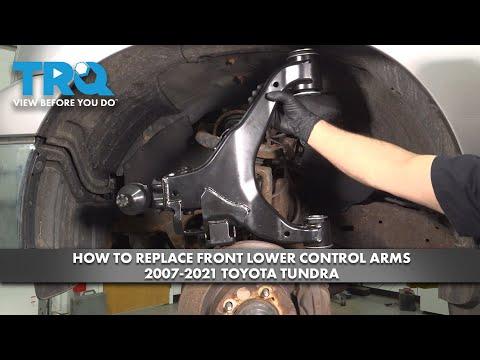
Assumption: This covers front control arm replacement on your Tundra. If you are replacing upper arms, lower arms, or both sides, the basic process is the same, but fastener access and torque values can differ by arm and position.
🔧 Front Control Arms - Replacement
The front control arms locate the wheel and keep the suspension aligned. When the bushings or ball joints wear out, you can get clunks, wandering, uneven tire wear, or steering pull. Replacing them restores proper suspension movement and helps the truck track straight.
Difficulty Level: Advanced | Estimated Time: 4-8 hours
⚠️ Safety & Precautions
- Support the truck on jack stands only. Never work under a vehicle held up by a jack alone.
- Use wheel chocks on the rear wheels before lifting the front.
- Front suspension fasteners can be very tight. Keep hands clear when parts come free.
- If your Tundra has a coil spring or strut under tension, do not remove related hardware without supporting the suspension properly.
- After arm replacement, the truck must be aligned.
- No battery disconnect is required for this repair.
🔧 Required Tools
You'll need the following tools for this repair:
- Floor jack (rated 3-ton minimum)
- Jack stands (rated 3-ton minimum)
- Wheel chocks
- Safety glasses
- Mechanic gloves
- Breaker bar
- Torque wrench
- Metric socket set
- Metric wrench set
- Ratchet
- Metric hex key set
- Ball joint separator (specialty)
- Dead blow hammer
- Penetrating oil
- Pry bar
🔩 Required Parts
HowToo sells all the parts you need for this repair:
- Front upper control arm - Qty: 2
- Front lower control arm - Qty: 2
- Front control arm hardware kit - Qty: 1 set
- Front alignment - Qty: 1
📋 Before You Begin
- Park on level ground, set the parking brake, and chock the rear wheels.
- Loosen the front lug nuts slightly before lifting the truck.
- Raise the front and support the frame securely on jack stands.
- Keep the suspension at normal ride height when tightening bushing bolts if the service procedure calls for it.
- Spray stuck bolts now.
🔨 Step-by-Step Instructions
Follow these steps in order:
Step 1: Remove the front wheel
- Use a lug wrench or breaker bar to remove the front wheel nuts, then take off the wheel.
Step 2: Support the suspension
- Use a floor jack under the lower control arm or knuckle area to hold the suspension in a neutral position.
- This helps control movement when the arm is unbolted.
Step 3: Disconnect the sway bar link if it blocks access
- Use the correct metric wrench and metric socket to remove the sway bar link nut if it prevents control arm removal.
- Move the link aside carefully.
Step 4: Separate the ball joint from the steering knuckle
- Use a metric socket or metric wrench to remove the ball joint nut.
- Use a ball joint separator (specialty) to release the taper from the knuckle.
- Do not hammer the stud directly.
Step 5: Remove the control arm mounting bolts
- Use a breaker bar and metric socket to remove the inner control arm bolts from the frame.
- Support the arm as you remove the last bolt so it does not drop.
Step 6: Remove the control arm
- Work the arm out of the suspension bracket using a pry bar if needed.
- Note how the alignment cams or washers are positioned before removal.
Step 7: Install the new control arm
- Position the new arm in place and start all bolts by hand using the metric socket.
- Install the outer ball joint stud into the knuckle and snug the nut by hand.
- Make sure any alignment cams or washers go back in the same orientation.
Step 8: Tighten the fasteners
- Use the torque wrench to tighten the ball joint nut and inner mounting bolts to factory specification for your exact control arm position.
- If the service procedure calls for it, final-tighten the inner pivot bolts with the suspension at ride height.
- Do not fully torque bushing bolts hanging free.
Step 9: Reinstall the wheel and lower the truck
- Reinstall the wheel using the lug wrench.
- Lower the truck and torque the lug nuts to factory specification with a torque wrench.
Step 10: Repeat on the other side if needed
- Replace control arms in pairs when possible so both sides wear evenly.
✅ After Repair
- Start the truck and turn the steering wheel lock-to-lock to check for binding or clunks.
- Inspect all fasteners visually after the first short drive.
- Schedule a 4-wheel alignment right away.
- Watch for steering wheel off-center, pulling, or uneven tire wear.
💰 DIY vs Shop Cost
Shop Cost: $900-$2,000 (parts + labor)
DIY Cost: $250-$700 (parts only)
You Save: $650-$1,300 by doing it yourself!
Shop labor rates vary but typically run $100-$150/hour. This repair takes a shop approximately 4-8 hours.
🎯 Ready to get started?
HowToo makes it easy: same-day/2-day shipping on every part, plus all the tools and specialty tools you need! Check out the parts and tools sections below to add everything to your cart.