









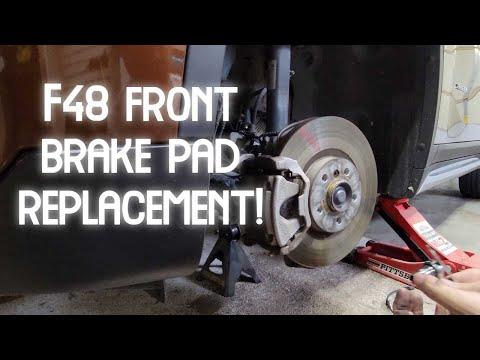







How to Replace Front Brake Pads & Wear Sensor on a 2016 BMW X1 (DIY Guide)
Step-by-step instructions with required tools, parts list, torque specs, CBS reset steps, and safety tips
How to Replace Front Brake Pads & Wear Sensor on a 2016 BMW X1 (DIY Guide)
Step-by-step instructions with required tools, parts list, torque specs, CBS reset steps, and safety tips


🔧 X1 - Front Brake Pad Replacement
Replacing the front brake pads restores safe stopping power and prevents rotor damage when pads get thin. On your X1, the front pads sit inside a floating caliper (the caliper slides on pins) and one front wheel has a brake pad wear sensor.
Difficulty Level: Intermediate | Estimated Time: 1.5-2.5 hours
Assumption: standard OEM-style floating front calipers.
⚠️ Safety & Precautions
- ⚠️ Work on a flat, solid surface; support the X1 on jack stands before you go under or remove wheels.
- ⚠️ Do not press the brake pedal while a caliper is off the rotor.
- ⚠️ Brake dust is harmful; use brake cleaner, not compressed air.
- ⚠️ Keep grease/oil off pad friction material and rotor faces.
- ⚠️ If your brake fluid reservoir gets too full when compressing pistons, remove a little fluid (do not spill on paint).
🔧 Required Tools
You'll need the following tools for this repair:
- Floor jack (rated 3-ton minimum)
- Jack stands (rated 3-ton minimum)
- Wheel chocks
- 17mm socket
- 3/8" drive ratchet
- 1/2" drive breaker bar
- Torque wrench (20-200 Nm range)
- 7mm hex bit socket
- Flathead screwdriver
- Brake caliper compression tool (specialty)
- Caliper hanger hook
- Trim clip tool
- Small pick tool
- Brake cleaner spray
- Wire brush
- Nitrile gloves
- Safety glasses
🔩 Required Parts
HowToo sells all the parts you need for this repair:
- Front brake pad set - Qty: 1
- Front brake pad wear sensor - Qty: 1
- Brake grease (silicone or ceramic) - Qty: 1
- Brake cleaner - Qty: 1
📋 Before You Begin
- Park on level ground, turn the steering wheel straight, and set the parking brake.
- Put wheel chocks behind the rear tires.
- Open the hood and locate the brake fluid reservoir. You’ll watch the fluid level when compressing the caliper piston.
- If your pad wear light is on, plan to replace the wear sensor (a small wire “trip sensor” that clips into one pad).
🔨 Step-by-Step Instructions
Follow these steps in order:
Step 1: Loosen lug bolts and raise the front
- Use a 17mm socket and breaker bar to loosen the front wheel lug bolts about 1/2 turn (do not remove yet).
- Lift the front with a floor jack and support securely on jack stands.
- Remove the wheel lug bolts with the 17mm socket and take the wheel off.
Step 2: Remove the caliper spring clip
- Use a flathead screwdriver to carefully pry the outer caliper spring clip off the front of the caliper.
- Keep a hand on it; it can pop.
Step 3: Unplug and unclip the front pad wear sensor
- Locate the wear sensor wire at the front wheel (typically on the left front).
- Use a trim clip tool to open the small clips holding the wire to the strut/control arm.
- Use a small pick tool to help release the connector lock, then unplug the sensor.
Step 4: Remove the caliper guide bolts
- On the back side of the caliper, remove the plastic caps (if equipped) using a small pick tool.
- Use a 7mm hex bit socket and ratchet to remove the two caliper guide bolts.
Step 5: Remove and hang the caliper
- Lift the caliper off the rotor by hand.
- Hang the caliper from the strut using a caliper hanger hook.
- Do not let the caliper hang by the brake hose.
Step 6: Remove the old pads
- Pull the inner and outer pads out of the bracket by hand.
- If the wear sensor is installed in the pad, pry it out gently using a flathead screwdriver.
Step 7: Compress the caliper piston
- Use a brake caliper compression tool (specialty) to push the piston slowly back into the caliper.
- A brake caliper compression tool is a screw tool that presses the piston in evenly so the new thicker pads will fit.
- Watch the brake fluid reservoir while compressing. If it looks too full, remove a small amount of fluid safely.
Step 8: Clean and prep the pad contact points
- Spray the caliper bracket pad “rails” with brake cleaner spray.
- Use a wire brush to remove rust where the pad backing plates slide.
- Apply a thin film of brake grease to the pad ears/edges where they slide on the rails (not on the pad friction surface).
Step 9: Install the new pads and wear sensor
- Install the new inner and outer pads into the bracket by hand.
- Clip the new front brake pad wear sensor into the correct pad position (same side/location as the old one).
- Route the sensor wire the same way as before and snap it into the clips using a trim clip tool.
- Reconnect the sensor plug until it clicks.
Step 10: Reinstall the caliper and torque the guide bolts
- Set the caliper back over the new pads.
- Install the two guide bolts using a 7mm hex bit socket and ratchet.
- Tighten with a torque wrench: Torque to 30 Nm (22 ft-lbs).
Step 11: Reinstall the caliper spring clip
- Reinstall the outer spring clip by hand, then use a flathead screwdriver to seat it fully.
- Make sure it’s locked into its grooves and sits flat.
Step 12: Reinstall the wheel and torque lug bolts
- Put the wheel back on and hand-thread the lug bolts.
- Lower the X1 to the ground.
- Use a torque wrench with a 17mm socket: Torque to 140 Nm (103 ft-lbs).
Step 13: Reset brake pad service (CBS) if needed
- Turn ignition on (engine off).
- Press and hold the dash trip/odometer reset button until the service menu appears.
- Tap the button to scroll to Front brakes, then press-and-hold to reset.
- If the reset won’t complete, the wear sensor may not be replaced or the connector may not be fully seated.
✅ After Repair
- Before driving, pump the brake pedal 8-12 times until it feels firm (this seats the pads against the rotor).
- Check the brake fluid level and top off only if needed.
- Test at low speed first. Listen for grinding or pulling.
- Pad break-in: make 6-10 gentle stops from ~30 mph with cool-down between stops. Avoid hard braking for the first ~150 miles.
💰 DIY vs Shop Cost
Shop Cost: $350-$650 (parts + labor)
DIY Cost: $90-$220 (parts only)
You Save: $260-$430 by doing it yourself!
Shop labor rates vary but typically run $100-$150/hour. This repair takes a shop approximately 1.5-2.5 hours.
🎯 Ready to get started?
HowToo makes it easy: same-day/2-day shipping on every part, plus all the tools and specialty tools you need! Check out the parts and tools sections below to add everything to your cart.