









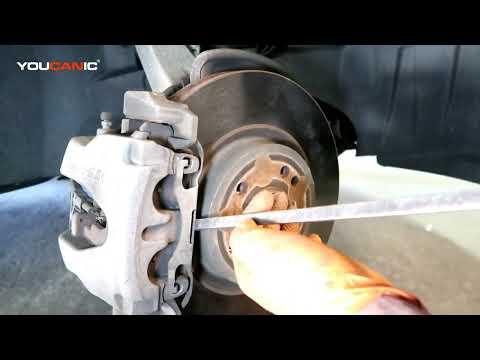







How to Replace Front Brake Pads & Rotors on a 2016 Mercedes-Benz GLE350
Step-by-step DIY guide with required tools/parts, wear sensor tips, and key torque specs for 2016, 2017, 2018
How to Replace Front Brake Pads & Rotors on a 2016 Mercedes-Benz GLE350
Step-by-step DIY guide with required tools/parts, wear sensor tips, and key torque specs for 2016, 2017, 2018


🔧 GLE - Front Brake Pads & Rotor Replacement
On your GLE, the front brake pads clamp the rotors to slow the SUV down. Replacing pads and rotors together restores smooth braking, reduces vibration, and prevents uneven wear from old rotors.
Difficulty Level: Intermediate | Estimated Time: 2-4 hours
Assumption: factory-style front calipers/rotors (stock).
⚠️ Safety & Precautions
- ⚠️ Support the SUV with jack stands; never rely on a jack alone.
- ⚠️ Brakes get hot—let everything cool before touching the caliper or rotor.
- ⚠️ Do not press the brake pedal while a caliper is off the rotor (pistons can pop out).
- ⚠️ Brake fluid can damage paint—cover fenders and wipe spills immediately.
- ⚠️ Don’t hang the caliper by the brake hose; use a hanger.
- ⚠️ If your brake fluid reservoir overflows when compressing pistons, remove a small amount with a syringe.
- ⚠️ Battery disconnect is not required for this job.
🔧 Required Tools
You'll need the following tools for this repair:
- Floor jack (rated 3-ton minimum)
- Jack stands (rated 3-ton minimum)
- Wheel chocks
- 17mm socket
- 1/2" drive breaker bar
- 1/2" drive torque wrench (20-250 Nm range)
- External Torx E18 socket
- 7mm hex bit socket
- 9mm hex bit socket
- Flathead screwdriver
- Punch (small)
- Hammer (small)
- Caliper piston compressor tool (specialty)
- Caliper hanger hook or bungee cord
- Wire brush
- Brake cleaner spray
- Shop rags
- Disposable gloves
- Safety glasses
- Pick tool (small)
- Fluid syringe or turkey baster
🔩 Required Parts
HowToo sells all the parts you need for this repair:
- Front brake pad set - Qty: 1
- Front brake rotors - Qty: 2
- Front brake pad wear sensor - Qty: 1
- Front pad hardware kit (clips/springs) - Qty: 1
- Brake lubricant (silicone/ceramic) - Qty: 1
- Medium-strength threadlocker (blue) - Qty: 1
- Brake cleaner - Qty: 1
- DOT 4 brake fluid - Qty: 1 liter
📋 Before You Begin
- Park on level ground, turn the steering wheel straight, and place wheel chocks behind the rear tires.
- Loosen the front wheel bolts 1/2 turn using a 17mm socket and breaker bar while the tires are on the ground.
- Open the hood and check the brake fluid level. If it’s near MAX, remove a little with a fluid syringe so it won’t overflow when you compress the pistons.
- Know these terms: the caliper squeezes the pads, the rotor is the metal disc, and the caliper carrier/bracket is the heavy mount the caliper bolts to.
🔨 Step-by-Step Instructions
Follow these steps in order:
Step 1: Lift the front and remove the wheels
- Use a floor jack to lift the front at the approved front jacking point, then set the SUV down securely on jack stands.
- Remove the wheel bolts with a 17mm socket and take both front wheels off.
Step 2: Remove the pad wear sensor (if equipped)
- Locate the small wire going into one front pad (typically one side only).
- Carefully pry the sensor out of the pad using a pick tool (it pulls straight out).
- Unclip the wire from its holders and disconnect it using your fingers (or a flathead screwdriver gently on the locking tab).
Step 3: Remove the caliper guide pin bolts
- On the back of the caliper, remove the two guide pin bolts using a 7mm hex bit socket or 9mm hex bit socket (Mercedes uses one of these depending on caliper variant).
- Once loose, slide the caliper off the pads/rotor.
- Hang the caliper from the suspension using a caliper hanger hook or bungee cord.
Step 4: Remove the old pads and hardware
- Pull the inner and outer pads out by hand.
- Remove any anti-rattle spring/clips using a flathead screwdriver.
- Clean pad contact points on the carrier with brake cleaner spray and a wire brush.
Step 5: Remove the caliper carrier (bracket)
- Remove the two carrier-to-knuckle bolts using an External Torx E18 socket and a breaker bar.
- Set the carrier aside.
- When reinstalling later: apply medium-strength threadlocker (blue) and Torque to 200 Nm (148 ft-lbs).
Step 6: Remove the rotor
- If your rotor has a small retaining screw, remove it (commonly Torx/Allen style). If it’s stuck, tap the driver gently with a hammer to shock it loose.
- If the rotor is rusted to the hub, spray hub area with brake cleaner spray, then strike the rotor “hat” area firmly with a hammer to break it free. Keep fingers clear.
- Clean the hub face with a wire brush so the new rotor sits flat (this prevents vibration).
Step 7: Install the new rotor
- Clean both sides of the new rotor with brake cleaner spray and shop rags (removes shipping oil).
- Set the rotor onto the hub. If equipped with a retaining screw, reinstall it and Torque to 10 Nm (7 ft-lbs).
Step 8: Reinstall the caliper carrier (bracket)
- Position the carrier over the rotor and start both bolts by hand.
- Tighten using an External Torx E18 socket, then Torque to 200 Nm (148 ft-lbs) with a torque wrench.
Step 9: Compress the caliper pistons
- Use a caliper piston compressor tool (specialty) to slowly push the piston(s) back into the caliper.
- Go slowly and watch the brake fluid reservoir under the hood. Remove excess fluid with a fluid syringe if it starts to overflow.
- Slow compression helps protect seals.
Step 10: Install new pad hardware and pads
- Install the new clips/springs from the pad hardware kit onto the carrier (match orientation to what came off).
- Apply a thin film of brake lubricant to pad ears/backing contact points (not on pad friction material).
- Slide the new inner and outer pads into place.
Step 11: Reinstall the caliper and tighten guide pin bolts
- Slide the caliper back over the new pads and rotor.
- Install the guide pin bolts using a 7mm hex bit socket or 9mm hex bit socket.
- Torque to 35 Nm (26 ft-lbs).
Step 12: Install the new pad wear sensor
- Plug the connector back in until it clicks.
- Clip the wire back into its holders so it can’t rub the wheel.
- Press the new sensor into the correct pad until fully seated (it should feel snug).
Step 13: Reinstall wheels
- Put the wheels back on and hand-thread the bolts.
- Lower the SUV off the jack stands using the floor jack.
- Tighten wheel bolts in a star pattern with a torque wrench: Torque to 150 Nm (111 ft-lbs).
✅ After Repair
- Before driving, pump the brake pedal 10-15 times until it feels firm. This seats the pistons against the new pads.
- Check the brake fluid level and top off with DOT 4 brake fluid if needed (don’t overfill).
- Start the engine and confirm the brake pedal remains firm.
- Perform a gentle bed-in: 8-10 medium stops from ~50 km/h to ~10 km/h, with 30-60 seconds between stops. Avoid hard stops for the first 200 km.
- If a brake warning stays on, recheck the wear sensor connection and routing.
- Listen for scraping/grinding on the first slow roll—light pad rub is normal, loud metal noise is not.
💰 DIY vs Shop Cost
Shop Cost: ₹25,000-₹55,000 (parts + labor)
DIY Cost: ₹12,000-₹35,000 (parts only)
You Save: ₹13,000-₹20,000 by doing it yourself!
Shop labor rates vary but typically run ₹1,500-₹3,000/hour. This repair takes a shop approximately 2-3 hours.
🎯 Ready to get started?
HowToo makes it easy: same-day/2-day shipping on every part, plus all the tools and specialty tools you need! Check out the parts and tools sections below to add everything to your cart.